By Toby Thompson
The fair-haired and affable Brett Evje perches in his Irish snug, a compact bit of Victoriana designed to mimic a ladies’ parlor 120 years ago, but here at Stockman’s, beside the bar, proves a comfy and effective sound block against the saloon’s afternoon bustle. We’re chatting at 31 East Main in Bozeman, hard by the restaurant Plonk, which, with the fancy steakhouse J.W. Heist up the block, has elevated Evje and his business partner, Michael Ochsner, to 2026 James Beard Award semi-finalist status for outstanding restaurateurs.
“We weren’t expecting the award at all,” Evje says. “But it’s certainly an honor.”

“I wanted an appropriate place, not necessarily for cowboys, but for cattle barons, the businessmen. A space that was elevated. I see cowboys as the original punk rockers.”
— Brett Evje
Brett is a bar and restaurant veteran who restored and saved Emigrant’s Old Saloon (founded in 1902), which he owned until recently, and Stacey’s Old Faithful Bar (founded in 1937) at Gallatin Gateway, which he purchased in 2020. Last year, he added The Westerner next door to Stacey’s as a honkytonk Nirvana for dancers, and a taqueria, El Gallo Cantina, which is attached. Each of these establishments, though consciously retro, is muy cowpoke. But Stockman’s, with its mahogany front and back bar set, its brass cash register, its tile floor and coffered ceiling, is more consciously formal—upscale.
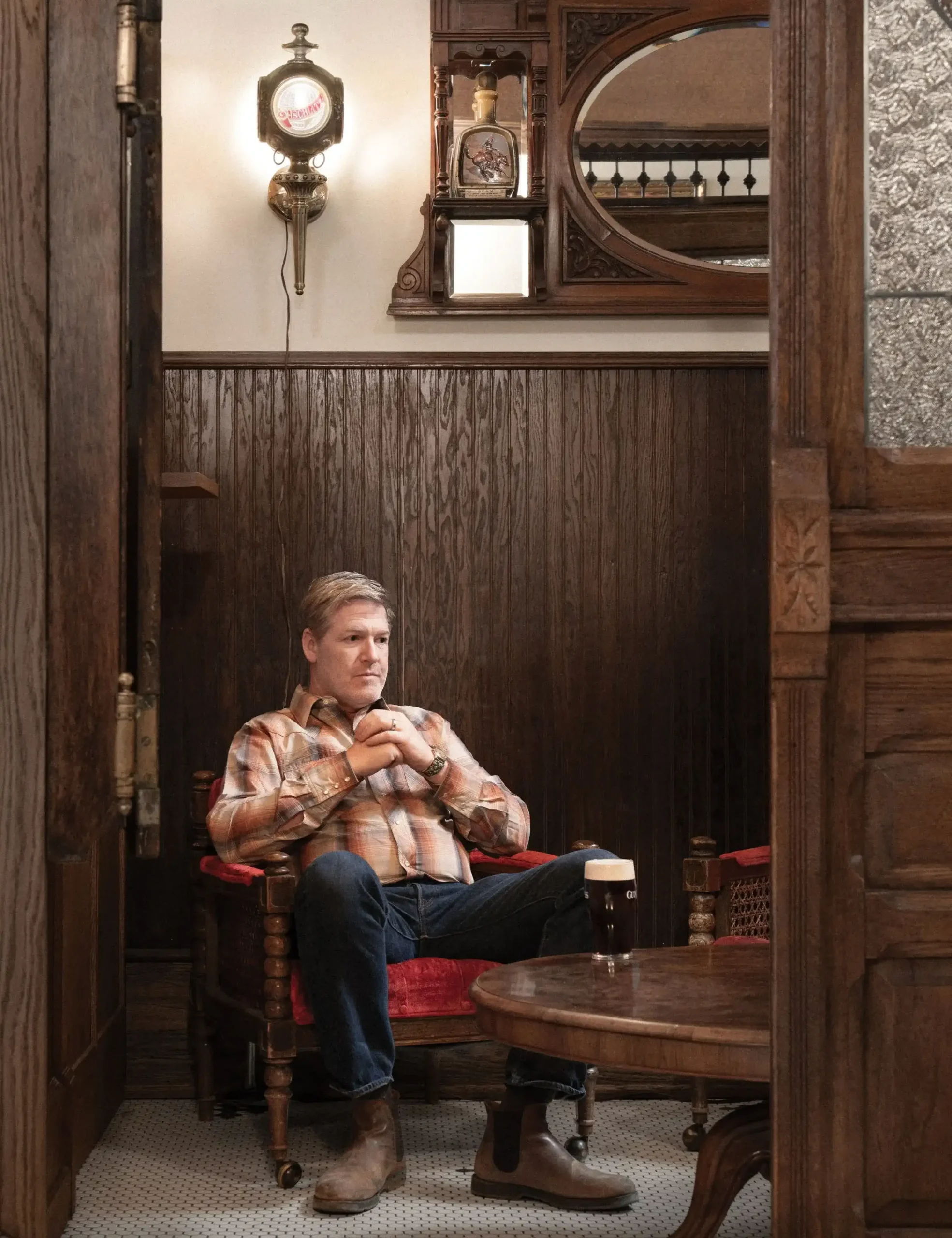
“I wanted an appropriate place, not necessarily for cowboys, but for cattle barons, the businessmen. A space that was elevated. I see cowboys as the original punk rockers,” he adds. “I grew up a skate-and-snowboarder and considered myself a punk.” During the 1970s, his father owned the Two Bit Saloon in Gardiner, and the 53-year-old Evje is a fifth-generation Montanan. His great-grandfather, J.W. Heist’s father, homesteaded in the Cinnabar Basin, ranched near Manhattan, and was a cattleman, “raising bulls.” Heads of comparable beasts decorate Stockman’s walls, with those of bighorn sheep, “shot by my grandfather.”
As for this saloon, Evje says, “I looked around Bozeman, and there was no bar with a Western feel. With this resurgence of Western culture, with people gravitating to cowboys and the Yellowstone bullshit, I thought, ‘Why not’?”
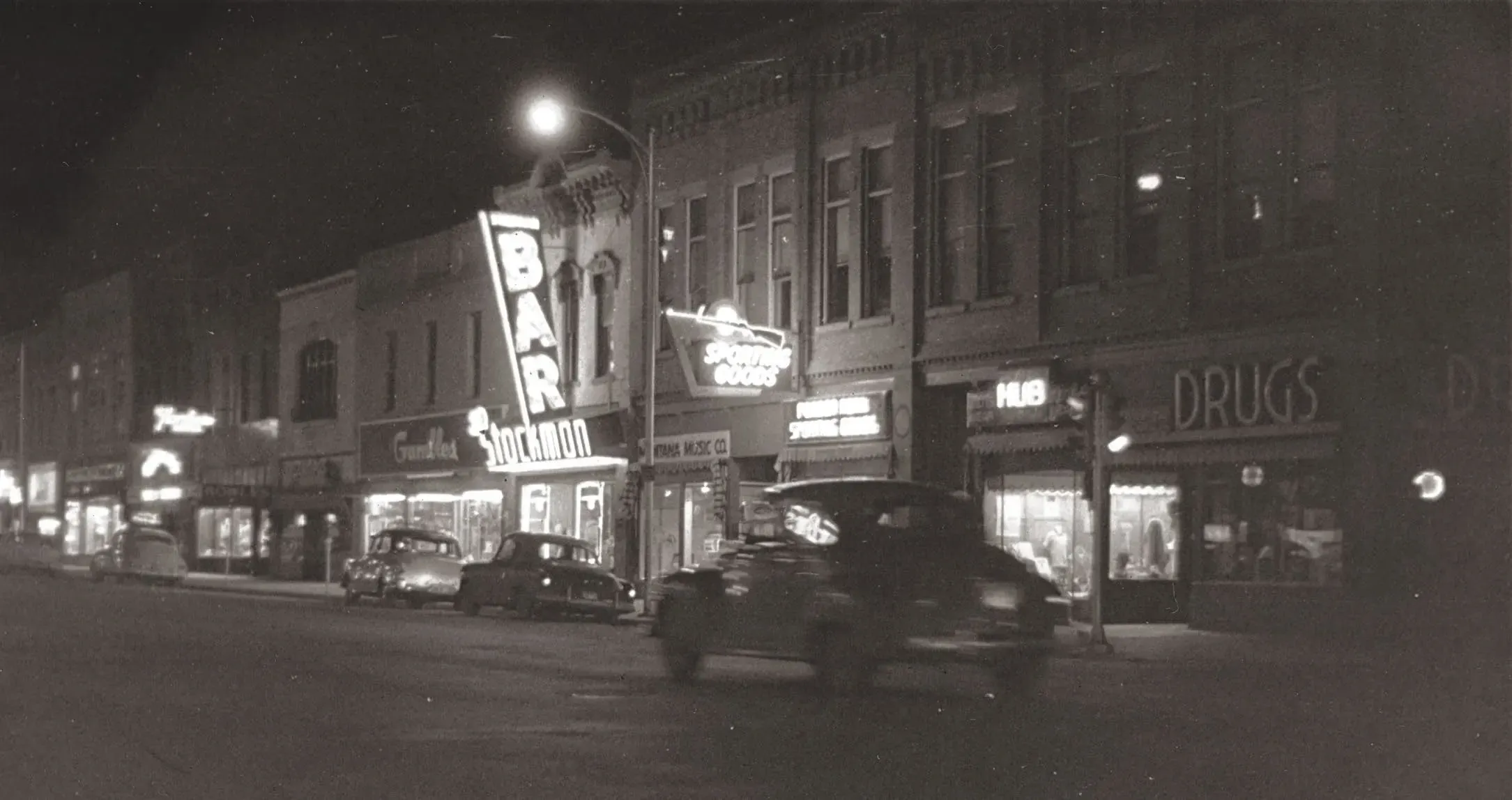
An earlier Stockman’s (1942-72) stood where Plonk stands now. The new space, in recent years, had been the boot-and-gun room of Schnee’s, a business still open next door. “We have an entranceway from there into our bar,” Evje says, “so the places complement one another. You can buy a gun at Schnee’s, then come right here for a whiskey.” He laughs.
My interest in saloons dates to the early 1970s when, hysterically, I spent four years on the road, searching for the Great American Bar, leading to publication of my 1976 book, Saloon. Many greats were in Montana, and in fact Brett Evje modeled Stockman’s on The Montana in Miles City, which in my estimation, split the vote for best bar with Captain Tony’s in Key West.
“For Stockman’s,” Evje says, “I didn’t want to do a college bar, and I didn’t want to do a dive bar. The Montana was the model. It was perfect.”
In terms of historical elegance, The Montana remains the most pristine of early Western saloons. Founded in 1908, its front and back bar set, its vintage coolers and cigar cases, its Italian tile floor and trough urinal in the Gents, its brass piping buffed to a shine, spell perfection. The summer of 1972, I recall stopping there after what felt like a dune buggy ride across gravel highways the 48 miles between Watkins and Terry—Montana rangeland, cowboys, cattle, and heavy equipment crowding the coulees, everything recessed before the stark landscape. I’d set my watch back an hour at the Montana line, but 60 miles west of North Dakota, I was 100 years into the past.
My criterion for greatness in a bar was not the quality of food, drink, or music at a particular spot, but how well the bar fulfilled its primary function: that of relieving loneliness, boredom, and dread.
During those months, I visited 30 bars a day, learning in my travels that the Mountain West – specifically Montana – held more saloons of the proper demeanor than any other region. My criterion for greatness in a bar was not the quality of food, drink, or music at a particular spot, but how well the bar fulfilled its primary function: that of relieving loneliness, boredom, and dread.
This was my drill: I’d study the exterior of a strange bar, its facade and structural demeanor, to decide whether I might find comfort there, or risk a step inside. I’d examine the bar’s architecture and its poise within its geographical setting, and the whole was a place mat properly or improperly laid. I required form to frame or isolate chaos. A great bar and its architecture were not unlike that fine crystal sphere, a paperweight if you will, or a child’s toy in a crib, that housed make-believe snowstorms. Snowstorms were the chaos; you wanted storms. But a glass ball was needed to contain them. And you wanted an interior adequately fixed to keep chaos in check. Front and back bars, antique furniture, dusty paintings, and tattered pool tables were the primary artifacts of an interior landscape. They were like tiny log cabins, snow-covered sleighs, and reindeer. You shook your glass ball as hard as the mood dictated. Or another something, faceless and edgy, shook it for you.

Today, saloons remain linked to a more ordered and formal past. This cultural moment, in and out of bars, is comparable to that of the 1970s, the decade of my quest for great bars. That era was a time of turmoil, with the Vietnam War, a heightening of indulgence in sex, drugs, and rock ‘n’ roll, and Watergate politics happening way too quickly. As one friend has said, remembering that decade, “The culture came apart like a frag grenade.” I found 19th-century saloons, where they survived, to be an escape from cultural discord.
In small Western towns, during the 19th-century, saloons had been a touch of urbanity, of the city. Their elegant fixtures (front and back bar sets, cigar display cases, ice chests, and cuspidors) had arrived in wagons, on steamships, or on trains. Often, the saloon had been the first building in a cow town or mining camp. It served multiple duties as a barroom, church, civic hall, barbershop, mortuary, and brothel. More significantly, it was an escape from the societal uproar of a gold camp, say, like Deadwood, South Dakota. Something about a saloon’s aesthetics and poise urged people to kibitz rather than confront.
The 19th-century saloon, with its cathedral-like fixtures, predominated until Prohibition (1920-1933), when the sale and production of alcoholic beverages became illegal in the United States, and the Jazz Age, with its whoop-de-doo, its extravagant cocktails, flapper culture, New Deal, and Art Deco décor, staid the saloon’s swinging doors. A few defiantly remained open; others became drug stores (with stiff tonics on the side), or ice cream parlors. Cocktail lounges, with their nods to Modernism, predominated, and the industry kowtowed. At Repeal, trade journals, such as a 1934 edition of Beer and Bar Equipment, urged revival of the 18th-century term, “tavern,” to replace “saloon,” arguing that it was “a good piece of merchandising, since it is at once evidence of the general desire of the country that we should create establishments that could not be associated with the old saloon … the world isn’t the same world that went into the World War … It’s a world that has settled down to counting its blessings.”
Evje admits, “Technically, I don’t know the difference between a bar and a saloon, but this feels like 1900. It’s a saloon, and it’s elevated. I want to make it seem like it’s been here since the turn of that century.”
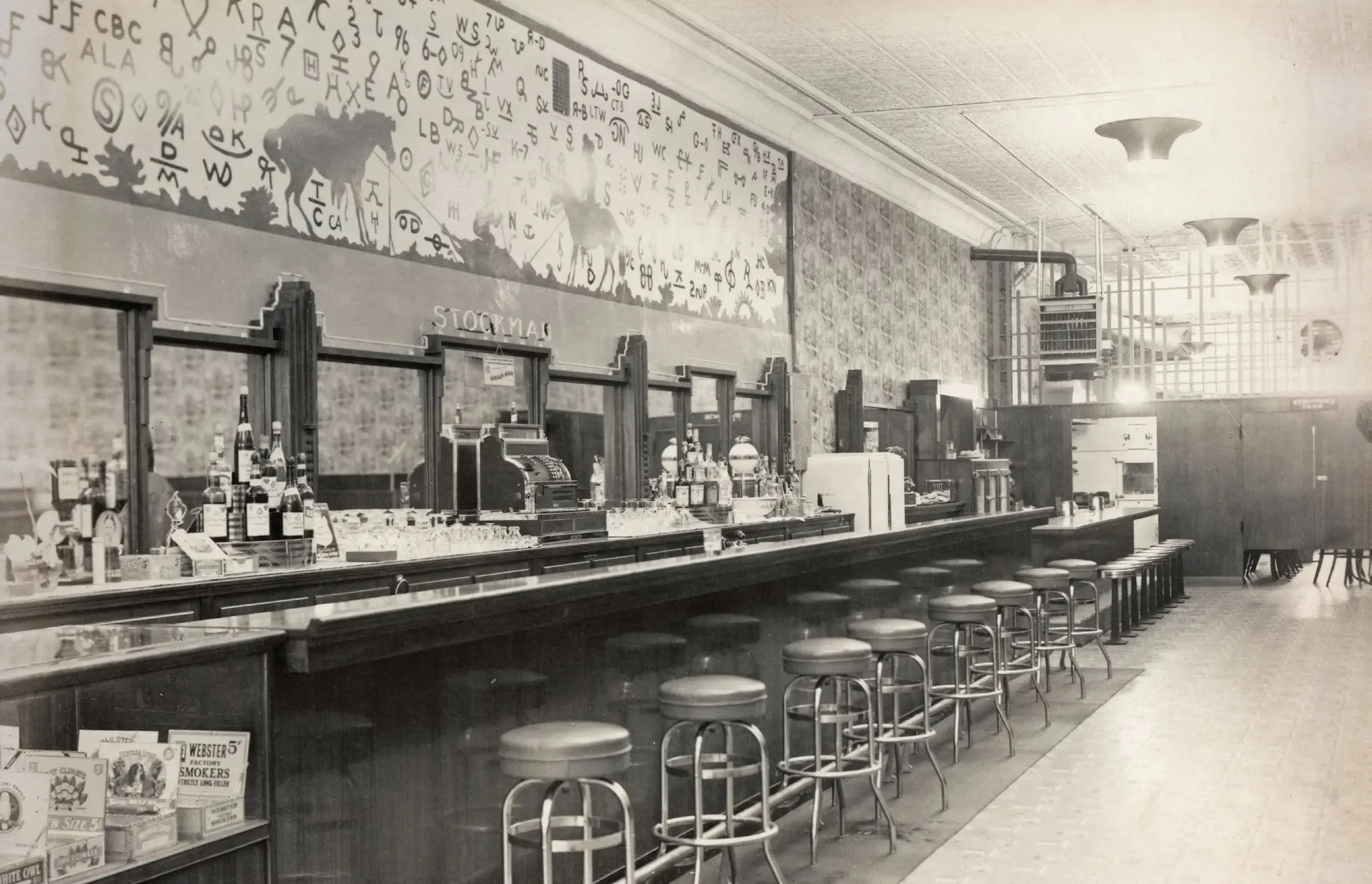
Before Stockman’s, Evje says, “I’d spent time in old bars: The New Atlas in Columbus, the Montana in Miles City, The Old Saloon in Emigrant. I’ve always loved old Western Montana.” Stockman’s, as Evje has designed it, is a step back in time, not just with its period fixtures, but with its studied lack of technology. Here, patrons aren’t glued to their phones: “They talk to one another,” Evje says. Stockman’s has only a small TV at the end of the bar, “usually looping ‘Lonesome Dove,'” he points out. At the Old Saloon, he played neither CNN nor Fox News, but the Cowboy Channel for rodeos. “When tradition’s your focus, and you’re following that line, it doesn’t include huge TVs at every corner of the room.”
The Stockman’s back bar is top-of-the-line, a 1900-era Brunswick-Balke-Collender, Mount Oro (“mountain of gold”), from a San Francisco restaurant, for which Evje paid six figures. “I’ve owned a couple of Brunswick bars now,” Evje says, “and there’s a small community of people that deal in and restore them, and kind of collect them.” In fact, there’s an entire subculture of dealers and aficionados who treasure old saloon fixtures.
Parley Pearce is one of these. A retired veterinarian in Walla Walla, Washington, he’s a connoisseur of Brunswick bars, keeping “six or nine,” and having decorated a Pendleton, Oregon bistro (which formerly he owned) with a “Del Monte Type-two back bar,” for which he spent $60,000 in a back-alley transaction at Butte. During the sale, parties were “armed to the teeth,” and payment was rendered with cash in a shoebox. “A customer who was carving up the counter had been murdered with a shotgun,” Parley explains, “and there was blood all over the bar.” It was ineradicable. “We left that stain and put a finish right on top of it.” Recently, he sold Brett Evje the panels for Stockman’s snug, and its antique brass cash register. “Parley’s an interesting figure,” Brett says. “An awesome guy.” Pearce is currently restoring an immaculately preserved brothel in Pendleton, which he’ll open as a hotel and rent “for special events.” He purchases 19th-century saloon fixtures at conclaves “like The Grass Valley, California, Old West Show,” he says, which include half a dozen stand-up roulette wheels. Raised on an Oregon ranch, Pearce adds, “I have a passion for the Old West.”
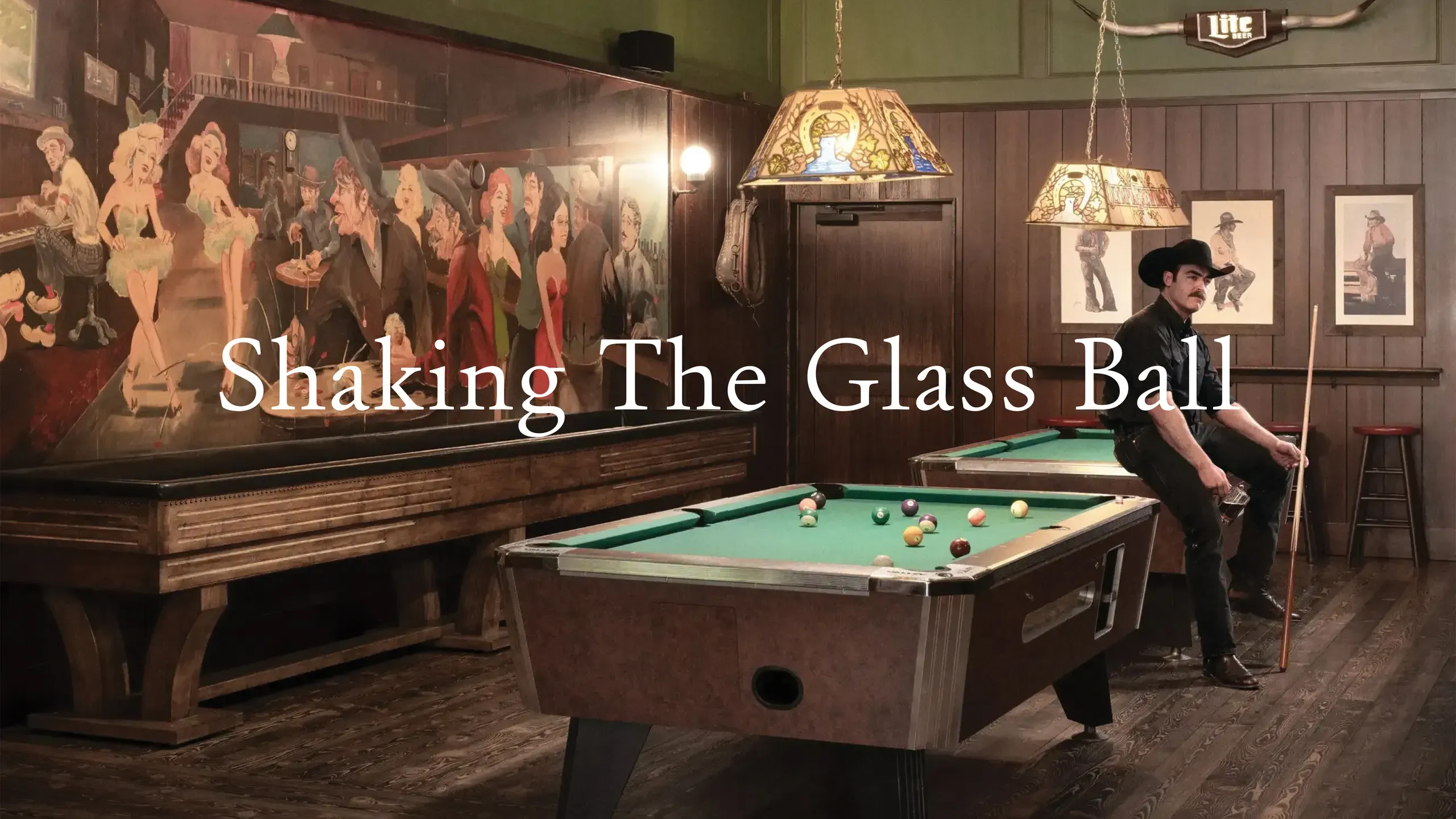
This appeals to Evje, who feels similarly. Standing before a wall-sized, honkytonk mural in Stockman’s pool room, he explains that he holds a history degree from the University of Montana, and as a boy, he’d enjoyed saloon trips with his parents. “I’d just climb the bar seat,” he says. “They’d visit this bar and that bar, and I’d always go.”
I’d had a comparable familiarity, as my parents were bar aficionados. At the outset of my search, I asked my mother which bar was the first I’d visited as a child. “I don’t know,” she said. “We took you everywhere.” Then, as if touched by the hand of a research god, I asked where I’d been conceived. She said, “At the St. Regis Hotel in New York City. Your father had just returned from World War II and …”
“Okay, what was the first bar you visited afterward?”
“That’s easy. Next morning, we went to the King Cole Bar downstairs and had Bloody Marys.”
So: I’d premiered as a zygote, at the King Cole, with its starched-apron waiters and celebrated mural by Maxfield Parrish, at the St. Regis Hotel on Fifth Avenue.
Thereafter, I recall mornings with my dad at Washington’s Old Ebbitt Grill, its walls hung with wild boar and walrus heads, the latter sporting a Kaiser helmet, and afternoons eating oysters and watching him drink at Maine Avenue’s waterfront saloons. One night, on a bet, he swam across the Potomac, that river 1,000 feet wide and contaminated below the Tidal Basin. But the crabber men’s bars, post-dip, provided comfort.
My attraction to weathered barrooms had been fixed by my parents’ dalliances, so in 1972, while researching Montana’s saloons, I worked feverishly, enjoying afternoons and nights of drinking that approached states of bliss. There was dancing at Livingston’s Longbranch or Wrangler saloons; there was six-pack swimming outside Chico Hot Springs Saloon, and afternoons sipping mint juleps at the Old Saloon. I recall an evening in 1976 when Jimmy Buffett and I met friends there, carpooled to Gardiner and the Two Bit, boogied to a country band with which Jimmy sang “Livingston Saturday Night,” skinny-dipped in the Boiling River after closing, gathered as dawn broke over the deserted saloon where Buffett took a guitar and said, “There’s this new song I’ve written. Like you to hear it.”
It was “Margaritaville.”
Decades passed before I said adieu to the booze, but saloons stayed constants, whether dancing at Manhattan’s American Legion, Gallatin Gateway’s The Jump, or Livingston’s Murray on any night, summer or winter. In late middle age, however, I believed I’d become inured to the comfort of saloons. But not long ago, on a snowy December evening, I stopped at the New Atlas Saloon in Columbus. It was a dark season of my life, heavy with loss and regret. As I approached the mahogany bar, I saw lights hanging from antlers of mounted deer and along the carved entablature of the mirrored back bar. A string band was completing its set. I glanced toward a figure beside me but did not speak. The band finished, and its leader stepped between us. He called for a drink, nodded to each of us and began “Silent Night,” a cappella. We joined him without hesitation or irony and sang heartily—three disheveled angels in a forgotten town on a frigid night, singing just to stay alive. At carol’s end, we embraced, shared a round, then hiked toward the blizzard, Christmas in our hearts.
A great bar and its architecture were not unlike that fine crystal sphere, a paperweight if you will, or a child’s toy in a crib, that housed make-believe snowstorms. Snowstorms were the chaos; you wanted storms. But a glass ball was needed to contain them. And you wanted an interior adequately fixed to keep chaos in check.
At Stockman’s, the afternoon morphs into evening, and quickly Evje’s bar is thrumming with patrons’ conversations and orders. The menu, designed by John Thayer, Plonk’s and J.W. Heist’s culinary director, is simple but elegant—with sirloin and chicken-fried steaks, brisket sandwiches, loaded green salads, and à la carte items such as single eggs, range beans, pan biscuits, chili Guisado, and smoked beef sausage. “A cowboy breakfast,” Evje says. “You can build a meal here.” A Formica lunch counter, similar to ones in saloons like the old M&M in Butte, sits perpendicular to the bar, and a pool room with that wonderful honkytonk mural is active. The booths are filling, attractive patrons line the bar, and country music tinkles. If I’d felt an emotion anywhere close to loneliness, boredom, or dread upon entering Stockman’s, it had been assuaged.
“This place could go into the Smithsonian,” I say to Evje.
He smiles. “Not yet.”
The night is young.
Toby Thompson is the author of six books of nonfiction, including Positively Main Street, his biography of Bob Dylan, and Riding the Rough String: Reflections on the American West. He has written for publications as varied as Esquire, Vanity Fair, The New York Times, Outside, and Men’s Journal. His first job, in 1959, was as a ranch hand outside of West Yellowstone, Montana. He is a part-time resident of Livingston, and is an emeritus professor of English at Penn State University.