How the Montana Cup brings the state together and “makes you feel like a kid again”
Words and Photos by Jack Reaney
Nico Composto decided to pack his track spikes. He had excelled in cross country in college, leading Columbia University to the Ivy League title in his senior season and earning All-American honors alongside his 30th-place finish at Division I nationals in a 253-runner field. But like most athletes, his competitive career ended with graduation. He spent a few months on the West Coast, headed home to Illinois for a year or two, and finally packed his bags for the Treasure State.
His dad saw him grab the spikes and questioned why he’d need those for adult life in Montana.
“I was like, ‘I don’t know,’” Composto recalled. “Brought ’em, and yeah—there’s a race to use them for every year.”

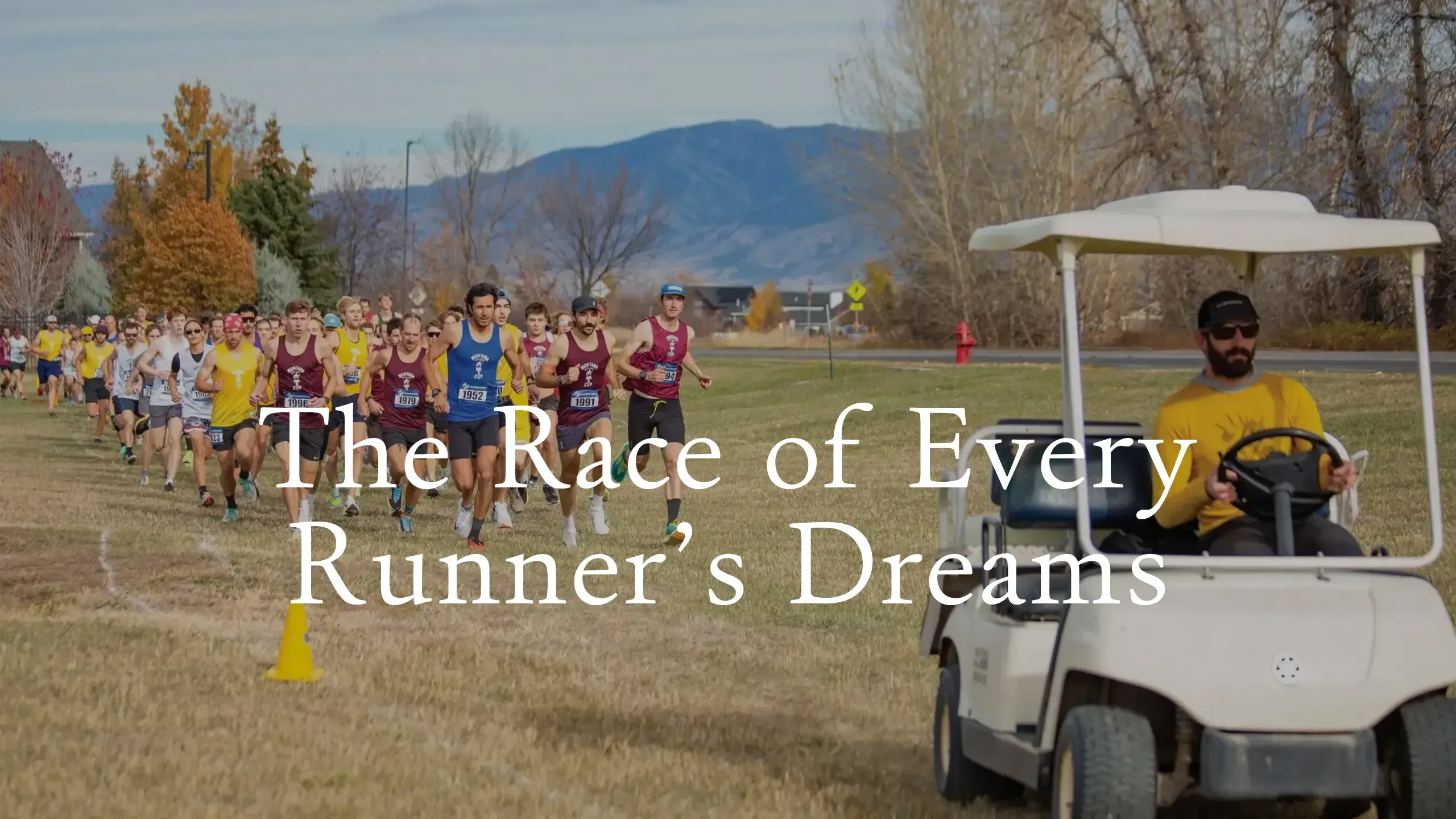
The Montana Cup is an annual cross-country style race, usually between 5 and 8 kilometers, that pits the Treasure State’s seven regions against each other in a team format—runners wear colors representing Billings, Bozeman, Butte, Great Falls, Helena, Kalispell and Missoula. Every fall, hundreds of Montanans, young and old, travel statewide for a down-to-earth tradition and a reunion with familiar faces. The fastest team drives home with the cup.
“Dude, it’s so sick. It makes you feel like a kid again,” Composto said.


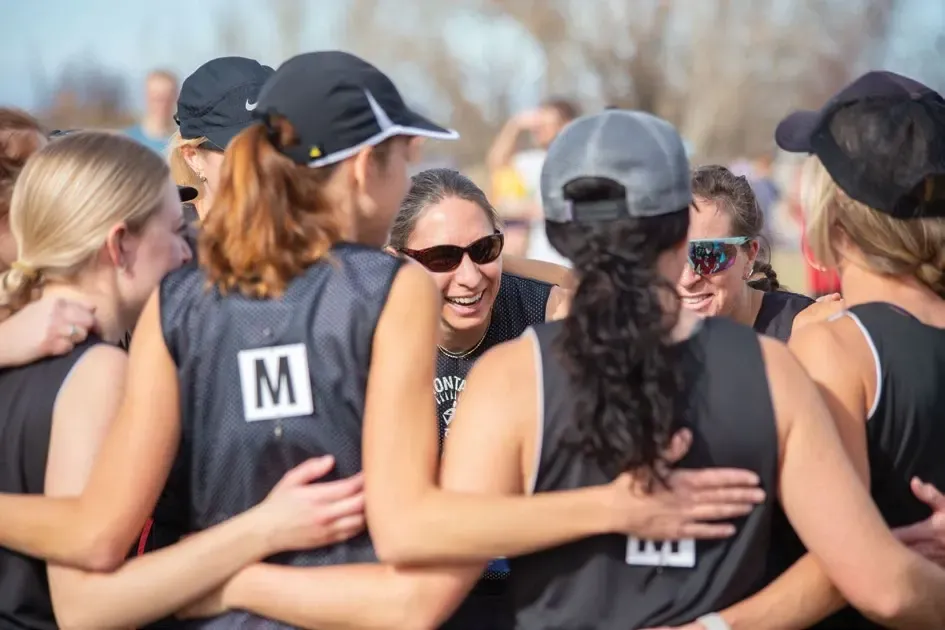
It all started in 1992. Ray Hunt, a runner-turned-coach at University of Montana, was tasked with putting together a low-budget, “all-star race,” featuring the best runners from cities across the state to compete against the Grizzlies. NCAA regulations, it turned out, prevented the Grizzlies from participating.
“We did it anyway,” Hunt said, just without the UM team.
The event, originally called the Montana Open Cross Country Race, stayed in Missoula for its first four years. Busy with graduate school in 1996, Hunt asked his friend Susan Kaluza to bring the event to Butte. By 2001, Helena had taken two turns hosting, and in 2002 the Montana Cup adopted a seven-year rotation around the state. Each region’s course is unique, with varying distances and terrain.
Hunt is proud to see the race grow. Over the years, it has drawn as many as 299 runners to a single race, a mark reached in 2016 in Bozeman. Fall Montana weather has made for a wide range of conditions—from 29 degrees Fahrenheit in Kalispell in 2019 to 73 degrees in Helena in 2008. And in 2013, the race in Deer Lodge started with a bullwhip in place of a starting gun.
“It was a really excellent way to see all of the cool hidden places in Montana where you could run a cross-country meet,” Hunt said. “There have been a handful of years where we’ve ended up someplace that was really fabulous.”
Composto became captain of the powerhouse Missoula men’s team. He won the event individually in 2017 and 2018.
In 2025, Composto raced for the eighth time and for him, the Montana Cup is a really big deal. “Our team captain here cares more about this race than anything in the world,” said Missoula runner Adam Peterman.
Peterman, 30, remembers his first Montana Cup in sixth grade, when he finished third to last. Now, he carries Composto’s squad. The Missoula native’s 15:32 won the 2025 race in Bozeman, hosted at Gallatin County Regional Park under exceptionally warm November skies.
A professional ultra-runner with Hoka, Peterman said the event resonates with runners who competed in high school or college and yearn for simpler times—donning a tattered, possibly smelly track pinny for a nonprofit race marked by colored flags and cones, and grinding toward a combined team score.
“It’s fun to come together with our seven teams and, like, actually represent something,” Peterman said. “It’s kind of like old-man cross country though. Nobody takes it too seriously.”
If anyone does, it’s the men in maroon. Missoula is the New York Yankees of the Montana Cup; the men have won in 23 of the event’s 32 years, dwarfing four wins apiece by the next best teams, Bozeman and Helena.
The Missoula women have dominated as well, with 17 titles. Bozeman’s women, however, have taken the past four. Helena runners seem to age well; both the men and women have won the masters division seven times since the category opened in 2005.
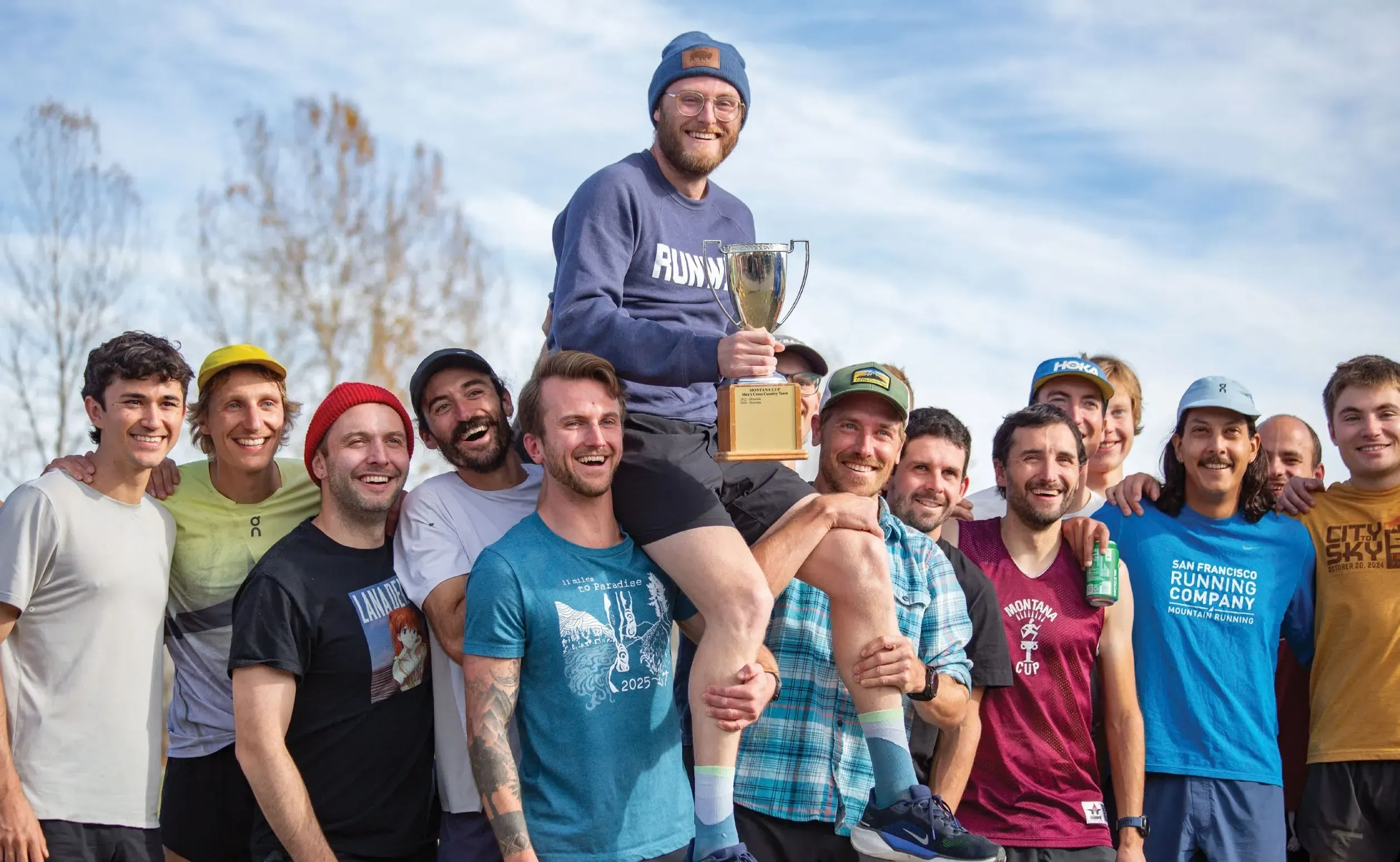
Peterman is proud that enough Missoulians care about the Montana Cup to fill a yellow school bus. He also enjoys recognizing familiar faces from his days running for Hellgate High. “The guy who finished second today, he and I were high school rivals, and then we ran together in college,” Peterman said. “It’s kind of cool now that we’re a little older and still seeing the same people.”
That guy was Zach Perrin, 30, who ran for Flathead High School before sharing a dorm room with Peterman at University of Colorado (Boulder). Perrin is a talented runner—his second-place split was 16:09—but isn’t competing on a professional level. “This is such a cool community event,” Perrin said after his first Montana Cup. “Montana is obviously a big state, but the running community is really tight-knit.”
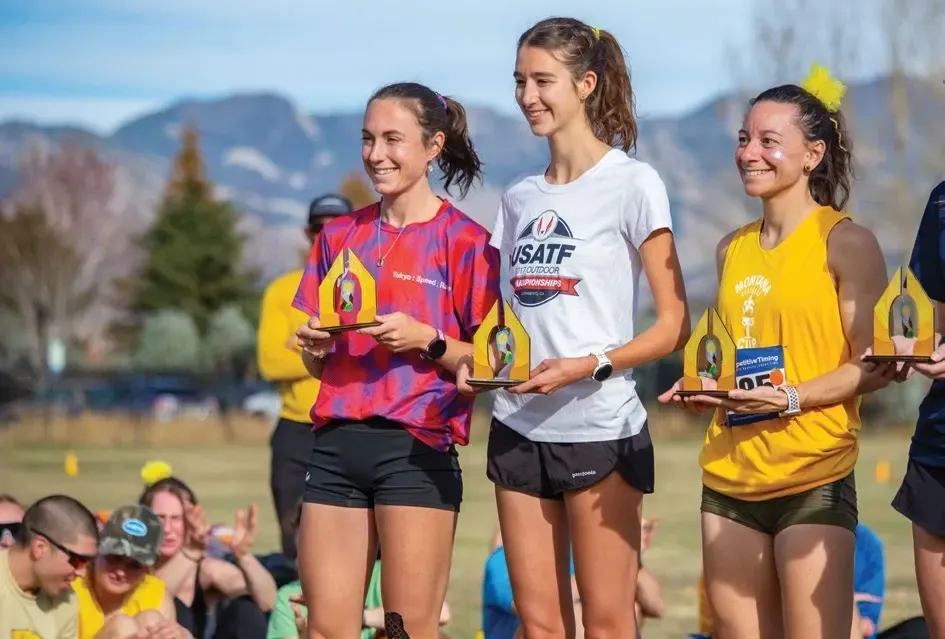
After the men wrapped up their 5K, Bozeman runner Makena Morley, 28, won the women’s race. She also ran for CU Boulder and continues her professional career with Asics. A Bigfork native, Morley won the 2013 race in Butte when she was barely old enough to drive. She returned in 2025 for the first time in about a decade, posting a 17:02 and a staggering 93-second margin of victory on her familiar Bozeman training grounds.
“It’s always such a special thing to see all of the runners in Montana come together … It’s a cool event because you don’t get to run cross country, like, any other time as an adult.”
— Makena Morley
“This was actually my favorite event in high school,” Morley said. “It’s always such a special thing to see all of the runners in Montana come together … It’s a cool event because you don’t get to run cross country, like, any other time as an adult.”
It was her first time wearing Bozeman’s gold jersey, having grown up repping Kalispell white. She was pleased to see the event hadn’t changed much in the past 10 years. “The whole vibe is really similar, just a great community event in every single town,” Morley said.
The flat, fast Bozeman course was far more approachable than the 2024 venue, Zinn Ranch in Helena, a rugged course with 400 vertical feet of gain. That’s where Missoula newcomer Alyssa Foote ran her first Montana Cup. She surprised herself by winning the whole thing, by a tenth of a second.
In the 2025 race, Foote finished second overall. It was enough to lead her new team, Butte, to a third-place finish, despite the green-clad women bringing only five finishers—the exact number required for a team score.
A former Division I runner at Oregon State, Foote hadn’t competed in a team-based race since college. When she moved to Montana, her Flathead Valley running group insisted that she sign up—although an October 2023 storm caused the first-ever weather-related cancellation, now immortalized in Montana Cup lore as “Snowpocalypse.” Foote got the point.
“They just had so much excitement and pride for their city and everything. I was like, ‘This is really cute,’” Foote recalled. She called the event “wholesome.”
Just about anything organized by volunteers is going to be wholesome. Many organizers, like Patrick Judge, have been involved for decades. “I’m glad we have people who are that excited, because it would be so easy for a race like this to not survive,” Composto said. “But there are people who care about it, so I’m just excited that we get to do it every year.”
“It is everything good about cross-country with none of the frustration. It reminds me of, like, middle school cross country … It’s something you don’t have to stress over. You’re literally just out there to push yourself and have fun.”
— Nico Composto
Judge first caught wind of the Montana Cup in 1994, in time for its third year. He hasn’t missed one since. “This is my 30th in a row,” the 55-year-old said. “And my times are showing it.”
He completed a 21:22 split on the fast Bozeman course in 2025. Back in 1994, he put Helena on the podium with his 16:33 in Missoula, just 10 seconds behind the top dog.
Judge has served as lead administrator of the Montana Cup since 2017 and still wears Helena blue. “It’s just such a unique concept of bringing together all of the different cities to run together in that cross-country team format that harkens back to high school or college, with the uniforms and everything,” he said. “This race inherently brings people from all over the state, and you have a chance to interact. It’s good fun, clean competition and camaraderie.”
Bozeman’s 2025 race director was Leigh Holleman, nominated by her peers. Judge said it’s a big lift, but she nailed it.
“I can’t say anything negative,” Holleman said as fellow volunteers packed her car full of race materials. She said her committee was “amazing” and volunteers really stepped up. “For me to be in charge of this race, and to run it, and I didn’t get stressed—it shows how much I love it … It’s a lot of work, but I think if you have enthusiasm and a sense of organization and love for people and running, it makes it a little bit easier.”
Holleman first ran the 2009 race in Bozeman and became women’s team captain around 2015. This year, she was proud to see teams setting up tents side-by-side, mingling like one big party.

After the race, two runners were inducted into the Montana Cup Hall of Fame: Jamie Brusa and Nico Composto. Brusa was selected for leading the Bozeman squad to four straight victories. She was surprised and honored.
“I just really love the team aspect of it, and I love that it brings together everyone from across the state for a shared love of running and competing,” Brusa said. The 38-year-old is still in her prime, earning a top-seven finish each year since her first Cup in 2017, including a photo-finish in 2024 when she nearly outkicked Alyssa Foote for the win. She finished third in 2025.
Composto was recognized for his “fervent” commitment to the Montana Cup including his role as captain during Missoula’s six-peat, and for his courage speaking up about mental health struggles shared by distance runners. Through youth coaching and mentorship, as well as writing a popular LetsRun.com article in 2015, “Dealing with Depression: How I Got Past Suicidal Thoughts While Running in College,” he has made a sincere effort to help fellow runners who put too much pressure on themselves.
The Montana Cup, in that regard, is a dream compared to the high-stress world of competitive running. “Dude, it is the best environment in the world,” Composto said. “It is everything good about cross country with none of the frustration. It reminds me of, like, middle school cross country … It’s something you don’t have to stress over. You’re literally just out there to push yourself and have fun.”
After a rough 2025 race for Composto, the Hall of Fame honor meant a great deal. “I put a lot of emphasis on the Montana Cup every year … I think the Montana Cup is just the running event that makes me feel some of that love for the sport that I felt when I first started.”
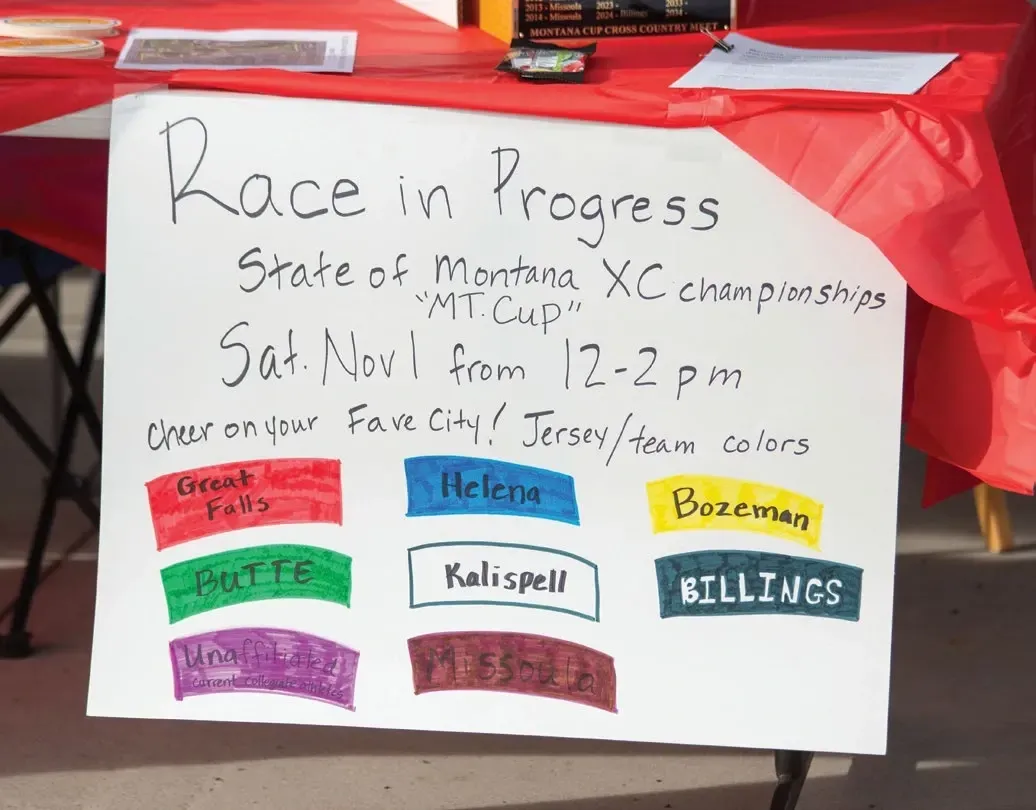

Every runner knows it’s a lifelong sport. Former high school and college speedsters can still run public races, collecting gift cards and small prizes at nearby 5K and 10K road races, or tackling the endless buffet of brutal distances and gritty trail runs popular among adults. But the sport generally becomes individual pursuit, and the team aspect of running—the matching jerseys, the strategy, the pre-race pump-up speeches before cramming into a tiny starting box spray-painted on grass, the mid-race encouragement to a struggling teammate you shouldn’t be catching up to, the awaiting of a cumulative score—can be hard to find.
Not in Montana. And it makes perfect sense.
The Montana Cup is the epitome of “The Last Best Place.” When country singers glamorize small-town American life, they’re talking about the way people treat each other when faces are familiar and everyone pitches in, even if some lyrics seem fixated on trucks, church and mass-produced beer. It’s traditions like Montana Cup where it counts. It’s the post-race potluck lunch: lasagna and baked ziti, hearty chili and salty chips, crock-pot soups and home-baked desserts galore; paper plates carried to picnic tables where the answer is, invariably, “Of course, have a seat.”
Montana is changing fast. The clash between multigenerational residents and wealthy out-of-staters has become a fixture of political campaigns, social media skirmishes and barstool grumblings. Some ranching families have spent many decades toughing out long winters and working the land, only to see condominiums spring up where the neighbors once farmed. The Brudi Brothers didn’t have to search far and wide for inspiration behind their 2025 hit, “Me More Cowboy Than You.”
Genuine traditions like the Montana Cup don’t solve that tension, but they can ease it.
Distance running isn’t a rodeo. It’s an imported and admittedly nerdy sport. But in this moment of rapid growth and change, the importance of down-home community gatherings that unite and welcome any and all Montanans—transplants and small-town farm kids like Ray Hunt alike—is hard to overstate. Especially when the entrance fee is $35 and comes with a meal shared with the competition.
Jack Reaney is a writer and photographer based in Big Sky, Montana. He works as senior editor for the Explore Big Sky newspaper. Outdoors, he’s a skier, runner, baseball player and timid mountain biker.