By Katie Thomas
A History
It’s New Year’s Eve and snowing. A group of 21-year-olds dressed in crushed velvet and tuxedos pile into someone’s Jeep Commando, setting off toward the grandest party destination in the valley. When they pull up to an elegant, palatial hotel, the driver drops them off and they tiptoe around the corner to the exterior staircase and slip inside. The group blends into the crowd of swirling, laughing revelers and make themselves at home. That was me and my friends in 1998, indulging in our annual tradition: We dressed to the nines and sneaked into the Gallatin Gateway Inn for its New Year’s Eve ball.
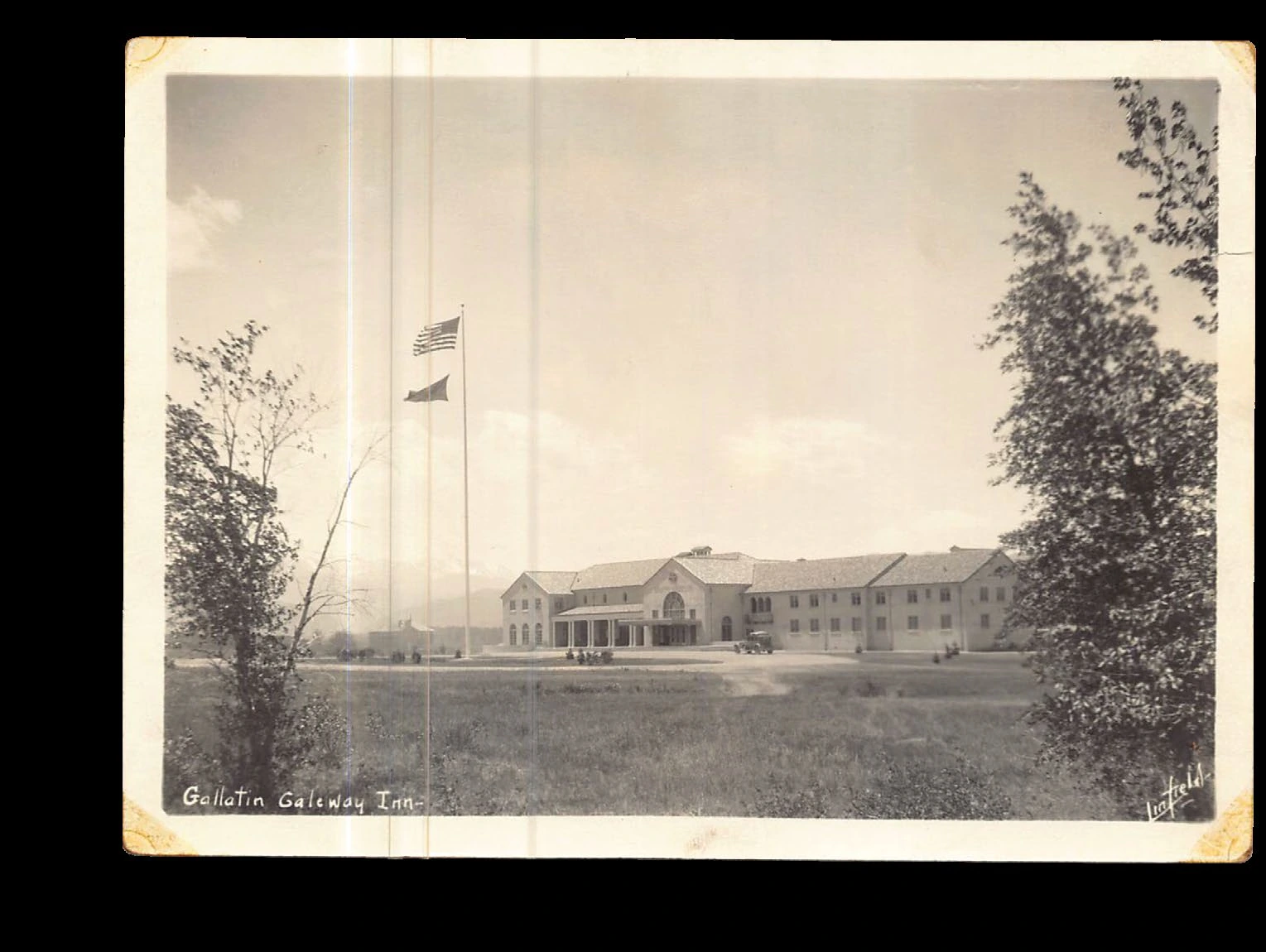
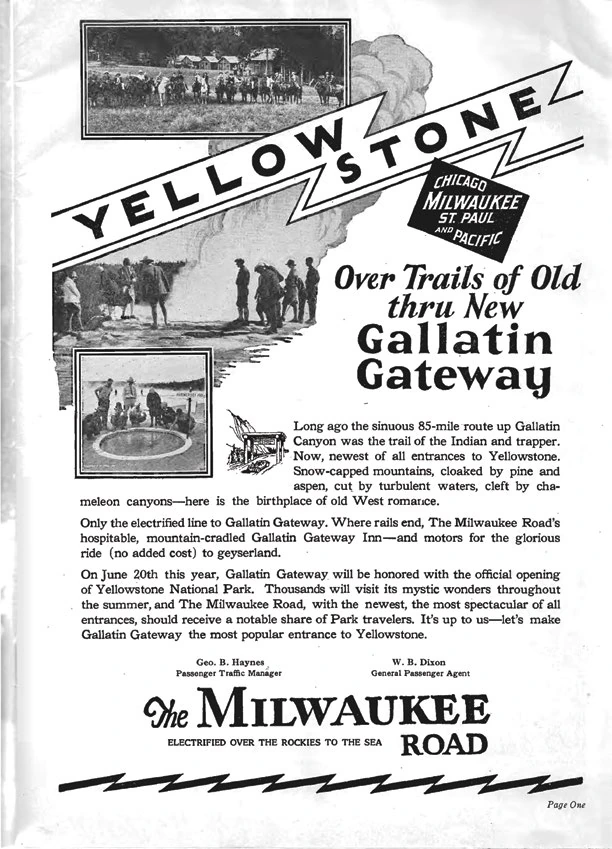
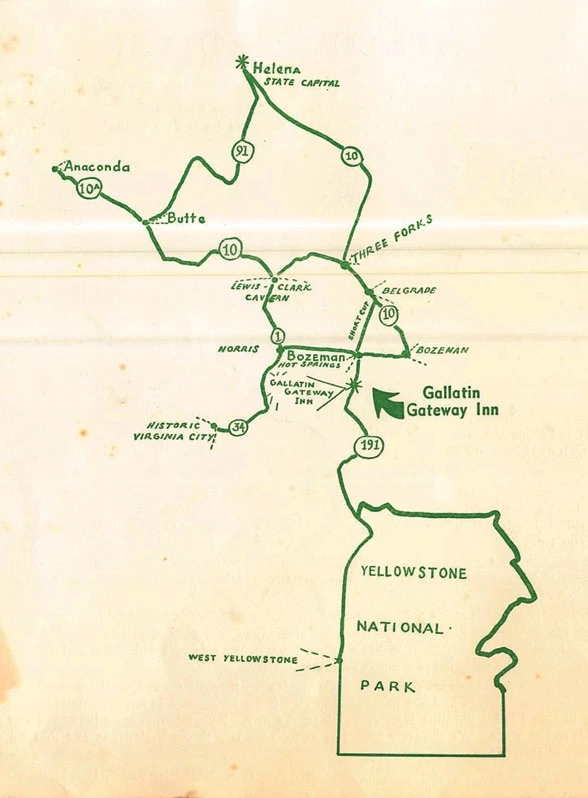
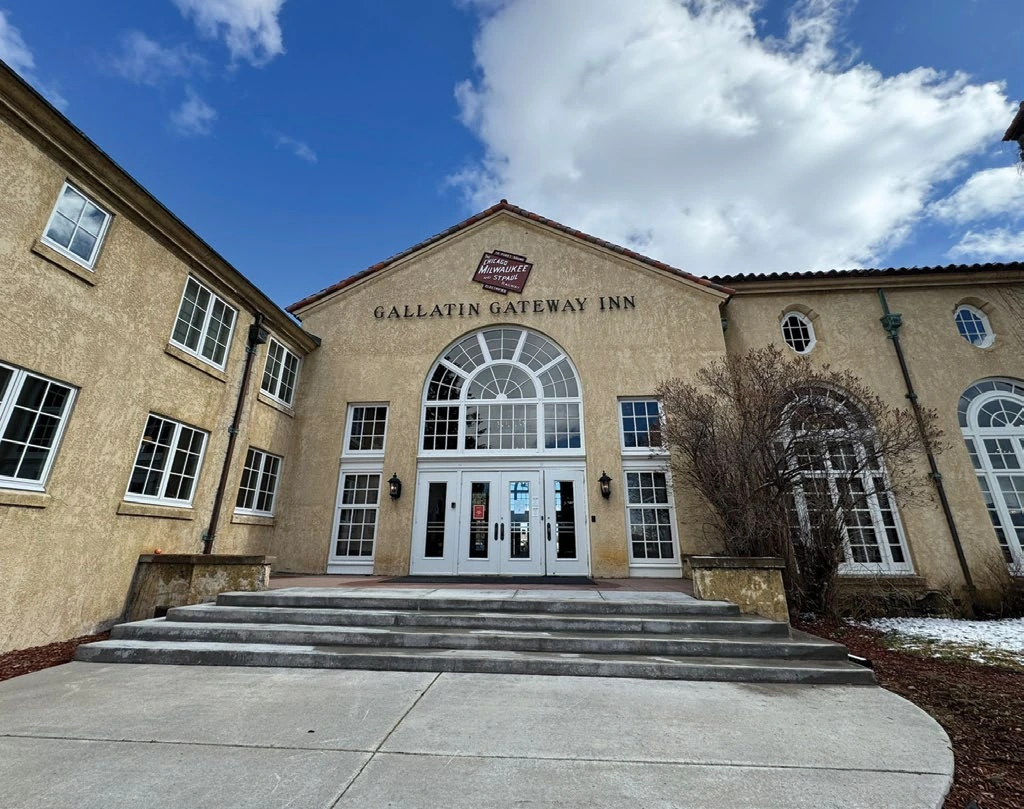
The Gallatin Gateway Inn is a historic railroad hotel situated on U.S. Highway 191, just north of the town of Gallatin Gateway, Montana. On February 18, 1927, the Milwaukee Road railway company broke ground for one of the most sophisticated hotels of its time, on what it hoped would become the main rail transportation to Yellowstone National Park. Automobiles were not yet a common mode of transportation, and tourism to the park was growing. The Milwaukee sought to compete with Union Pacific Railroad’s facilities at West Yellowstone and Northern Pacific Railway’s in Gardiner.

The Milwaukee’s Pacific Extension ran east-west across Montana from 1908 until 1980, when it was finally abandoned. But things were bustling in 1927, and the electrified railroad’s main route had spur lines to Bozeman and Gateway. The Spanish Colonial-style inn was built as a respite for Yellowstone-bound travelers before they boarded buses to the park. Construction took just four months to the tune of $500,000. The resulting 24,000-square-foot structure featured 28 original guest rooms, a sprawling lobby, a dining room featuring custom “Galatea” china, and telephones in every guest room—a cutting-edge luxury for its time. The grand opening was held June 17, 1927, and drew more than 20,000 people.

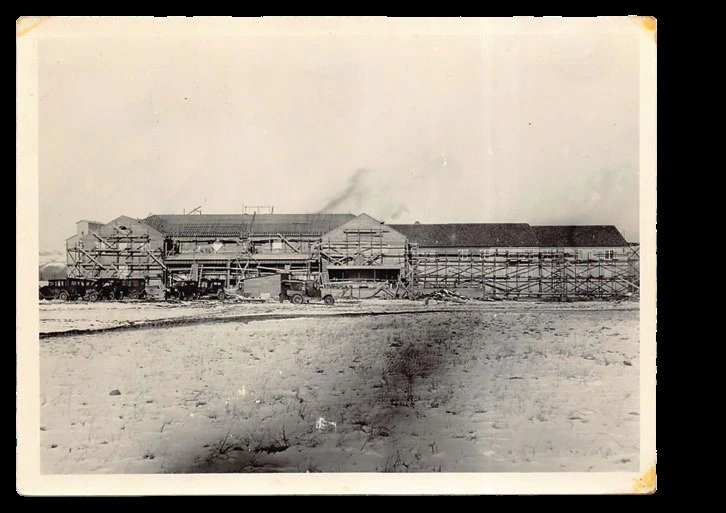
The inn’s construction put the surrounding community on the map. Once known as “Slabville” for its cabins built from cast-off lumber mill pieces, the town was named Salesville in 1883 for Zachariah Sales, an early pioneer who had established a sawmill there. In 1927, Salesville was officially renamed Gallatin Gateway, to promote the region. Further publicity efforts included nationwide press releases, short features in the Milwaukee Magazine cheekily dubbed “Gallagrams”—in which hotel guests were nicknamed “Gallagaters”—and even a film called “Honeymoon at Gallatin Gateway Inn.”
A Century at the Gateway
- 1927 — June 17, Grand Opening of the Gallatin Gateway Inn.
- 1951 — Milwaukee Railroad sells the inn to Butte businessman Paul Holenstein.
- 1969 — The Inn sells to Minnesota couple who converts it into an antique museum.
- 1985 — A young carpenter and his mother restore the hotel and in 1986 it wins the Montana Historic Preservation award.
- 2014 — Following a foreclosure in February, the Inn is purchased and renovated by M&M Hospitality.
- 2015–current — the building is leased to the Yellowstone Club to provide housing for Yellowstone Club, Spanish Peaks Mountain Club and Moonlight Basin employees.
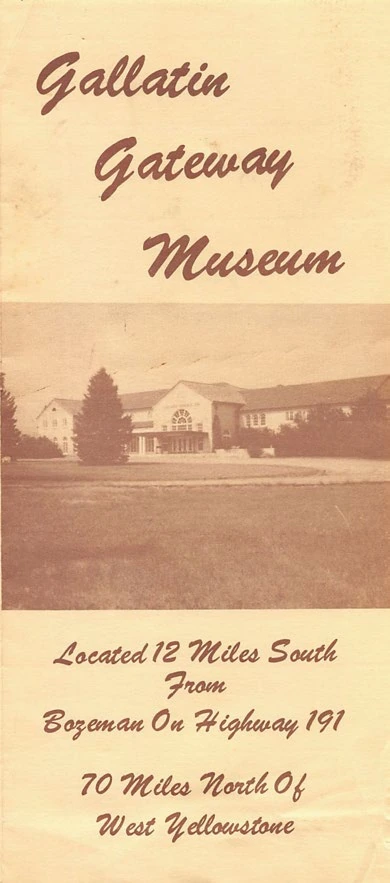
The Milwaukee operated the hotel until 1951, when it sold due to declining business. Rail travel was falling fast, overtaken by the growing popularity of the automobile, and the inn was purchased by Butte businessman Paul Holenstein. He was the first in a long line of private owners who struggled to turn a profit, and most were more concerned with revenue than preservation. In 1969, a Minnesota couple converted the inn into an antique museum and removed one of the cathedral windows with a chainsaw to drive cars inside. The late 1970s subjected the inn to an owner who used it for raucous concerts, spraying thick foam insulation on the walls and ceilings to improve acoustics. Women’s mud-wrestling matches involving Jell-O and chocolate pudding were a regular occurrence.
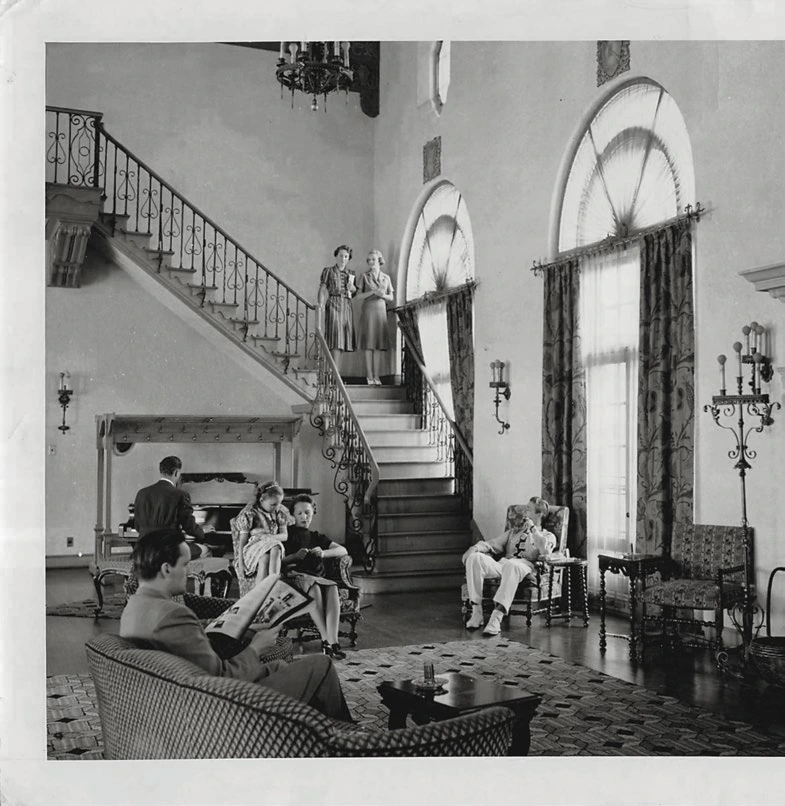
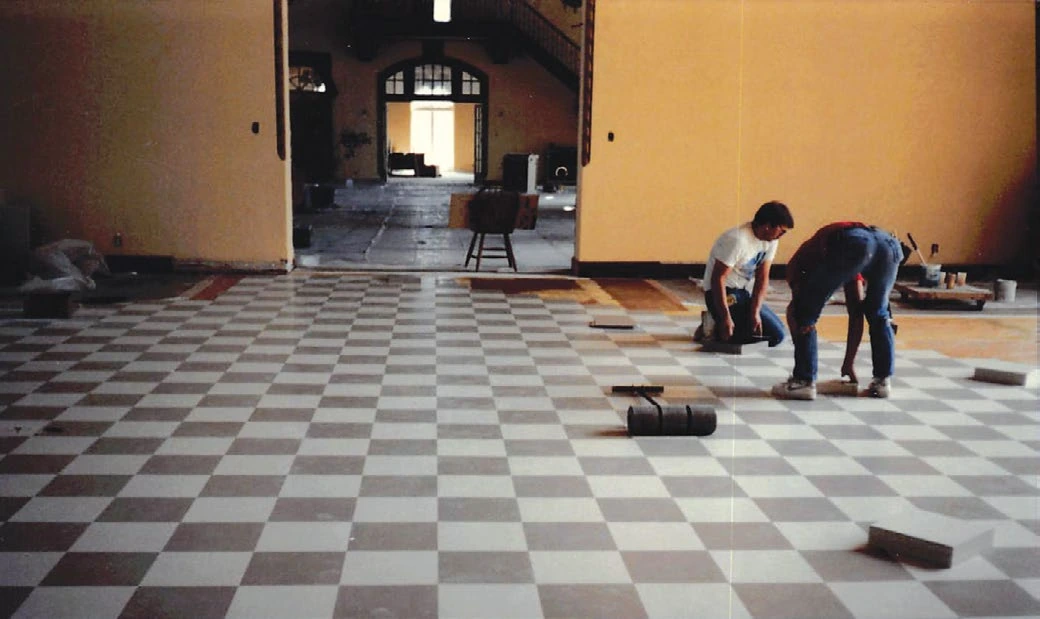
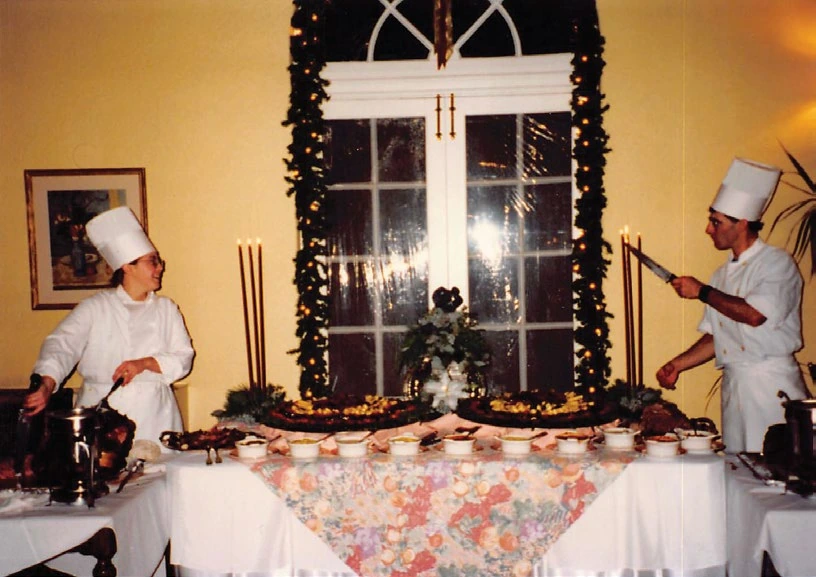
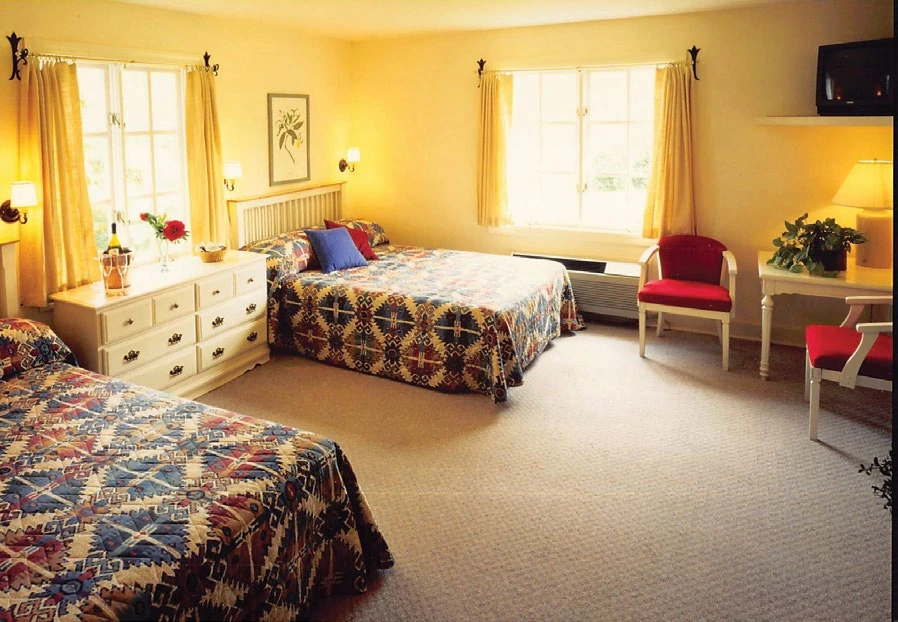
There was a silver lining to these indignities. A young carpenter moonlighting as a bartender during the shenanigans took note of the structure’s grandeur and hatched a plan. In 1985, he and his mother purchased the inn and began the daunting task of restoring the hotel. The beams alone required a tremendous amount of work. Foam was scraped away and years of grease and cigarette smoke were scrubbed off before the delicate rose stenciling could be repainted. Original furniture found in a dump behind the hotel was refinished and reupholstered. A new heating system was installed, as well as an outdoor swimming pool and hot tub. The inn reopened to great enthusiasm and earned the Montana Historic Preservation award in 1986.
The Gallatin Gateway Inn saw a few more owners over the next couple of decades. Then one day in 2013, the hotel staff arrived at work to discover padlocked doors and signs informing them the inn was closed until further notice.” Guests with reservations were not notified, and scheduled events were forced to find new venues. Local newspapers later reported that the owners, a couple from Las Vegas who had purchased the inn for $2.5 million in 2008, had filed a deed in lieu of foreclosure. Rocky Mountain Bank was the inn’s new owner.
In March of 2014, a Minnesota-based real estate group bought the hotel, and the Yellowstone Club in Big Sky began leasing the building for employee housing. Lone Mountain Land Company purchased the inn from the Minnesota group in 2015 and continues to lease it to the Yellowstone Club today. I’m happy to report that this paragon of style and history is in good hands: The checkered floor, windows, and mahogany beams still gleam. The original railroad clock in the lobby ticks on, marking current time. The old ticket booth and shoe-shine station remain intact, looking ready for use at any moment. The dramatic ballroom with its immense fireplace retains its historic flair and class. Schack’s Depot, named for James Schack, one of the inn’s architects, is the new employee café occupying the old dining room.


As the Gallatin Gateway Inn approaches its 100th year, its story is worth telling in full. That it remains upright and fully restored to its original splendor is a testament to its construction and the people who refused to let it disappear. This landmark has survived countless owners, incarnations and renovations. It was added to the National Register of Historic Places in 1980 and is listed as a Historic Hotel of America. It’s a monument to travel, technology, hospitality, the economy, and southwestern Montana. Cheers to its next 100 years!
Katie Thomas is the dining contributor for Bozeman Magazine and writes for many local publications about food, people, local history, and the outdoors. Her first fiction, the story Terraces, has been published in the mystery anthology Deadly Yellowstone.