By Fischer Genau
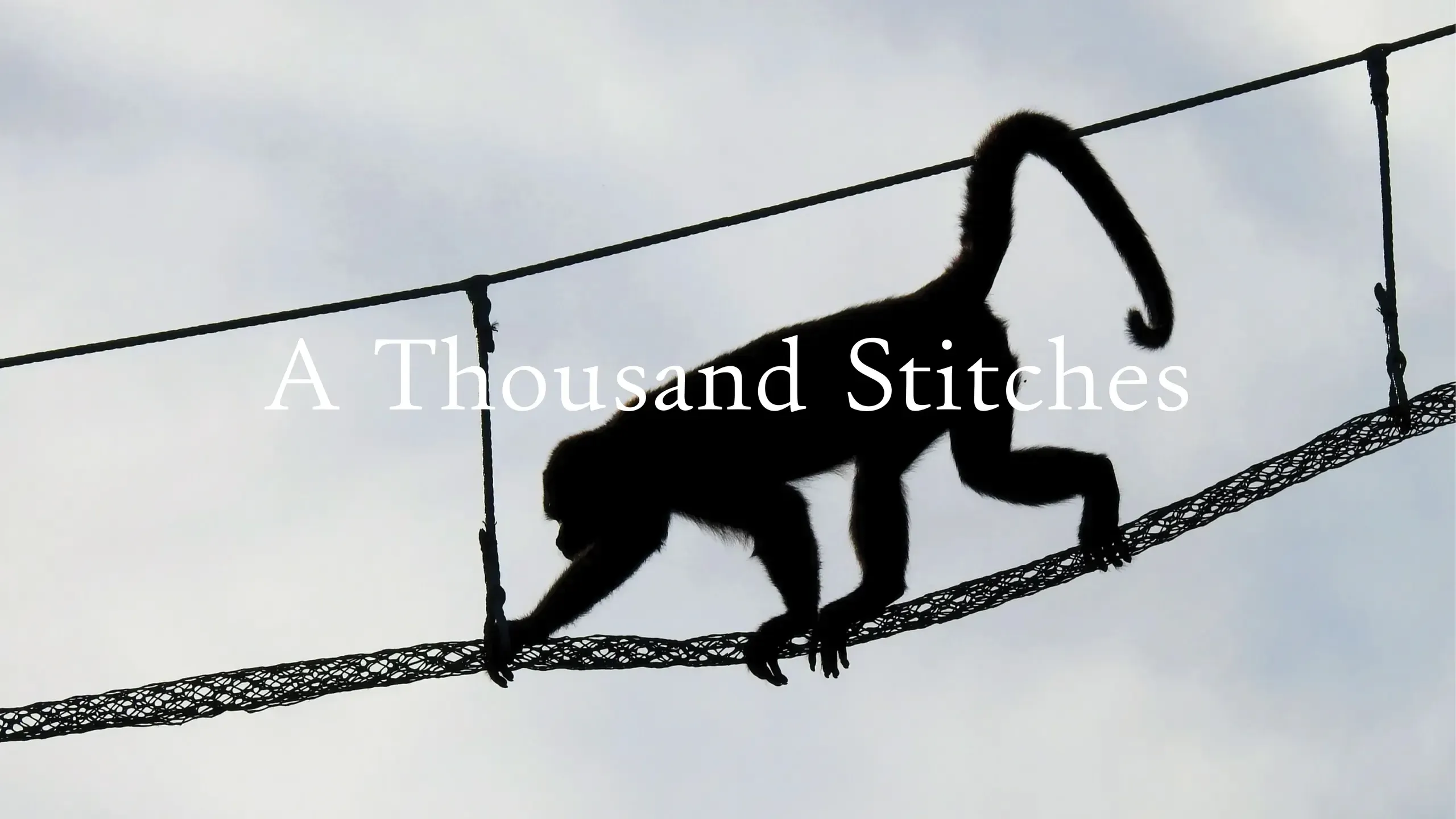
In Costa Rica, it’s not uncommon to see a long strand of mesh suspended high above a road, stretching from one side to the other and vanishing into the rainforest. These contraptions can look like a ship’s gangway, but they’re not designed for sailors. They’re made for monkeys.
These aerial structures are canopy bridges, and there are hundreds of them scattered across a country half the size of Kentucky. They’re built to provide monkeys and other tree-dwellers safe passage over roads while cars whiz past below, and they can be made from a variety of materials—ropes, wire mesh, and even electric cables. These treetop tightropes can be as heavy-duty as metal cables and chain-link mesh fixed to concrete or as simple as a single rope stretched between two trees, and they’re most often used by mantled howler monkeys. But capuchin monkeys, squirrels, kinkajous and opossums have also been spotted on canopy bridges, and many of these structures have center cables that allow two- and three-toed sloths to shimmy across them too.

For road ecologist Fernanda Teixeira, canopy bridges are a personal favorite. “That’s where I started in road ecology, so I’m super biased towards canopy bridges,” Teixeira said. She knew she wanted to work with animals, but not in captivity. After taking a field course in animal behavior in Argentina, she ruled that out too. “It’s boring to stay eight hours underneath a monkey saying what it does every two minutes.” Eventually she found road ecology and never looked back. During her undergrad studies, Teixeira helped install canopy bridges in Brazil, where she grew fond of them for their practicality and low cost. Some kinds of canopy bridges can be constructed quickly, by almost anyone, and for relatively little money (a simple rope bridge costs a few hundred dollars and can be strung up in an afternoon), making them an efficient and accessible way to save animal lives. And saving animal lives is Teixeira’s main concern.
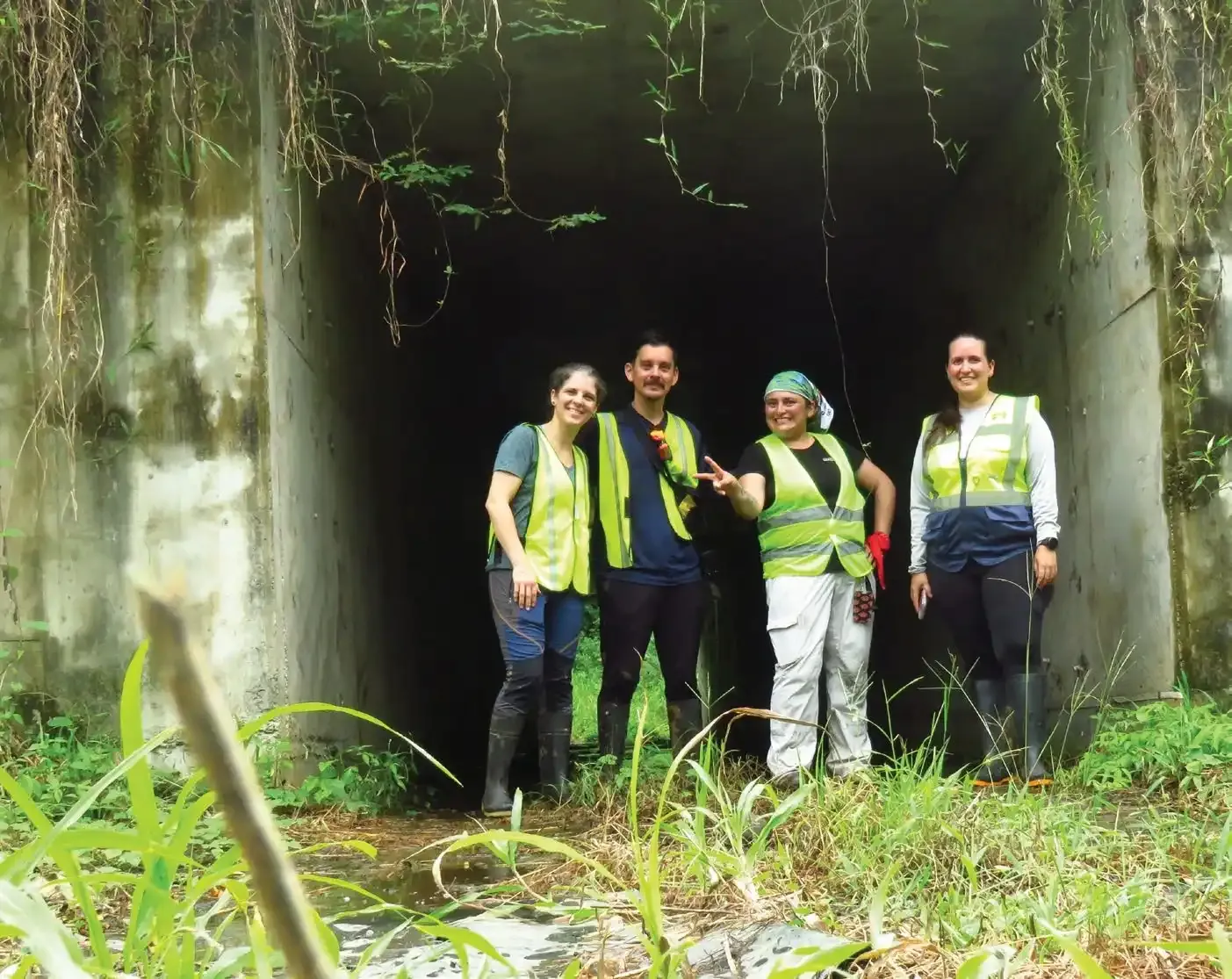
Teixeira works for the Center for Large Landscape Conservation (CLLC) as its linear infrastructure ecology advisor. She’s currently in the middle of an 18-month study commissioned by Costa Rica’s Ministry of Public Works and Transportation and funded by the Development Bank of Latin America and the Caribbean (CAF) to create a set of comprehensive guidelines for wildlife collision mitigation measures in the country. In the past 10 months, Teixeira and her colleagues have traveled across the peninsula, surveying canopy bridges and other structures, including dedicated underpasses, adapted culverts and fences. They’re also taking inventory of the country’s wildlife mitigation measures and identifying maintenance needs and areas for improvement. The final government document they’re preparing will include an overview of road impacts on wildlife, the environmental requirements for the construction or modification of roads, and a set of design standards for different types of mitigation, such as canopy bridges. After the document is complete and approved by the Ministry of Public Works and Transportation, every new road and road expansion in Costa Rica will have to follow its guidelines and build with wildlife in mind.

“There aren’t many countries that are acting in such a comprehensive manner,” said Deb Kmon Davidson, chief strategy officer for CLLC. “Costa Rica is definitely a leader on this internationally.”
Davidson joined CLLC in 2015, and in the past decade, the Bozeman-based nonprofit has worked on projects all over the world, from advising on Asian elephant crossings in Sri Lanka to developing infrastructure guidelines for snow leopards in Asia, as well as on wildlife connectivity in its own backyard. But no matter where they are, their goal is always the same: Find large-scale solutions to the habitat fragmentation caused by roads, railways, fences, and other human-made obstacles to animal movement. Wildlife must travel to find food, water, and mates, and roads isolate and weaken populations, disrupt their natural cycles, and kill millions of them each year. CLLC founder Gary Tabor calls this fragmentation “death by a thousand cuts,” and the nonprofit is trying to stitch the landscape back together.
CLLC founder Gary Tabor calls this fragmentation “death by a thousand cuts,” and the nonprofit is trying to stitch the landscape back together.

In Montana, CLLC is pushing for wildlife crossings and other mitigation measures on busy roads like U.S. Highway 191 north of Big Sky and Highway 89 into Yellowstone. Both areas are hotspots for wildlife-vehicle collisions, and deer and elk are two of the most common casualties. The situation in Costa Rica is different. While in Montana, much of the support for wildlife crossings comes out of concern for drivers’ safety—a collision with an elk can total a car and send its occupants to the hospital—most of Costa Rica’s wildlife is smaller and poses less risk to people on the road, so the push to build wildlife crossings comes mainly from a desire to preserve the country’s biodiversity. Costa Rica has more than 500,000 distinct species representing about 6.5 percent of the world’s total biodiversity. And every one of those animals must navigate the country’s rapidly expanding road network.
From 2007 to 2016, the number of vehicles on roads in Costa Rica jumped by 80 percent according to a study by Programa Estado de la Nacion. As wildlife casualties piled up, support for crossing structures grew, and in 2010, the country built its first official wildlife crossings in the Hacienda Baru National Wildlife Refuge. The government had announced plans to upgrade Route 34, a two-lane gravel road passing through the refuge, and the refuge manager requested that it include wildlife underpasses to protect animals from increased traffic. In response, the government built 33 crossing structures—29 underpasses and four canopy bridges—laying the foundation for wildlife connectivity in the country.

For a male ocelot (a jungle cat that looks like a tiny jaguar with oversized ears) patrolling an area of 15 square miles, a new road cutting through its territory hinders its ability to hunt and reach breeding females in neighboring territories. According to Panthera and Las Pumas Rescue Center, about 50 ocelots are killed by cars each year in Costa Rica, and a handful end up in wild cat rescue centers like Las Pumas with injuries such as brain swelling, missing eyes and bone fractures. Roads have a similar effect on many other species, and the diversity of Costa Rica’s wildlife calls for an equally diverse array of solutions.
“When you go to Costa Rica, there’s such a huge diversity, and of course there are tapirs and jaguars, but there are like, less than five big species,” Teixeira said. “Most of the biodiversity are small … How do you solve the problem for those species?” In Costa Rica, wildlife crossings must be designed for a panoply of wildlife, including capuchin monkeys (as seen in “Indiana Jones” and “The Night at the Museum”), coatis (sort of a mix between an opossum and a raccoon with a long snout and tail), northern tamandua (picture a cross between a sloth and an anteater), hairy porcupines (nature’s answer to the chihuahua), and a colorful assortment of birds, amphibians and other creatures.

The most common kind of wildlife crossing in Costa Rica after the canopy bridge is the underpass, most often used by smaller mammals like ocelots. These typically take the form of a square tunnel or circular culvert. Culverts usually measure six feet in diameter and are used mainly by small and medium mammals, and reptiles. They do double duty, as they also channel water to prevent erosion and flooding. Square tunnels are generally larger, and can accommodate bigger animals. Game cameras in the underpasses built in Hacienda Baru captured 21 distinct species, including ocelots, armadillos, coatis, and collared peccaries. A study published in the journal Diversity in 2022 found that roadkill deaths in that area dropped by 74 percent after the installation of underpasses and canopy bridges.
The national government has built 43 underpasses in the country, with more under construction, along with 41 canopy bridges, six bridges, 20 culverts adapted with dry ledges for wildlife, and a smattering of tunnels and viaducts. During its study, Teixeira’s team visited every single one. Research has consistently shown that underpasses are effective in reducing roadkill, but it’s mainly mammals that use them. In Costa Rica, the majority of species killed by cars are reptiles or amphibians. For a previous project in Costa Rica, Teixeira surveyed a 20-kilometer stretch of road for its impact on wildlife, and on her first day, she logged one dead bird. A few days later, it rained, and the road turned into a slick of slithering, hopping, and crawling life. “We couldn’t drive because there were hundreds of amphibians every hundred meters,” Teixeira said. “We would stop every meter, and we would get out of the car and there were like 20 or 30 amphibians killed.”
When it rains in Costa Rica, thousands of frogs, toads and salamanders emerge from under leaf litter, logs, and burrows to feed or mate, and when they reach a busy road, it’s a bloodbath. Amphibian deaths go relatively unaddressed, but there are ways to prevent them. Fences made from black recyclable plastic can be dug into the ground along highways to keep amphibians away from cars, and these fences have been shown to reduce mortality for ground-dwelling frogs by almost 90 percent. Teixeira hopes that measures like these will eventually be explored in Costa Rica too—but they have begun building in safety measures for bats and birds. These species often fly directly into the path of oncoming cars, and the government has installed flight diverters on highway bridges to discourage birds and bats from flying near the road. Flight diverters consist of hundreds of vertical poles lined up next to each other, about four inches apart, and they force fliers to soar up and over the road rather than into it.

Yet another species with its own particular kind of crossing is the land crab, also known as the Halloween crab for its bright orange coloring. They used to migrate by the thousands in Costa Rica’s Nicoya Peninsula, scuttling from their inland burrows to the coastline to lay their eggs at the beginning of the rainy season, but their population has been hurt by traffic on busy roads. Teixeira and CLLC want to propose a crab overpass similar to one built in Christmas Island, Australia, to help the crabs migrate safely. The Christmas Island crabs scale a near-vertical 18-foot wall, then march over a busy highway on a 5-foot-wide bridge to reach their breeding grounds, and Teixeira believes a similar design could be used on existing coastal roads in the country.

The solutions for wildlife connectivity in Costa Rica are as varied as the species that need them. “Sometimes I feel humbled because everything is so context specific,” Teixeira said. “It doesn’t matter how much knowledge I accumulate, every time I look to a project, I’m like, ‘This is different.'” Each species and location requires a tailored approach, but Teixeira also said the field of road ecology has developed a solid base of knowledge that practitioners can now refine and adapt as needed.
For Teixeira and CLLC, one lesson is clear: Factoring wildlife into the planning process early, before roads are built and land is developed, is one of the best ways to protect animals. And that’s one thing that the guidelines she’s working on aim to do.
Teixeira and her colleagues will submit their proposed guidelines at the end of April, and a three-month period of review and discussion will follow. Official approval is expected in July, after which Teixeira will spend three months sharing the new guidelines, talking with government staff, engineers, maintenance crews, and contractors about what the document means for all of them. She said she was struck by how participatory the entire process has been and how genuinely bought-in everyone seems to the importance of wildlife connectivity. “Of course some people might say, ‘This is too expensive,'” Teixeira said, referring to interviews she conducted with stakeholders at the start of the project. “But they don’t think it’s something that’s nonsense. And everywhere else I’ve worked, there’s some people who do.”
Costa Rica’s progress towards wildlife connectivity has been hard won. “It has been quite a challenge and a difficult journey; even to this day it remains a struggle,” said Andrea Avila Alfaro, who works in Costa Rica’s Ministry of Public Transportation in their environmental and social management program. She said it’s hard to secure the money and resources to build wildlife crossings, maintain them, and monitor their effects long-term; and successfully building infrastructure will require continued commitment. But, as CLLC’s Davidson will attest, Costa Rica has come a long way.
“I think in Montana, we value our wildlife, and our government does too, but taking it that one step further—that’s pretty amazing commitment,” Davidson said. She believes the U.S. could learn from Costa Rica’s approach. “Here’s a country who’s made a commitment to ensure that all new roads and upgrades, expansions, and paving incorporate wildlife needs,” Davidson said. “That’s huge. That would be an amazing goal for us to get to in the United States, and I think we have some examples of us stepping towards that … but they value their wildlife to such a degree that they have committed to this.”
Montana is making strides. In 2025, the state launched its Wildlife and Transportation Partnership, a program designed to reduce wildlife-vehicle conflict and enhance wildlife connectivity across the state. Two CLLC staffers sit on the committee, working alongside Montana Fish, Wildlife and Parks and the Montana Department of Transportation to identify locations for wildlife crossings and other preventative measures. Elsewhere in the country, New York and Maryland are launching similar initiatives, and Colorado has constructed more than 100 wildlife crossings, including the I-25 Greenland Wildlife Overpass, the largest in the country at 200 feet wide and 209 feet long. Still, the United States has a long way to go. Its 4.1 million miles of public roads, the most in any country, contribute to an estimated 365 million animal deaths per year. That’s about a million a day.
Davidson acknowledged that the United States and Costa Rica are structurally different. Montana alone is seven-and-a-half times larger than the Central American country, and there’s far more ground to cover. It’s also easier in a small country to get the ear of politicians and decision makers and turn research and ideas into action. But Davidson is hopeful. “I like the work we’re doing, because we’re trying to find practical and replicable solutions to this gnarly problem,” she said. “And there are solutions!” Her first eight years after college were spent in environmental advocacy, which she described as “constant fighting” and always defensive. The work she’s doing now feels different. “We know development is going to happen and roads are going to become busier. How can we make sure that happens in the right way and takes wildlife needs into account?” she said.
In the past 25 years, Costa Rica’s population has grown by 30 percent, and the country has one of the highest road densities in the world. But throughout that tumultuous change, and perhaps because of it, the country has made wildlife connectivity a priority as they build new roads and infrastructure. Teixeira argues that everyone needs to develop a broader perspective: When we build things, we should think about their impact on animals too. Traveling the country to visit its wildlife crossings, Teixeira caught a glimpse of what that could look like—families of howler monkeys dancing above traffic, ocelots slinking beneath highways and birds soaring safely over busy roads. Hundreds of new roads have cut through the habitat of Costa Rica’s wildlife, but with each new canopy bridge, culvert, and underpass, the landscape becomes a little more whole, knitted together by thousands of tiny stitches.
Hundreds of new roads have cut through the habitat of Costa Rica’s wildlife, but with each new canopy bridge, culvert, and underpass, the landscape becomes a little more whole, knitted together by thousands of tiny stitches.
Fischer Genau is a writer, photographer and filmmaker based in Bozeman, Montana. He writes stories and shoots videos for Explore Big Sky as their digital media lead, and his writing has also appeared in Explore Yellowstone, Outside Bozeman, and The Boardman Review.