Sponsored Content
By Taylor Owens
In downtown Bozeman, Alara Jewelry offers something that feels increasingly rare: a jewelry experience that’s as personal as the pieces themselves.
There’s no sharp divide between customer and counter, no pressure to perform a purchase. Instead, the space invites exploration—side by side, conversation-driven and grounded in curiosity. It’s a deliberate shift away from tradition, shaped by founder Babs Noelle’s early impression of the industry as “thoroughly entrenched in stuffiness.”

Her response wasn’t to tweak the model but instead it was to rethink it entirely.
“I was trying to turn what had become a very negative experience … into an experience that’s a lot more lighthearted and personal in spirit, but imbued with all the technical know-how,” she says.
That philosophy defines Alara today. The gallery feels open, even collaborative, echoing the small European jewelry spaces that first inspired Noelle. “The showcases aren’t some sort of physical barrier between the host and the guest,” she explains, but a place where people can discover pieces “side by side and together.”
It’s a subtle shift, but one that changes everything.
While Alara’s approach may feel unconventional, its sense of place is unmistakable. After relocating from Denver more than two decades ago, Noelle found a home, and a community, in Bozeman.
“The moment I came downtown … it’s just an absolute precious little jewel,” she says. “And the welcome I received was very wholehearted.”
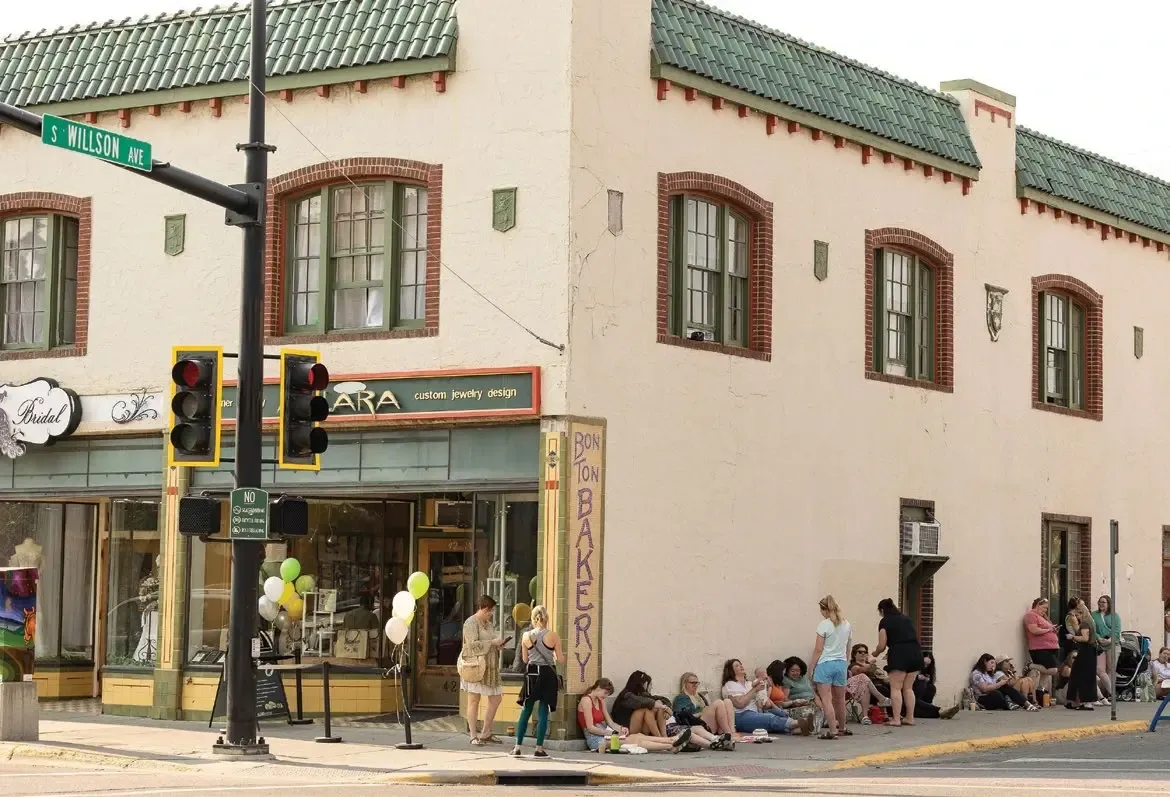
That connection to Montana isn’t just about location, it’s embedded in the jewelry itself. Few elements capture that more clearly than Montana sapphires, which have become central to Alara’s identity.
“They are a tremendous source of artistic inspiration,” Noelle says. “Their color palette is unique in the sapphire world.”
Unlike traditional sapphires, Montana stones often lean into softer, more nuanced tones—subtle blues, smoky greens, slate-like grays. “You don’t find some of these really … smokier, slate-ier, kind of calmer colors” elsewhere, she adds.
That distinction resonates with customers, especially those looking for something that feels personal rather than conventional. In recent years, Montana sapphires have become a defining feature of Alara’s custom work—particularly in engagement rings and wedding bands.
It’s a natural fit: a locally sourced stone, shaped into a piece that marks a major life moment.
Custom design sits at the heart of that process. Rather than steering customers toward a predetermined style, the team at Alara approaches each project as a collaboration and as an opportunity to create something that reflects the individual wearing it.
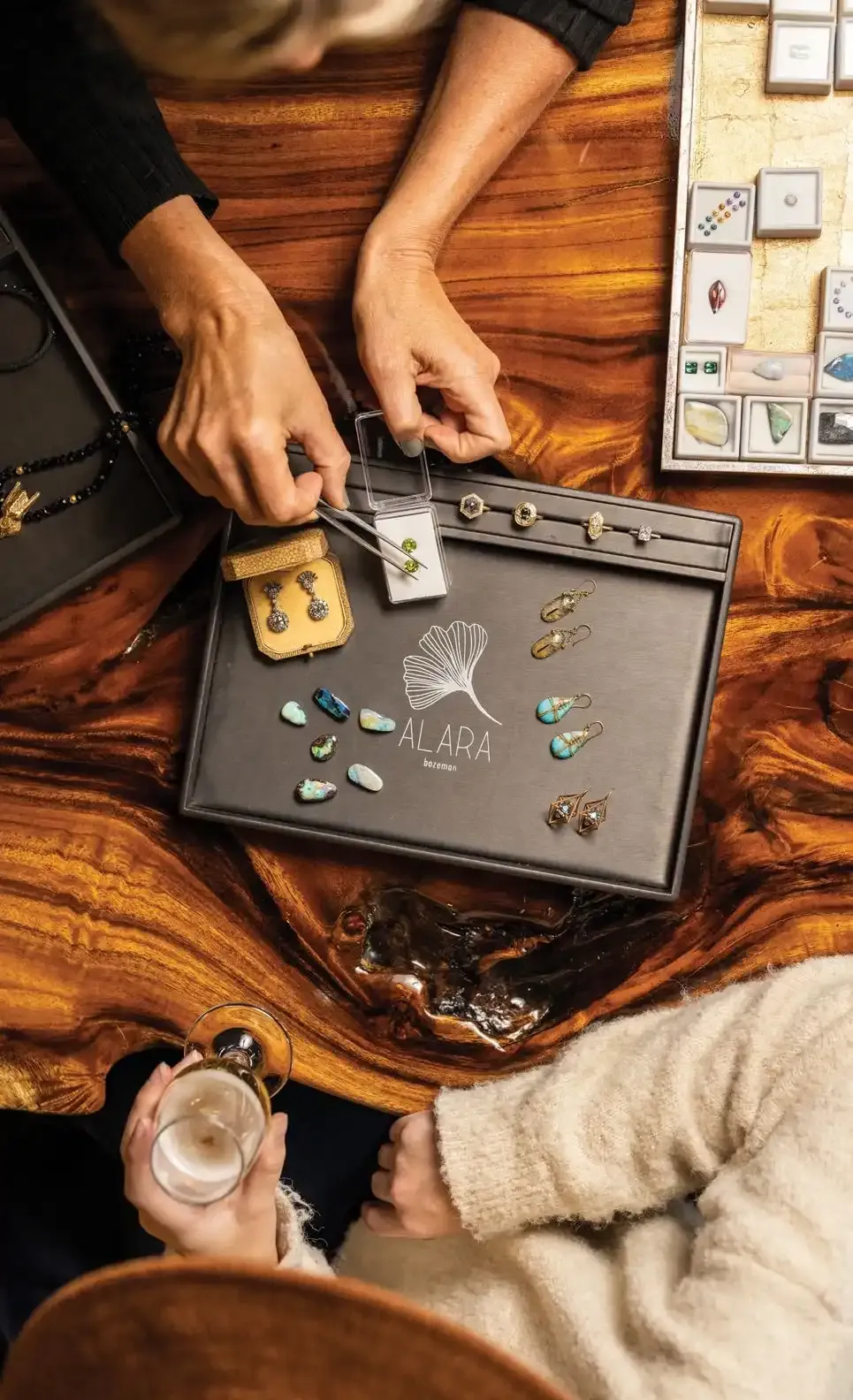
That philosophy carries through every interaction in the store, shaped in part by general operations manager and minority partner, Chantell Cazell.
“It really is more about the people,” she says. “I’m a people person at heart … and that kind of puts me right in the middle of some really meaningful moments.”
Cazell’s path to Alara began at Montana State University, where she studied earth science with a focus on geology. Her introduction to the store came in an unexpected way—working as an “Alara elf” during the Christmas Stroll. What started as a seasonal role turned into a long-term career, and eventually, a partnership.
Today, her days reflect the dynamic nature of the business. “No two days are the same. Ever,” she says. “And honestly, that’s one of my favorite things about it.”
From sourcing stones to guiding customers through custom designs, the work is varied but the through line remains the same: connection.
That connection becomes especially meaningful in the context of bridal jewelry, which makes up a significant portion of Alara’s work.
“Helping couples navigate through the engagement ring buying and wedding band process … it never gets old,” Cazell says. Over time, those interactions build into something lasting. “It’s really nice to see returning faces over the years.”
For many customers, a first visit to Alara might be about an engagement ring. Years later, they return for anniversary gifts, redesigns, or new pieces that reflect a different chapter.
That continuity of relationships and stories is part of what defines the experience.
Underpinning it all is a commitment to ethical sourcing that has been part of Alara from the beginning, long before it became an industry trend.
“When I was looking at how most jewelers manufactured … they used gold that was strip-mined, when there was plenty to be found and refined and reused,” Noelle says. “It just seemed like a little something positive I could do.”
That “something small” has grown into a broader philosophy. Alara works with recycled metals, fair trade gemstones, and upcycled diamonds, while maintaining close relationships with designers to ensure transparency across the board.
For Cazell and the team, it’s not a feature but a baseline.
“We care deeply about where everything comes from,” she says. “If you don’t know where something comes from … it’s hard to represent that in the store.”
That clarity matters, especially for customers investing in pieces meant to last a lifetime or longer.
Step into Alara, and the atmosphere reflects all of these elements at once: creative, unpretentious and quietly vibrant.
“It’s very friendly … almost kind of neighborly,” Cazell says. The space feels less like a showroom and more like a place you’re invited to spend time—browsing, asking questions or simply taking it all in.
There’s no rush, no expectation, just guidance when it’s needed.
“Our goal is to simply guide you through whatever brought you through the doors with just genuine enthusiasm.”
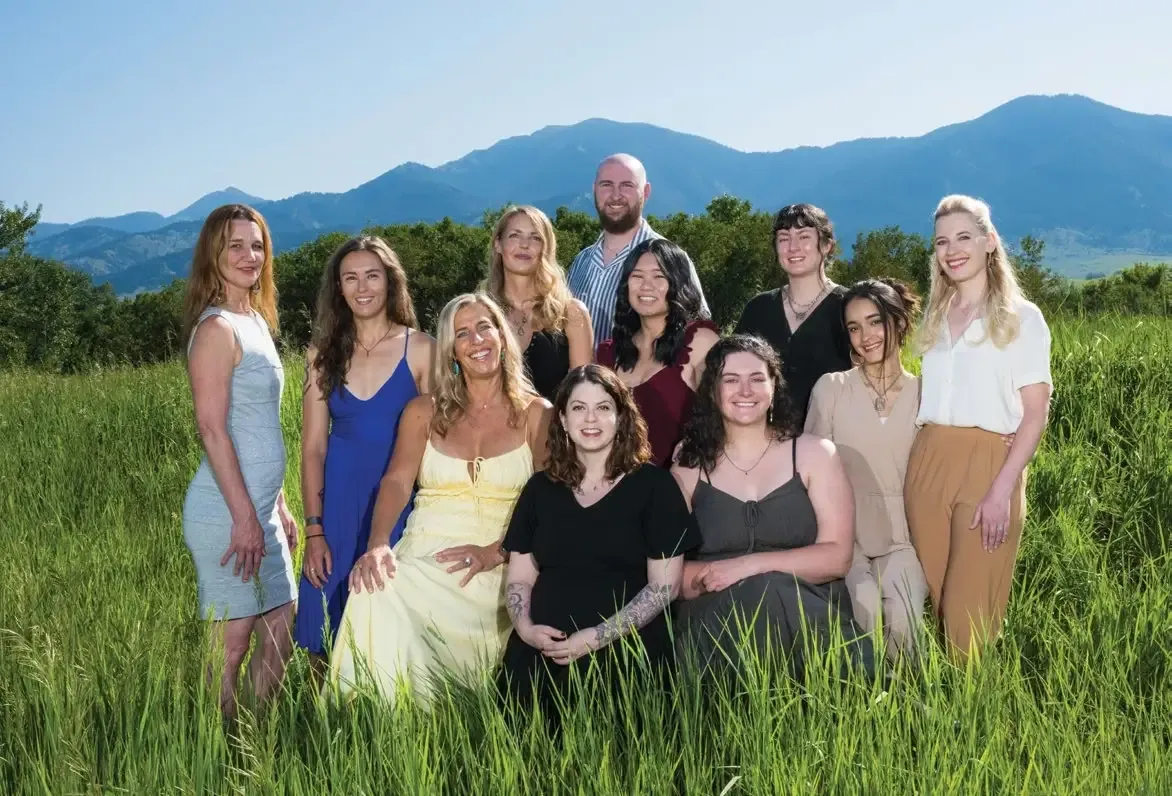
For Noelle, that sense of ease starts with the team itself.
“I encourage everyone to be who they are when they’re here,” she says. “Because then the service they’re giving is from the heart.”
It’s a simple idea, but one that shapes everything, whether it’s how customers are greeted to how pieces are designed and presented.
In a place like Bozeman, where individuality and landscape go hand in hand, that authenticity feels right at home.
And in an industry often defined by tradition, Alara stands apart not by rejecting jewelry’s significance—but by deepening it. Through local stones, thoughtful sourcing, and real human connection, it offers something more than adornment.
It offers meaning.