By Eric Ladd
Just before dusk, silence settles across golden hills north of Yellowstone — broken only by the long, distant call of wolves. Raw and unfiltered, it’s a sound that carries the spirit of the West and reminds us what is at stake.
As I watched my son under the glow of an August sunset at the Flying D Ranch, I wondered: Will he get to experience the same wild I’ve known in my lifetime?

Three generations of my family sat alongside wildlife photographer Holly Pippel and biologist Michael Phillips as we watched wolves play across an open meadow, while 6,000 bison grazed the 130,000-acre expanse Ted Turner built as one of the largest private conservation landscapes in North America.
The Flying D, stretching from Gallatin Canyon to the Madison Range, is a living laboratory for how working lands, wildlife and people can coexist. It shows what happens when land is left wild: a thriving ecosystem pulsing with life. Beyond the ranch’s ridgelines, the distant lights of Bozeman in Gallatin Valley flicker, revealing one of America’s fastest-growing counties.
If we hope to find balance between growth and wilderness, we must celebrate those working tirelessly to keep the West wild. In the following pages, we share some of their voices.
“Only the mountain has lived long enough to listen objectively to the howl of the wolf.”
— Aldo Leopold

Casey Anderson
Filmmaker, VisionHawk Films
For filmmaker and explorer Casey Anderson, keeping the West wild isn’t about nostalgia, it’s about survival of the human spirit. “The wild West still gives us that connection,” he said. “When people try to tame it, they’re stealing something essential.”
Anderson bridges science and storytelling, using film to remind audiences that awe and respect must come before protection. “If you lay out the truth and the stories,” he said. “Most people will make the right decisions.”
Through his company, VisionHawk Films and recent project Endless Venture, he explores the emotional and ecological fabric of wildness — from the dens of mountain lions to the hidden migrations of wolves. His latest projects harness AI and bioacoustics to bring audiences closer to “the ancient languages of the forest,” capturing the subtle conversations between species that most never hear.
“I haven’t seen the wildness of the West under such attack as it is today,” Anderson warned. “What’s at stake is simple: If it’s lost, it’s lost forever.”
“What’s at stake is simple: If it’s lost, it’s lost forever.”
— Casey Anderson
Kristin Gardner
Chief Executive and Science Officer, Gallatin River Task Force
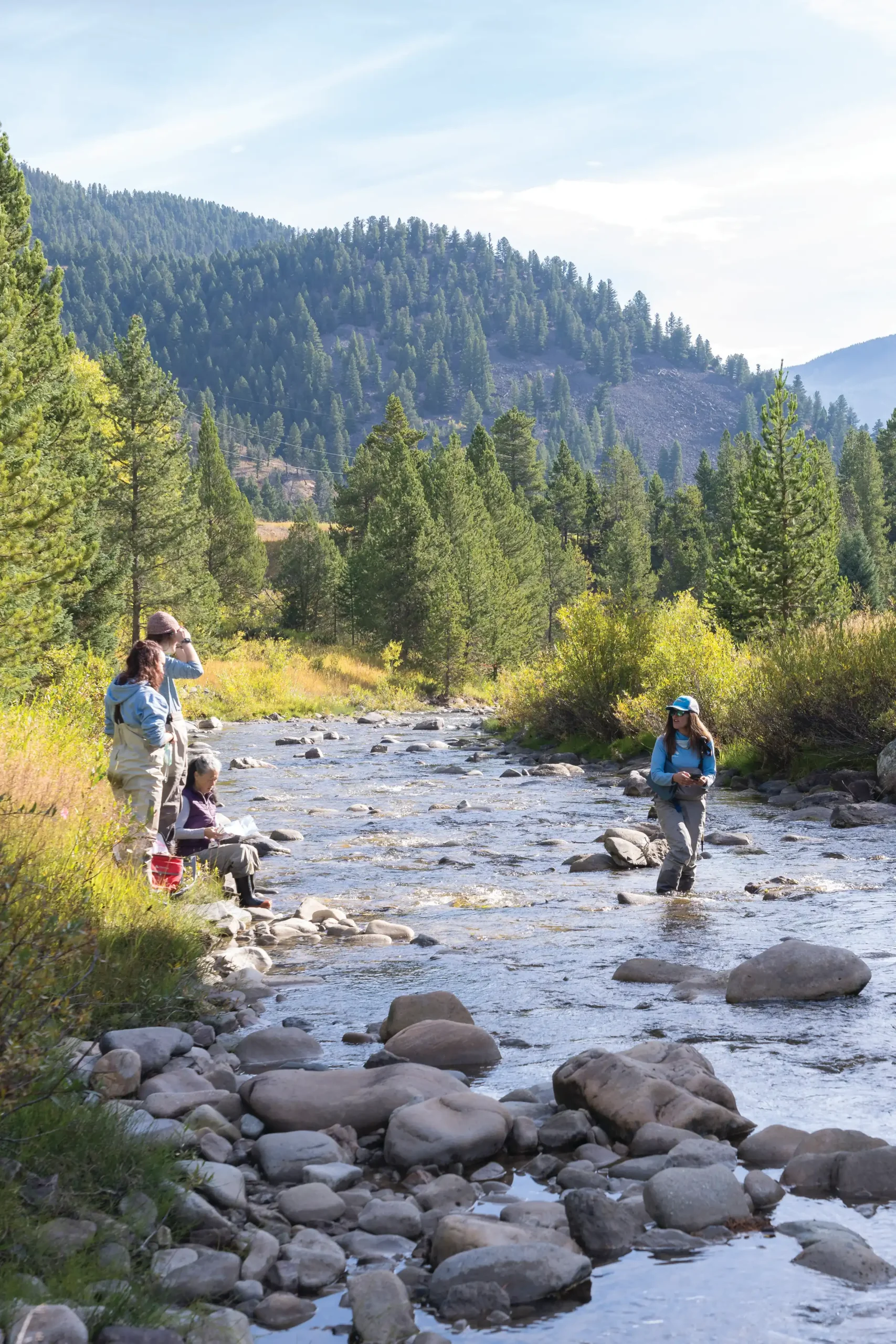
In the heart of Big Sky, the Gallatin River Task Force, led by Kristin Gardner, stands as a guardian of one of Montana’s most beloved waterways.
“The Gallatin gives life to this valley,” she said. “It’s our drinking water, our economy, our community, our soul.”
That lifeline is fragile. Hotter summers, heavier recreation and rapid development are pushing the river toward its limits, threatening trout species and the health of the river itself.
“Trout do not thrive in warm water,” she said. “How we develop land — how we treat stormwater, roads, and runoff—determines whether the Gallatin stays alive.”
GRTF’s work is to monitor, restore, conserve and advocate for this waterway, their latest effort being the GYREAT Act, introduced by Congressman Ryan Zinke, which aims to permanently protect 39 miles of the Upper Gallatin as a Wild and Scenic River.
“Growth is inevitable,” Gardner said. “But stewardship must grow with it. We have the chance to prove that progress and protection can coexist.”
“We have the chance to prove that progress and protection can coexist.”
— Kristin Gardner
Deb Kmon Davidson
Chief Strategy Officer, Center for Large Landscape Conservation
For Deb Kmon Davidson, chief strategy officer of the Center for Large Landscape Conservation, wildness is measured not in acres but in connectivity. While CLLC operates on a global scale, they are based in Bozeman, Montana, and are working on two high-impact connectivity sites in the region.
“These animals rely on corridors between Yellowstone and Glacier,” Kmon Davidson said. “Our challenge is making sure those pathways remain open.”
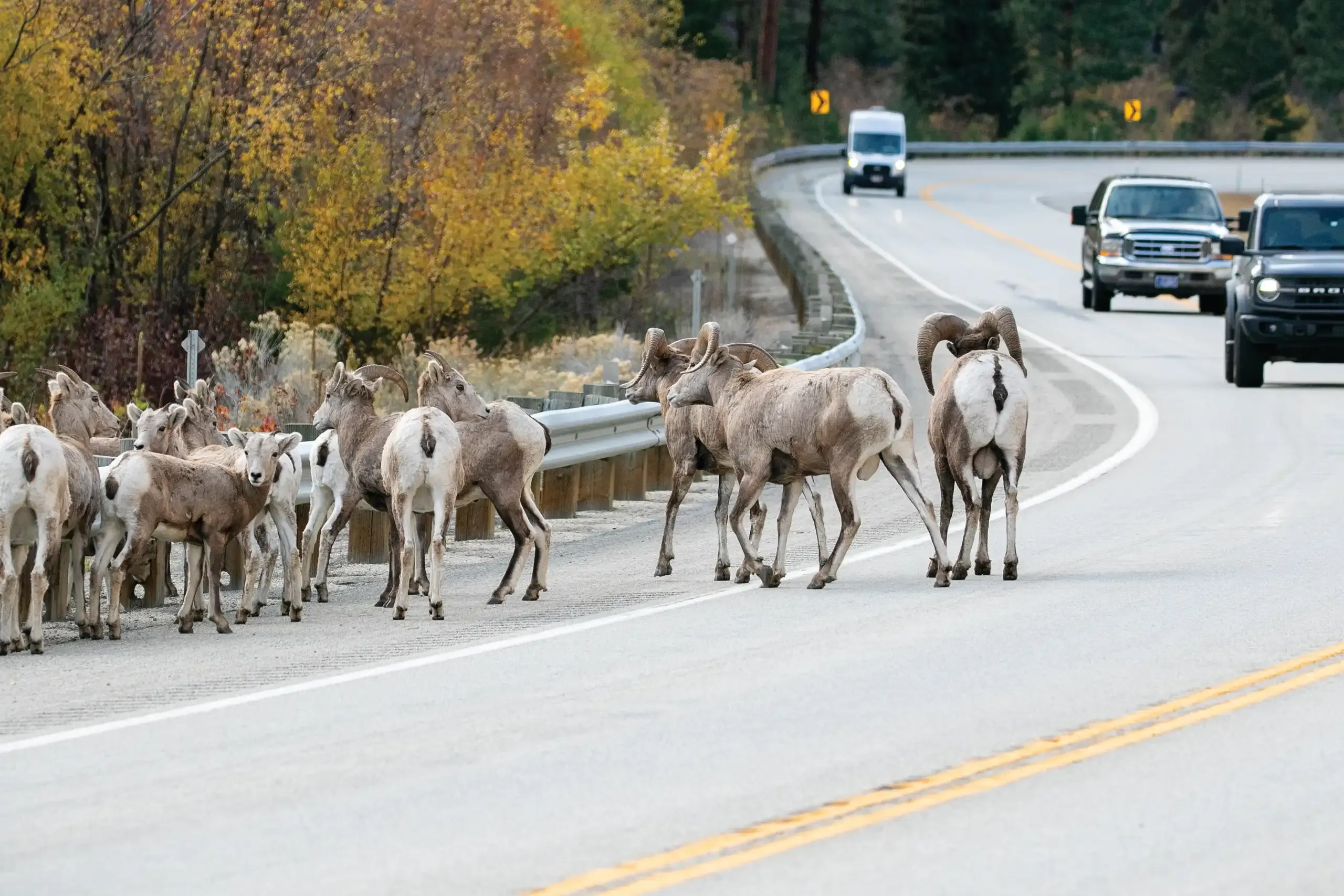
From the outside, migration looks romantic — herds under open skies. In reality, Kmon Davidson explains, it’s becoming a daily struggle.
“We’re seeing elk, deer, and even rare carnivores cut off from their seasonal ranges,” she says. “You can’t put the genie back in the bottle.”
CLLC’s work on the U.S. Highway 191 Wildlife Crossings Initiative is reshaping how Montana plans infrastructure, combining engineering with ecology to make roadways safer for humans and animals alike. This year, Montana established the nation’s first permanent wildlife-crossing fund, financed by specialty plates and cannabis taxes.
“Once it’s gone, it’s gone,” Davidson said. “But we’ve proven we can plan smarter. The future of the West depends on whether we connect what we’ve begun to divide.”
“The future of the West depends on whether we connect what we’ve begun to divide.”
— Deb Kmon Davidson
Alison Fox
CEO, American Prairie
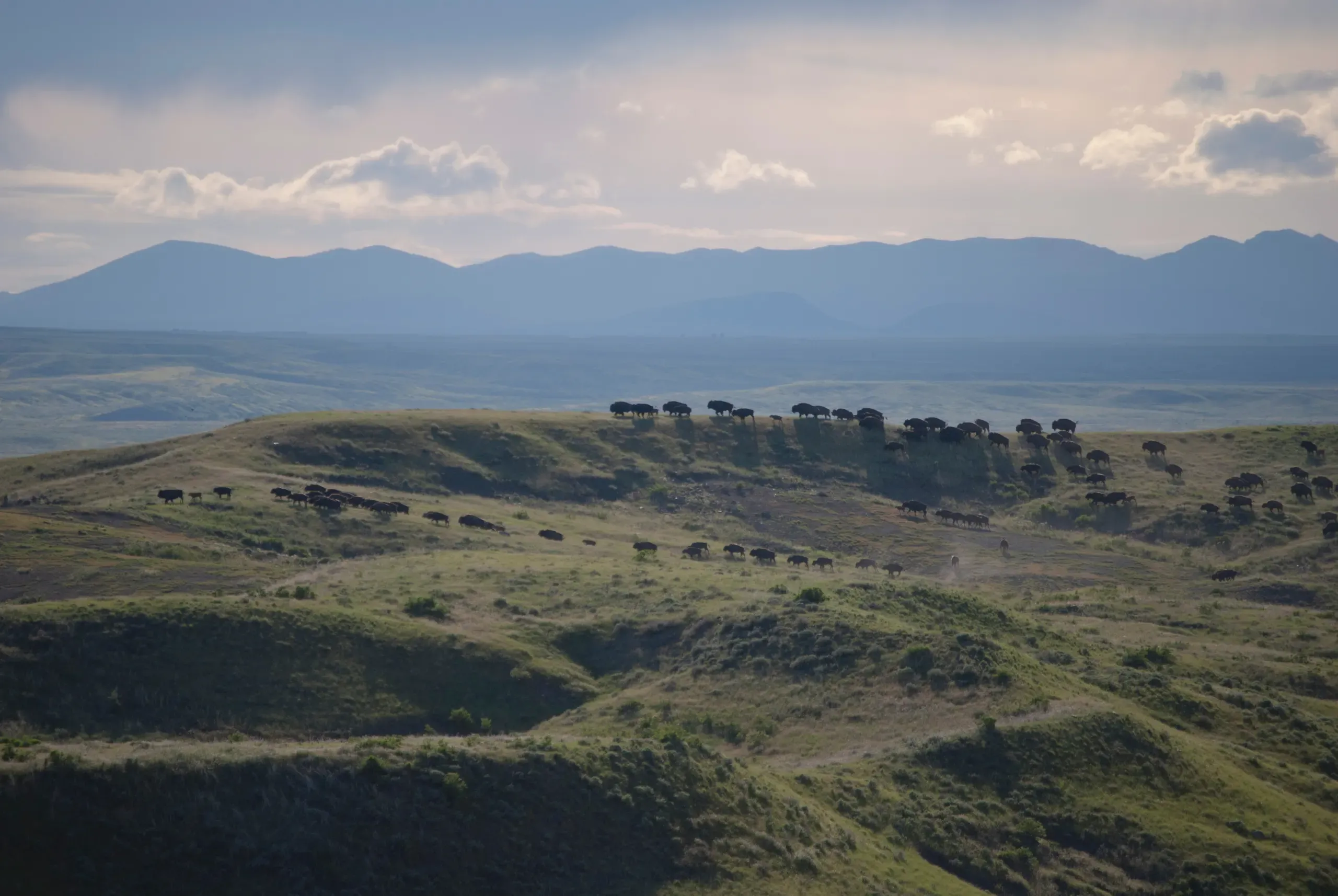
Across central Montana, Alison Fox, CEO of American Prairie, envisions a landscape reborn.
“We’re wild about the prairie,” she said. “We want future generations to feel that same awe when they step into this place.”
American Prairie is stitching together millions of acres of public and private land to restore a functioning grassland ecosystem.
“Inaction and division are our biggest threats,” she said. “The window to act is open now, but it won’t be forever.”
Recent milestones highlighting the group’s success include the Anchor Ranch acquisition, which expanded critical habitat in north-central Montana’s Missouri River Breaks and ensured public access for future generations. American Prairie’s bison herds — “the heartbeat of the plains,” Fox emphasized — are reviving native grasslands and carbon-rich soils.
“What’s at stake isn’t just land,” she added. “It’s our ability to coexist with nature in a changing world.”
“The window to act is open now, but it won’t be forever.”
— Alison Fox
Brian Yablonski
CEO, Property and Environment Research Center
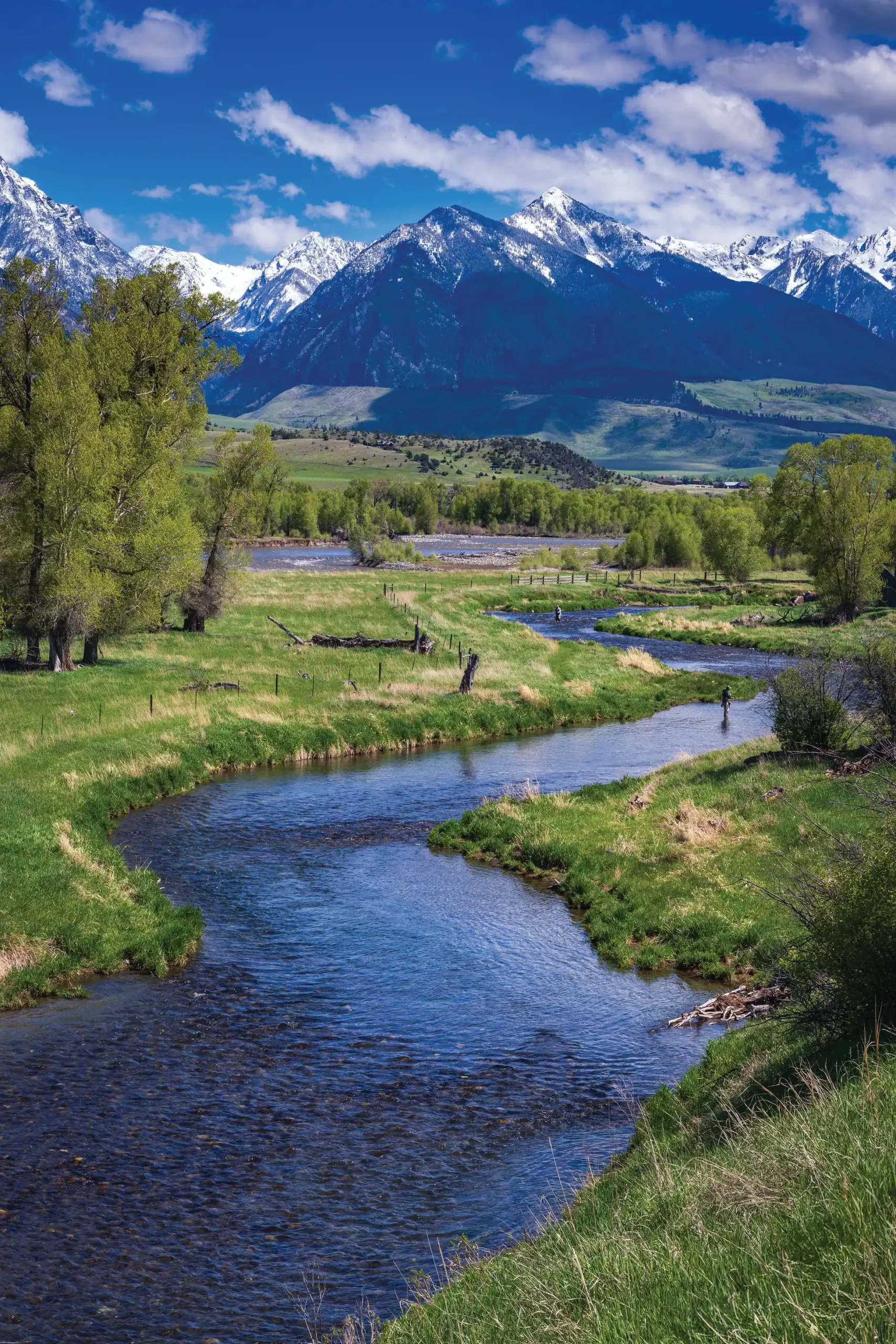
For Brian Yablonski, CEO of the Property and Environment Research Center in Bozeman, keeping the West wild means living with awareness, and sometimes a little healthy fear. “So long as I still have to carry bear spray when I walk our dogs around our Paradise Valley cabin, that’s a good indicator of keeping it wild,” he said.
To Yablonski, the challenge isn’t simply protecting land; it’s aligning economics with ecology.
“People aren’t moving here to mine or cut timber,” he explained. “They’re coming for clean rivers and big skies. That demand for nature can actually fuel its protection — if we build a market around conservation.”
At PERC, that philosophy is more than theory. Their Elk Rent program compensates ranchers when migrating herds use their land. Their Brucellosis Compensation Fund offsets livestock disease costs, and their Virtual Fence Fund replaces miles of barbed wire with wildlife-friendly technology.
“Incentives matter,” he said. “When wildlife becomes an asset instead of a liability, everyone wins.”
He believes this work carries patriotic weight.
“If we fail,” he said, “we lose a big piece of what it means to be American. Conservation is our country’s birthright. Failure isn’t an option.”
“Conservation is our country’s birthright. Failure isn’t an option.”
— Brian Yablonski
Wildlands: The Soundtrack of Conservation
Live music festival, Big Sky, Montana
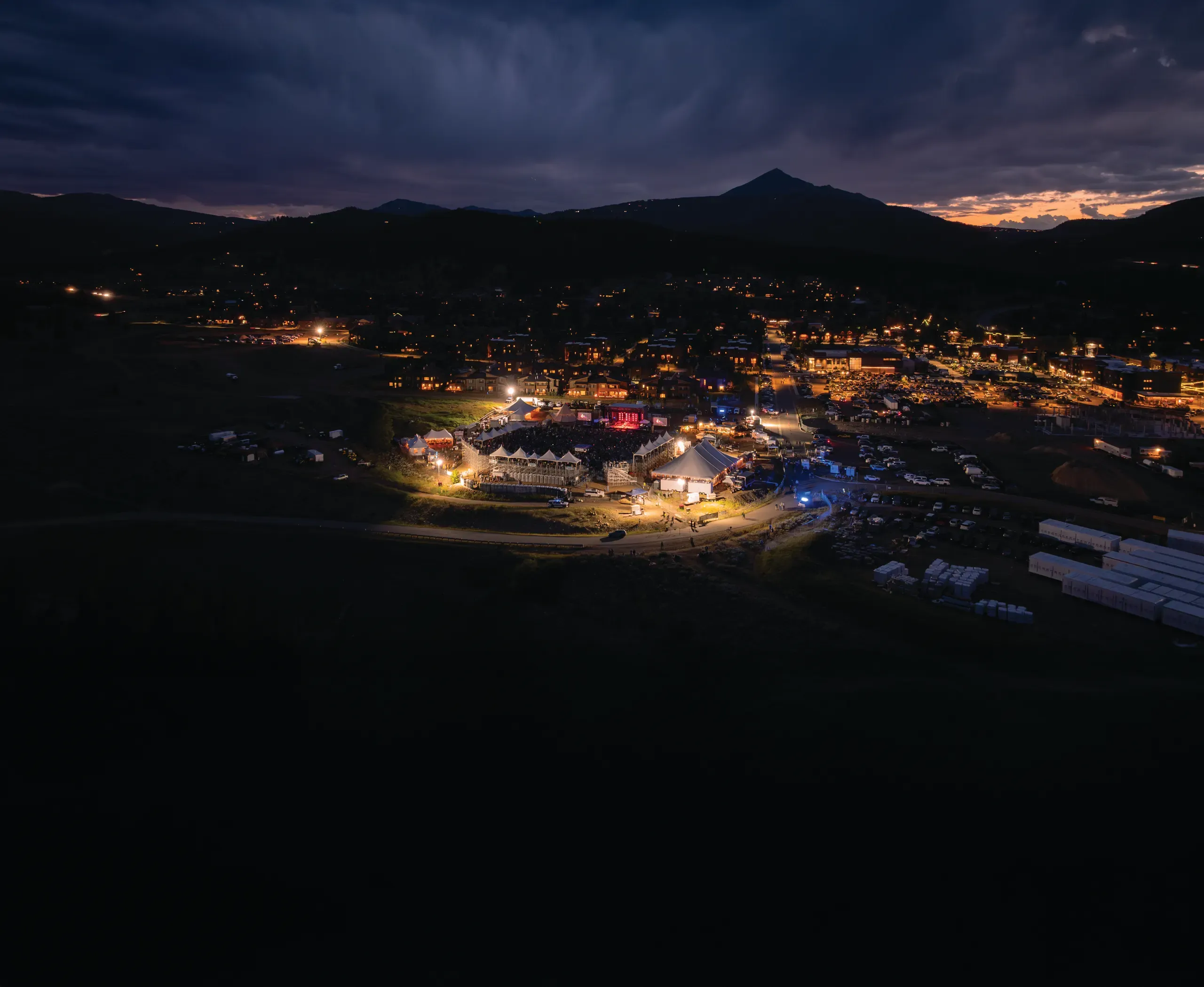
Every summer in Big Sky, music becomes a movement. Wildlands, produced by Outlaw Partners, publisher of Mountain Outlaw, unites artists, conservationists and community in one shared rhythm: the will to protect what inspires us.
In 2025, Dave Matthews, Lukas Nelson, and Molly Tuttle filled the mountain air with sound and purpose. The weekend raised $650,000, matched by the Dave Matthews Family & Foundation to reach $1.3 million for conservation across the Greater Yellowstone region. “This is a magic part of the world,” Matthews said from the stage. “We’re so attached to it.”
Nelson echoed him: “The beauty of this place only deepens my desire to protect it.”
For partners like American Rivers, the impact was personal. “What a weekend,” said CEO Tom Kiernan. “Wildlands brought the music, the Montana magic and big love for rivers.”
Now entering its sixth year, Wildlands returns to Big Sky July 31 and Aug. 1, 2026, aiming to become the Farm Aid of conservation, a celebration proving that creativity, culture and community can move mountains — or save them.
“The beauty of this place only deepens my desire to protect it.”
— Lukas Nelson
Saving the Big Sky: A Chronicle of Land Conservation in Montana
Three conservationists chronicle a lifetime of resilience
If Montana’s open lands could tell their story, they might sound like John Wright, Robert Kiesling, Bruce Bugbee, and Kevin League, the authors and photographer of Saving the Big Sky: A Chronicle of Land Conservation in Montana.
Together they’ve chronicled 50 years of victories and resilience, proof that cooperation, not conflict, defines the Montana way.
“Without the private lands held in ranches and farms, the high country becomes a pale version of itself,” Wright said.
Their book celebrates the unsung heroes — ranch families, land trusts and conservation brokers — who’ve protected more than 6 million acres, equal to three Yellowstone parks. League, a photographer with Prickly Pear Land Trust, calls it “a story built handshake by handshake.”
Published by the Foundation for Montana History and Oregon State University Press, Saving the Big Sky shows what’s possible when pragmatism meets passion. “You look at this place and it’s so beautiful, it almost aches,” Wright said. “Beauty isn’t a guarantee — it’s a responsibility. Every generation inherits this landscape and decides what to do with it.”
“We’ve protected some of the most important places, but that doesn’t mean the work is done. We’ve got a lot of work ahead of us.”
— Kevin League

The Art and Science of Wild
Michael Phillips, Executive Director of the Turner Endangered Species Fund
Holly Pippel, wildlife photographer
Few embody the harmony of science and soul like Michael Phillips and Holly Pippel.
Phillips, Executive Director of the Turner Endangered Species Fund, believes keeping the West wild means retaining large, self-willed landscapes where natural processes — predation, fire, renewal — are celebrated rather than controlled.
“There is a disregard for, if not outright ignorance of, ecological processes, especially predation by large carnivores,” he said. “Rising ecological illiteracy is a problem that grows more consequential with time.”
Phillips was instrumental in Colorado’s 2020 wolf reintroduction, the first citizen-led species restoration in United States history.
“If we fail, we lose the ecological diversity, resiliency, and majesty of one of the world’s great remaining wild areas,” he said.
Pippel gives that message form through her photography.
“We live in one of the last intact ecosystems in the Northwest,” she said. “Public lands, clean water, and wildlife corridors — they’re all in jeopardy.”
Her images capture reverence, the sacred pause between predator and prey, storm and silence.
“I hope my images become part of a success story,” she said. “That they inspire people to reconnect with nature. Small efforts can make a big difference.”
“The camera teaches you to slow down, to pay attention,” she said. “When you really see an animal — its struggle, its calm, its resilience — you understand that protecting it isn’t charity. It’s gratitude.”
Together, Phillips and Pippel represent two sides of the same calling — science and art, data and devotion — both striving toward one truth: Keeping the West wild is as much a moral act as an ecological one.
“Rising ecological illiteracy is a problem that grows more consequential with time.”
— Michael Phillips
“Small efforts on our part can mean a big difference for wildlife.”
— Holly Pippel
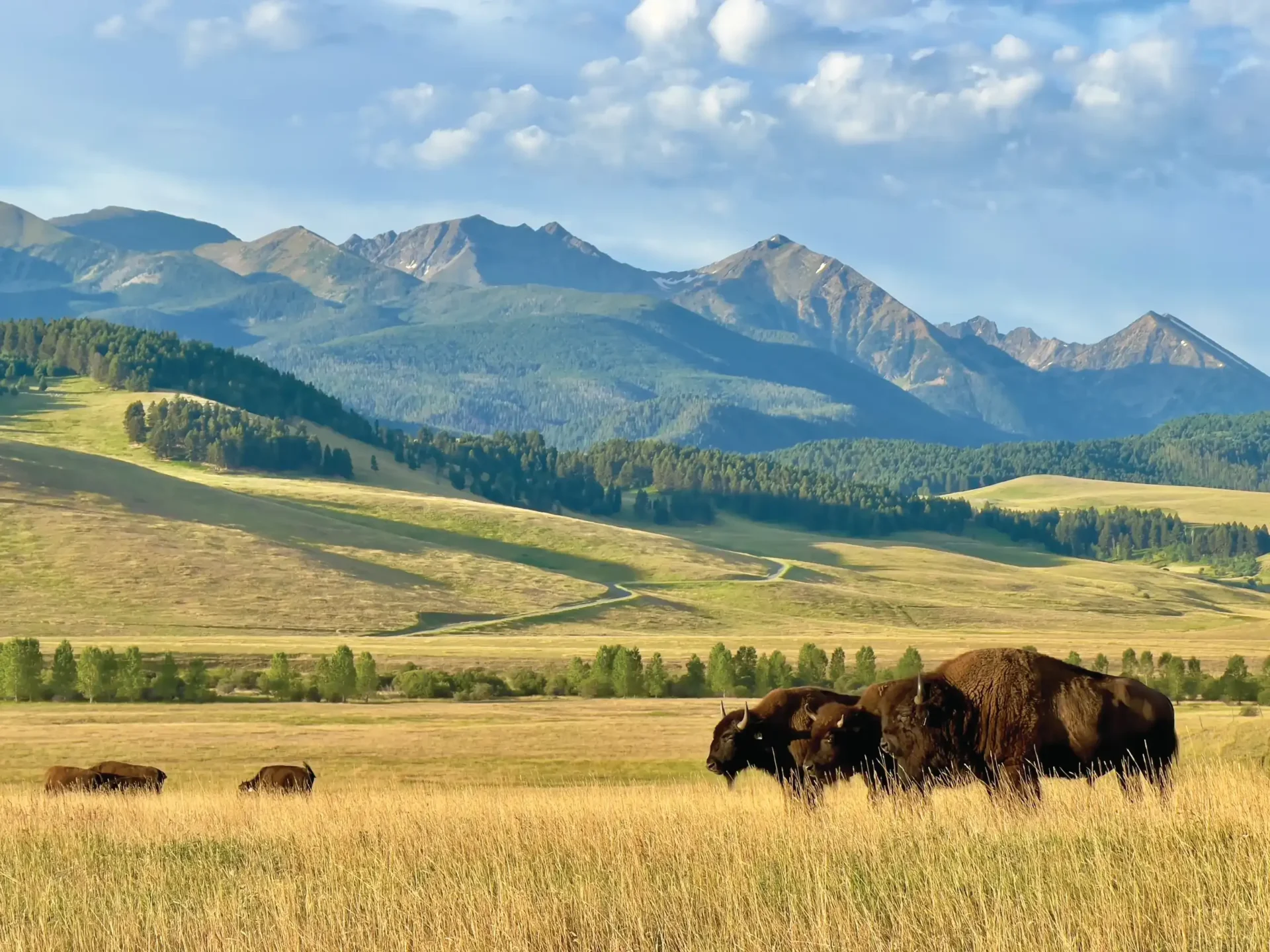
Bison roam on the Flying D Ranch in southwest Montana. Photo by Holly Pippel
The Balance of the West
We can’t fault people for wanting to move West. The open spaces, the rivers, the sense of possibility — they’re part of what makes this region magnetic. But every new light on the horizon, every fresh subdivision or road, reminds us of what’s being tested.
In 1909, as documented in Saving the Big Sky, the Montana Department of Publicity predicted such growth. “As older states have filled up, the pressure from those seeking homes has become great … Many large ranches have become too valuable to be used as pasture and have been divided into small tracts and sold. Some things never change.”
Yet this story is not one of loss — it’s one of responsibility. The work of keeping the West wild is not an optional effort; it is critical. From the rancher maintaining open range to the artist documenting fragile beauty, from the nonprofit scientist mapping corridors to the musician using a stage for a cause, every choice either preserves or erodes what remains.
If this story has moved you, let it also move you to act. Support the organizations and individuals featured here — the Gallatin River Task Force, Center for Large Landscape Conservation, American Prairie, PERC, and the countless local land trusts and advocates protecting this place. Attend a conservation-focused event like Wildlands. Volunteer. Donate. Educate your children about the power of wilderness.
The truth is simple: You can read about the wild, photograph it, legislate for it — but unless you stand up for it, it won’t stand for long. The time to act is now. Not later. Not someday.
Do something. Keep the West wild.
“What you do makes a difference, and you have to decide what kind of difference you want to make.“
— Jane Goodall
Eric Ladd is the publisher of Mountain Outlaw, and a husband and father. He advocates for clean rivers and open landscapes whenever possible, including serving on the boards of American Rivers and the Gallatin River Task Force.