By Canyon Hohenstein
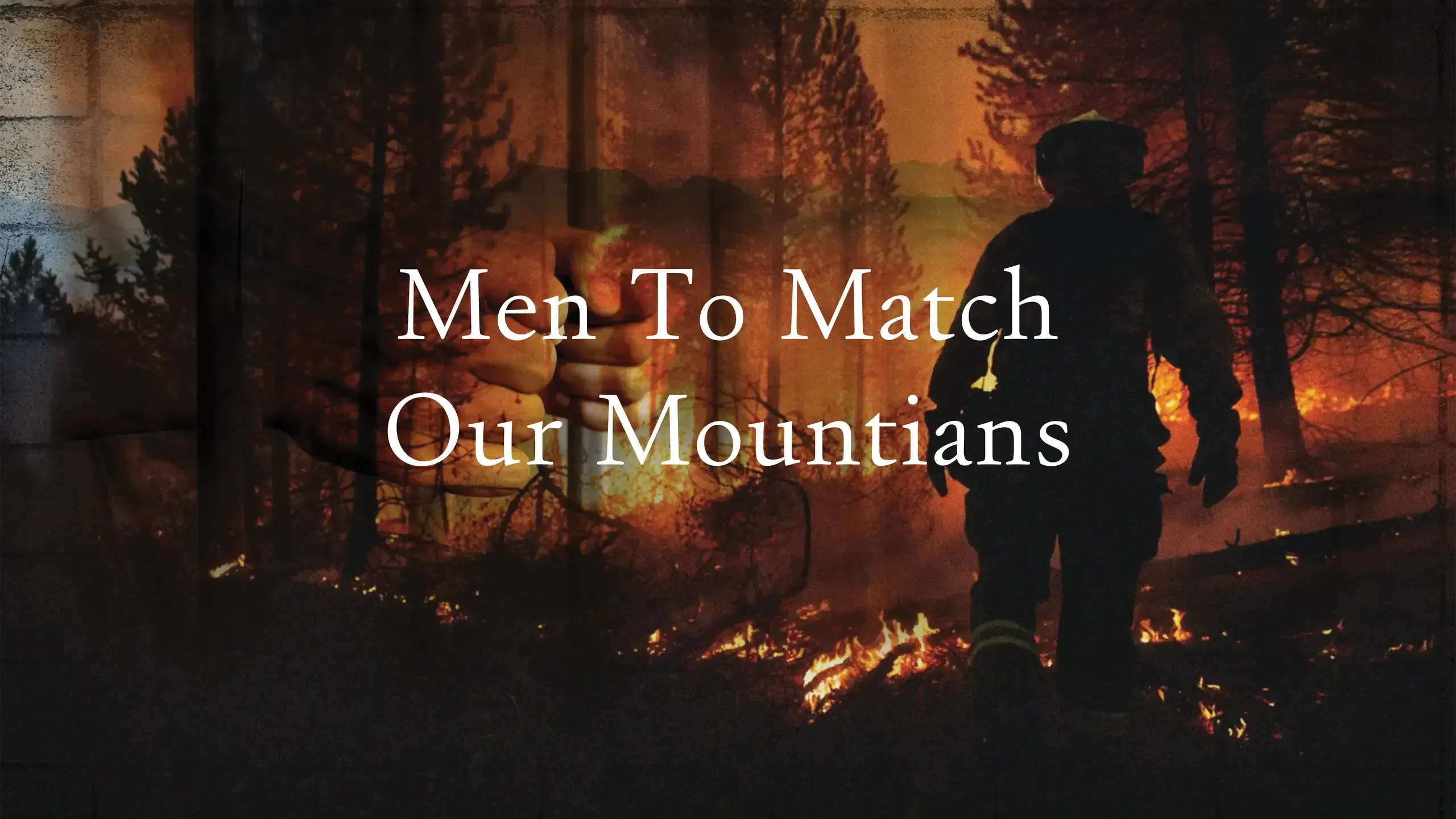
“Bring me men to match my mountains, bring me men to match my plains, men with empires in their purpose, and new eras in their brains.”
— Samuel Foss, The Coming American
The wildfire knew nothing of their rap sheet. It simply followed Mother Nature’s programming. Flames ran up the tree trunk, into the branches, and from there made easy work of the Douglas fir. Smoke rose high into the sky. The men lifted their chins to watch. They gazed up at the torching timber, admiring the flashing brilliance as dusk settled and smoke hung over the mountains.
When the trunk was just a blackened snag, they looked around at their fellow crew members, exchanging glances of disbelief. Collective wonder that came from confronting an inferno, but also, perhaps, from this shared sip of freedom after a long spell of confinement.
With tools in their hands—Pulaskis, rhinos and combis—they lowered their heads and continued digging handline around the spot fire. Each man grunted as he swung his tool, interrupted by the occasional crack of superheated wood and a revving chainsaw on a distant division. The fullness of fatigue was settling in. A 16-hour shift showed in their hollowed eyes, singed cheeks and dried sweat stains. But every prisoner would agree that wildland firefighting beat the hell out of being behind bars.

It was difficult to say why. They may not even have been able to explain it themselves. Perhaps because they, too, could rise like the smoke of a torching tree. Perhaps, by fighting wildfires, they already were.

The Deer Lodge Crew
This is Montana’s inmate fire crew: prisoners selected from the Montana State Prison to partake in Big Sky Country’s yearly fire season. The penitentiary is in Deer Lodge, and so in radio communications and resource orders, they are called the Deer Lodge Crew.
As they should be. “Con crew” or “prison crew” are correct but feel obsolete. On a wildfire, competency matters more than a criminal record. And these individuals are fully trained to the standards set forth by the National Wildfire Coordinating Group. Each man has earned a Red Card by passing all mandatory courses, obtaining medical clearance, completing the pack test, and getting trained to wield a chainsaw. This bright red slip of paper is the passport of the profession, showing a firefighter’s earned qualifications. Every firefighter must have one to engage in wildfire suppression. Offenders retain this card upon release, making it a bridge between their life serving time and their future freedom.
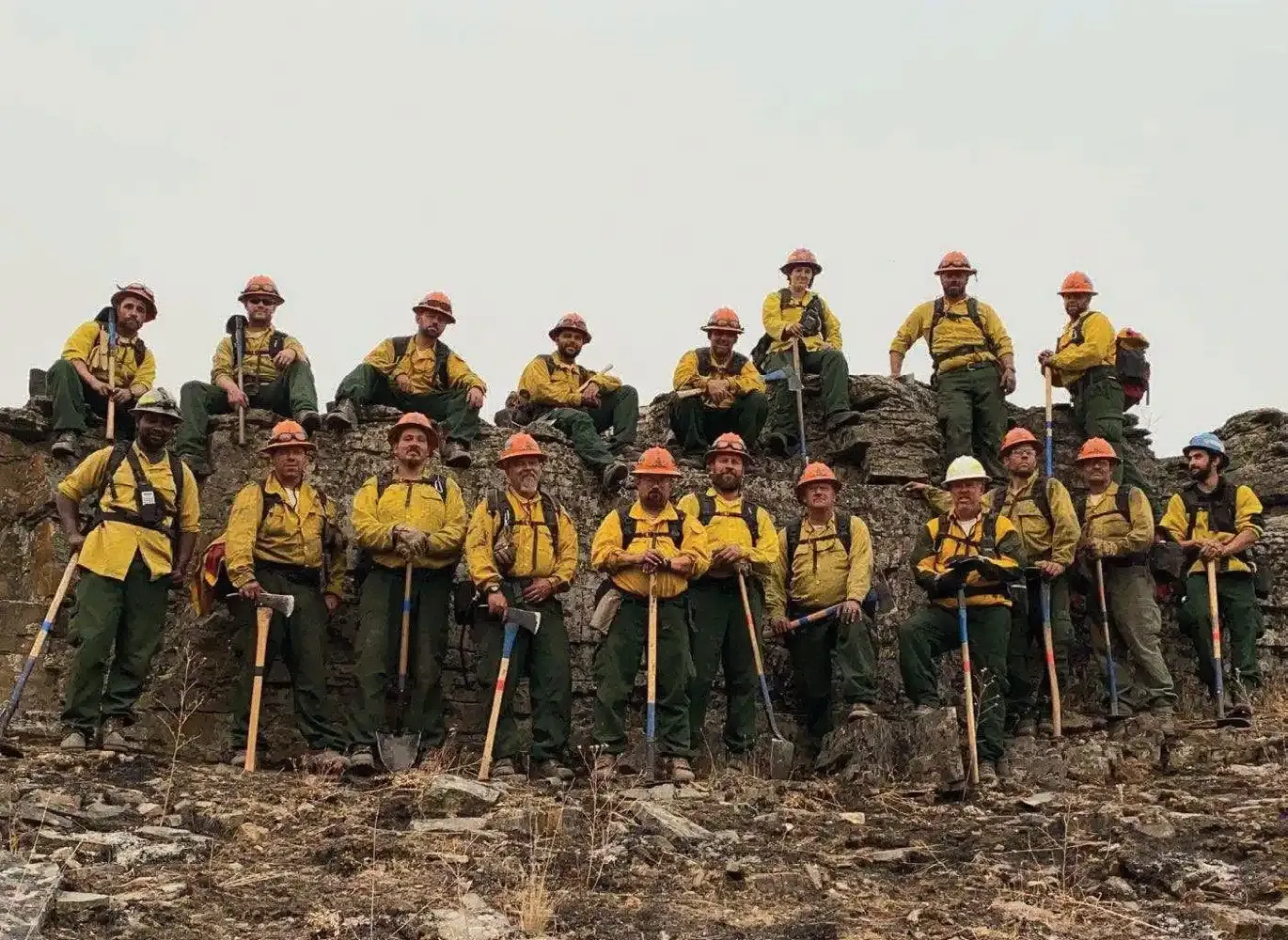
The program is run through a partnership between the Montana Department of Natural Resources and Conservation (DNRC) and the Department of Corrections (DOC). It’s a handcrew composed of 15 inmates, two DOC staff members, the fire crew supervisor, and a DNRC crew boss. The crew is a resource available for any incident in Montana, the same as a hotshot crew or a helicopter. Once deployed, the team can be out for a two-week stint plus travel days.
They have all the gear of the trade, such as the iconic yellow button-up shirts, green Nomex pants, gloves, a fireline pack with a fire shelter attached, and leather boots. Nothing in their physical appearance indicates their past transgressions except the orange hard hats bearing Deer Lodge stickers.
Inmate firefighting is an odyssey shaped by economic, mythological and legal incentives, creating the ideal conditions for a hero’s journey, where prisoners can voluntarily enter the belly of the beast. They won’t face a literal dragon, but they will certainly face its fire. Ask most inmates at Deer Lodge if they would join, and they’ll likely give the same answer: Decent pay, outdoor living, hard work with a dose of danger—sign them up.

Amuir, Nick and Steven
Amuir, Nick and Steven took on the challenge. Their time in Deer Lodge is not counted by tally marks on a concrete wall, but by the work they’ve done for Montana. Amuir knows the system. He has been an inmate since 1997 and has served more than a quarter of his century-long sentence. He paused before answering every question, weighing each response. He understands the lay of two lands: the penitentiary and the fireline.
Nick is instinctually helpful—a vital trait in firefighting where missions are accomplished as a team. Unprompted, he offers to answer any future questions about prison or firefighting. The most detail he gives is about what it takes to become a firefighter. You don’t simply drift onto the crew. You must want it and work for it. He did both and has one year of firefighting under his belt.
Steven comes to the fire crew from a different path. A former correctional officer, he is now the fire supervisor. “Honored” is the only way he described his position. At 21, he’s more than 20 years younger than Amuir and Nick, but he talks like someone who already carries the responsibility of leadership. Steven started leading the crew in June 2025.
“Him being a former CO, the first thing he’s thinking about is security, security, security. But then once we’re in action and he sees our professionalism and how serious we take the job, it opens his eyes to like, ‘Dang, these guys aren’t just inmates. These guys are actually being firefighters.’ To get that kind of appreciation from him helps us do a better job, go the extra mile, and work a little harder,” Amuir said of Steven.
Even over a phone call, the mutual respect between the two inmates and their supervisor is palpable. Age, race, background, none of that matters more than their shared profession.
“This is one of the highlights of the things that I’ve done through my incarceration. When we’re out on a fire, we’re firefighters. We go through the same training. We’re exposed to the same risks and dangers.”
— Amuir
“This is one of the highlights of the things that I’ve done through my incarceration,” Amuir said. “When we’re out on a fire, we’re firefighters. We go through the same training. We’re exposed to the same risks and dangers.”
As with prison, there can be deliberate destruction in firefighting—a burning of the forest’s dead to make room for fresh life after the smoke clears.
For a firefighter, the only thing more exciting than a wildfire is one created by your hands. Burnouts are a strategy of using fire to fight itself. A handful of firefighters can completely level fresh fuel ahead of an incoming wildfire with a drip torch and a coordinated plan.
“Getting to do some back burning on a big slope to stop the advance of the front of a fire on the Horn Fire south of Ennis—it’s a very powerful experience,” Nick said. “You’re trying to direct [it] and there’s a lot of variables. That’s a pretty cool thing to do.”
The gap between guards and the guarded breaks down on the line. A guard hands an inmate water, and the inmate points out a widowmaker. Everyone is tired and sore, relying on the person next to them to look up, down and around for potential hazards. Upslope, one man starts to drop fire, then another and another. From their anchor point they crawl across the mountainside, setting it aflame in one sweep. The crackling colors dance in a predictable yet untamed pattern, never leaving the tightly bound parameters in which they can burn.
Zoom out and this team is just one part of a coalition of other crews assisting in the burnout together. “When we’re out on a fire, they don’t look at us as inmates,” Amuir said. “Frankly, they probably don’t even know we’re inmates until they look at our helmets and see ‘inmate’ on there, but they treat us like we’re part of a team. It’s all good.”
Earning a Place on the Crew
Joining the fire crew isn’t as easy as volunteering. Certain standards are in place. Inmates nowadays have ample opportunity to work. In Deer Lodge, they can dabble in agriculture, furniture building, laundry, and work at a license plate factory. Five full-time members of the fire crew assist the DNRC with non-wildfire projects such as prescribed burns, pre-commercial thinning and fencing. The other 10 members work elsewhere when the crew isn’t deployed. All 15 are activated when a resource order comes in.
All work in the state prison is done through Montana Correctional Enterprises, an organization with three imperatives: “Teach. Train. Transform.” The program, “provides on-the-job training and work experience to inmates in industry, vocational and agricultural programs. Inmates training and working in these programs develop marketable job skills, a strong work ethic and self-esteem through a feeling of pride in their accomplishments, often for the first time in their lives.”
To be considered for the fire crew, offenders must apply to the fire crew supervisor and meet eligibility requirements: minimum-custody classification, within three years of parole eligibility or discharge, enrolled in or having completed court-ordered treatment, acknowledgment and acceptance of responsibility for their crimes, and prior positive work evaluations. Staff compile candidate packets for review by the Administrative Review Committee and Community Screening Committee, including Criminal Justice Information Network checks and input from the sentencing judge, county attorney, and registered victims or their families.
“Accountability has to be number one,” Amuir said. “If you’re not holding yourself accountable to what brought you to prison, you probably won’t even be looked at for this position.”
Once accepted, crew members receive all the necessary wildland fire training from the DNRC.
Ross Wagner, bureau chief of the MCE, was present at Steven, Nick, and Amuir’s interview. He made an important point about the purpose of prison, one frequently lost in the debate over incarceration. The crew isn’t an endpoint for most, but a node in a chain that begins with an inmate’s imprisonment and ends, ideally, with their release. Everything done in MCE is geared towards getting these men out and ensuring they never return.
“The fire crew is a huge, huge asset. I’m an advocate for all these guys—keeping them moving forward, getting them ready for release, so when they’re released they have the training and the self-worth to know they can succeed. They don’t have to worry about, ‘Boy, if I do this I may go back.’ They’re not gonna think that. They’re gonna be like, ‘I’m gonna succeed. I’m staying out.'”
This unique fusion of wildfires and inmates didn’t start in Montana. The history of inmate firefighters extends even farther west and further back in time.
A History Forged in California
The official use of inmates on the fireline began in California during World War II. The Japanese had attacked the mainland with floating incendiary balloons. Fire officials feared these could ignite California’s vast timber reserves and threaten watersheds, agriculture and military infrastructure across the state. Due to a shortage of able-bodied men, officials decided to put inmates to work in the war effort.

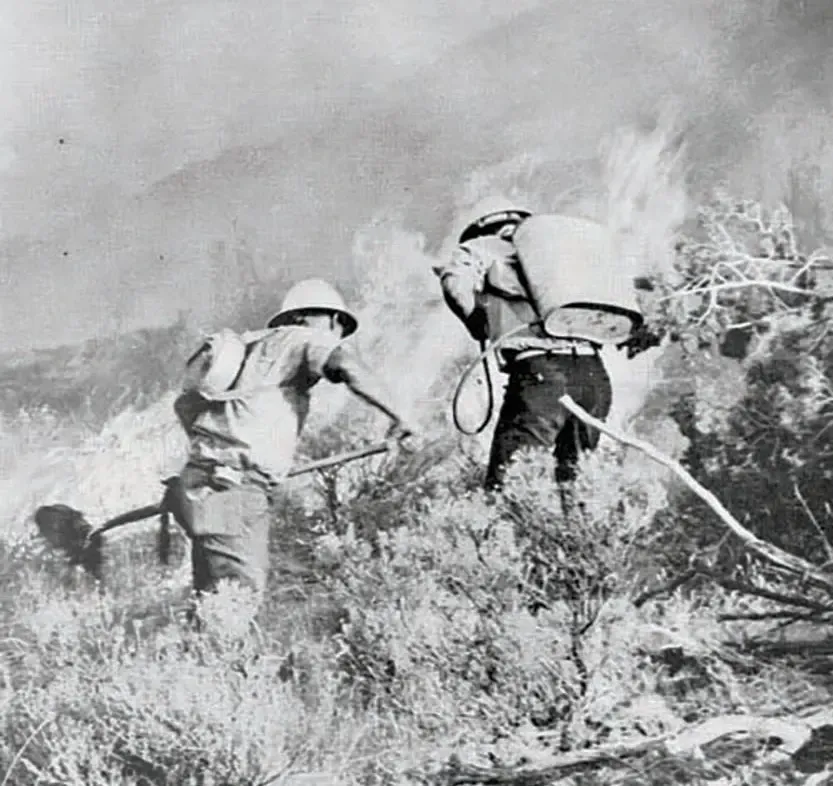

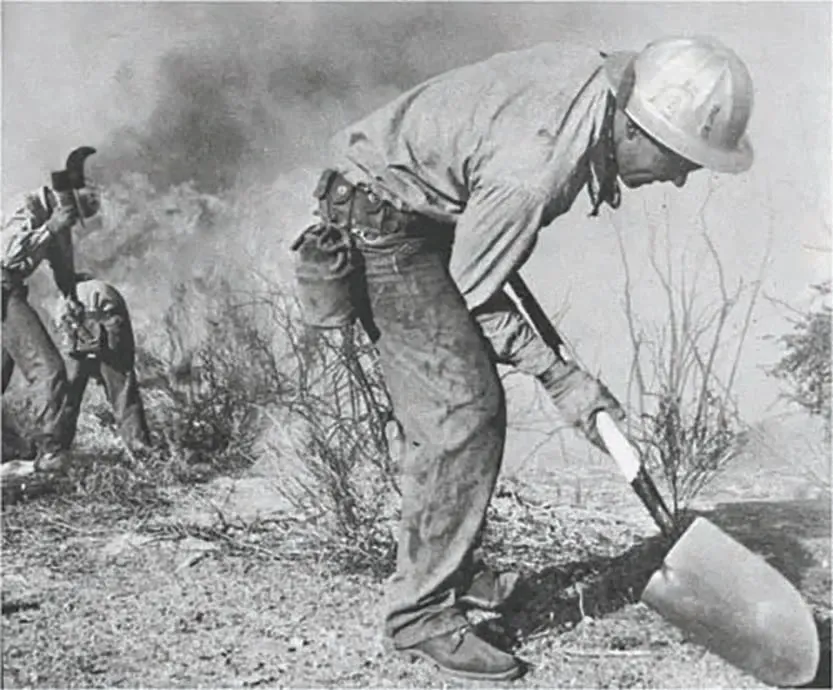
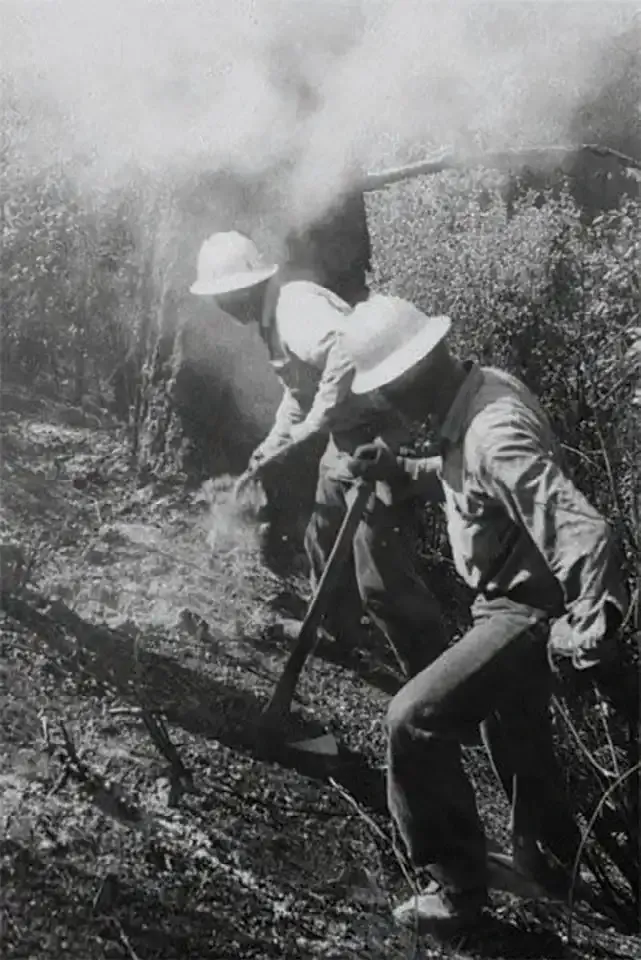
Photos courtesy of California Department of Corrections and Rehabilitation
Dr. Volker Janssen, a history professor at California State University Fullerton, wrote When the ‘Jungle’ Met the Forest: Public Work, Civil Defense, and Prison Camps in Postwar California. In it, he wrote that prisoners had been transformed by the war from public enemies to public assets by contributing to seasonal harvests, forest camps and manufacturing industries at San Quentin and Folsom prisons.
The warden of San Quentin State Prison summed up the efforts: “The men inside the walls feel they are working shoulder to shoulder with fellow Americans on the outside.”
A 1944 newsletter from the California Institution for Men expressed the feeling of the inmates serving on the frontlines of wildfires: “On the ground fighting the smoke, flames, heat and fire bugs, will be found the fire crews of CIM … Millions of acres of valuable timber and grass and hundreds of homes have been saved through the efforts of our crews … Our men … are veritable gold to Uncle Sam, due to the manpower shortage.”
These camps were—and still remain—a liminal space between liberty and incarceration where the rules of prisons still applied but with less force the deeper one went into the flames. So says Dr. Janssen, “Even at their most orderly, camps lacked many of the boundaries and spatial regimentation of regular institutions.”
Inevitably, there were escape attempts, but far fewer than one would expect. The question is not why some prisoners would try to escape, but why most didn’t. The answer is simple. They had the carrot-and-a-stick promise of reduced sentences and better wages compared to other prison labor. Plus, no one wants to escape an institution that sees them as an asset and not an enemy. Battling blazes positioned prisoners as model citizens, not hardened criminals—exemplars of honorable action. The story of their lives was shaped by the forces of natural disaster, but also by their response to it. Who would walk away from such a mission and the praise that followed?
Praise was plentiful. An elderly woman in a letter to the governor captured public sentiment about these inmate firefighters, “I don’t care who they are. They helped save my house.”
More than 50 years later Amuir described the feeling from the other side. “Seeing people drive by, honking their horns and giving us little heart symbols. Stuff like that, it hits deep.”
Unsurprisingly, systemic wildfire suppression followed the contours of the military. Nothing quite compares to firefighting. The valor is within the word itself. You fight fires, just as a soldier engages in battle. Prison crews partook in campaigns requiring a massive marshalling of manpower and resources. Once facing the inferno, they worked as a team to suppress and contain the enemy in a shifting field.
If a martial mindset and vocabulary was unavoidable, so too was the ethos most associated with service. To fight fires was an act of selflessness. There was something inherently heroic about people in professions where death is ever-present, regardless of the choices that led them to this career. No one ever doubted the heroism of soldiers in Normandy. That same belief applied to inmates fighting fires in Northern California.
The rationale was darker than the heroism suggested. As Janssen wrote, the state understood that if a convict died on the line, it was not the worst outcome for all parties involved. “The inversion of capital punishment, prisoners’ willful sacrifice on the fire line, demonstrated the state’s capacity to shape, elevate, and direct life even to the point of ending it in manly civic duty.”
The inmate would go down as a hero, the state would be applauded for allowing it, and the public received cheap emergency services.
With World War II in the rearview mirror, California opened the Rainbow Conservation Camp in 1946, the first permanent male conservation camp, where incarcerated men entered as inmates and left as inmate firefighters.
California’s conservation camp programs are alive and well, even expanding in 1983 when the Rainbow Camp converted to a female camp, chronicled in Jamie Lowe’s book Breathing Fire. Roughly 1,800 inmates serve at any given time, about 30 percent of the state’s wildland firefighters. There have been policy changes and public outcry, yet the program endures and has inspired other states to follow.
Montana’s inmate fire crew is a mote compared to its mighty influences. It began in 2002 and is nothing like the institutional practice found in California. It’s simply one crew among the thousands working in Montana during the fire season. As Deer Lodge Prison puts it, the program “works with, not against, other crews in the state.”
Proper preparation is essential to that partnership. Injury and death are always possible in this line of work, though the DNRC has an excellent track record. To date, no major injury or death has occurred. Protocols are in place if any incident were to happen. No inmate enters the fray without first having crucial safety rules committed to memory: the 10 Standard Firefighting Orders, the 18 Watch Out Situations, LCES (Look out, communication, escape routes, and safety zones), and more. The final rule of the 10 Standard Firefighting Orders is, “Fight fires aggressively, having provided for safety first.”
Nothing happens on a wildfire without first establishing a safety plan. Lives matter more than trees or structures. That understanding is embedded into every aspect of fire operations. Nick has seen this firsthand. “I have concern for my safety, but I don’t feel I’m placed in any undue dangerous situations,” he said. “Steven communicates with us, and we are part of briefing every single day. We have our LCES in place, safety routes, escape routes, everything like that. Not only does Steven take that responsibility, but anybody we have been with on the DNRC puts the safety of our crew ahead of anything else.”
Steven agreed. “I know for me and the other staff members, we go throughout the day and make sure that everyone is taken care of.”
Participation is voluntary—inmates are not forced onto the crew, nor are they put in unnecessary danger. Still, not all inmate firefighters throughout history have had such positive outlooks.
Amika Mota, a former inmate firefighter in California, wrote about her experience in an article titled, “I Was an Incarcerated Firefighter. Here’s What I Want People to Know.” She wrote that while the work was rewarding and gave her a sense of purpose, “Neither I nor my work felt dignified or valued.”
Human dignity is a way of living, not a settled destination. And the way to live in America is through the almighty dollar, even in prison.
What the Work Is Worth
Prison isn’t cheap. Incarceration creates direct costs for inmates, including lost income, long-term earning damage and ongoing financial penalties. Inmate firefighters in Montana earn $50 a day, but as the old adage goes, the only guarantees in life are death and taxes. They pay for hygiene items and personal clothing, victim restitution and court-ordered fines, child support, and to save for their release.
In his article “Confessions of an Inmate Firefighter,” Joshua Daniel Bligh wrote that despite the low wages, the work gave him something money couldn’t: “I learned valuable skills and through the experience was able to feel like I was giving back to the society which by my actions had wronged.”
“When I sense outrage and shock in the faces of the contract crews who hear how little we make for the work we do, I remember that I could have been sitting in a prison cell,” Bligh wrote. “I think a lot of inmate firefighters feel the same way. We work hard because we are grateful. We work hard because we are fallen and in need of redemption in the eyes of our community. We work hard not because we can support our families with the income, but to build the mentality we will need when we are released.”
This raises the question: Should equal risk be compensated with equal reward? If inmates are firefighters, then they should be paid the same as other firefighters. Or maybe not. An inmate on the line is also paying back the society they transgressed.
The base pay for a DNRC Wildland Firefighter Type 2 is $20.74 an hour, plus overtime and a 10 percent pay increase when supporting authorized emergency work. Two and a half hours into a shift, a firefighter will earn more than an inmate for the entire day.
“For more than 20 years, the partnership between the DOC and DNRC has offered a unique opportunity for incarcerated Montanans to build skills while also providing an essential service to the state,” Gov. Greg Gianforte said during the 2024 wildfire season. “During this active fire season, we needed all hands on deck to approach each fire with an aggressive attack. I join all Montanans in thanking our fire crews.”
Governors praise their service. But their paychecks tell a quieter story. On the line, they are firefighters. On paper, they are still inmates. Their wages sit at the tension between penance and profession, for payment is measured not just in dollars but in the mentality, skills and experience they acquire.
The DOC frames it plainly: The Deer Lodge Crew gives DNRC needed work at a reasonable cost while giving inmates work experience, life skills and income to support their reentry into Montana communities.
What the state owes an inmate and what the inmate owes back resists simplicity. This is not merely a monetary issue. It is also a moral one, and problems of that nature cannot be solved in a budget.
“Prison is not a destination for myself and a lot of people in here, it’s a changing point, and there’s a lot of people in here looking at this as an opportunity to better themselves and to live a more intentional life.”
— Nick
Few crews on a fire partake in aerial firefighting, but even just witnessing it is awesome. Steven recalled seeing it for the first time. “One of the stories that will stick out to me, I shared this with my family: It was my first fire in Ennis, just seeing the helicopters. There was so much smoke in the sky as these helicopters were coming down and dropping water right next to us. And it was just pretty cool how fast they’d go back and forth to put the fire out.”
They’re on a hillside digging a cup trench. The sun is setting. Smoke mixes with the soft shades of dusk. As humidity increases, the fire dampens down. The crew continues digging. They need to get a line anchored in before complete darkness.
Overhead, the helicopter is dropping bucket after bucket on the fire. They can’t help but look up as the mechanical marvel hovers over a torching tree and douses it. The noise of fire turned instantly to steam is satisfying—a great hiss. Wisps of water hit their faces. They bend down and rip out another chunk of land.
Across the way, another peak is burning. Live fire creeps tiredly instead of running. “For myself, it really reignited a passion for the outdoors,” Nick said. “It really invigorated my attitude and just because I’m here doesn’t mean I can’t have a purpose and provide a benefit.” That passion is incurable. In wildland firefighting, it’s called the fire bug.
And it’s highly infectious.

“Conservation camp workfare united advocates of rehabilitation with those of punishment,” Janssen wrote. Debates around incarceration constantly fluctuate between the two. Inmate firefighters make up a small niche of American society, but their enduring success lies in the general bipartisan consensus over these programs.
A sparsely populated state like Montana serves as a microscope for the broader criminal justice system. There are thousands of inmate firefighters in the U.S. and just 15 in Montana, making it a contained case study with one crew, traceable outcomes and clear accountability lines.
Debates around prison reform will continue. And while they do, the focus must remain on individual inmates, equipping them with the tools to free themselves. Inmate firefighting is one such tool.
Personal responsibility must come first. Amuir and Nick know that. For them, systemic change would matter little without individual reckoning. Wildfire offers no refuge from yourself. Unforgiving and illuminating, flames expose every insufficiency. They will humble you. From that humility, something new can take root.
After the Burn
A burned forest is a gray space. Ash covers the land and everything is quiet, save the occasional flutter of a bird’s wing as it dives for a roasted grub. The inmate fire crew patrols the line, arm’s length apart, shoulders sagging from the weight of the line gear. Their boots are chalky; their faces sunburned. All that remains are mop-up operations: leisurely search-and-destroy missions for any remaining hotspots.
The crew is tired after 14 days straight of grunt work. Friendly bullshitting usually flows effortlessly, but not now. Words come sparingly. Only so much can be said through all the hikes, hose laying, and line digging.
The inmates stop for a water break, soaking in the sunshine, planning what they will do back in the penitentiary, and preparing for when the state needs them again. They are fathers, friends, and now firefighters, a marker that may fade with time, but never completely disappear.
“Prison is not a destination for myself and a lot of people in here,” Nick said. “It’s a changing point, and there’s a lot of people in here looking at this as an opportunity to better themselves and to live a more intentional life. That’s a really big parallel with working on a fire crew ’cause you have to have intention. You can’t just do your day recklessly, taking things as they come. You have to have a plan and of course be flexible in that plan, but execute it in the most productive way possible. That’s definitely a lesson I intend to take forth into the rest of my life once I’m able to be released.”
The wildfire is contained. Private property and grazing land have been saved. Houses have been buffered against fire danger with wildland-urban interface. And yet one can never completely prevent fires. Even on the most well-managed incidents, some land will always burn.
Beneath this charred duff are the seeds of tomorrow’s trees, ready to spring forth into a new forest flush with life. It will take time and patience. Roots, rhizomes, and buried buds will sprout green shoots. Grass blades will push through soot. Webs of fungi will spread through the seared soil.
But these changes don’t take decades. For those willing to witness the minute details, that transformation has already begun.
Canyon Hohenstein is the author of Who Tames the Flames?, a novel inspired by his time working with inmate firefighters. For more of his work, visit canyonhohenstein.com.