By Kaley Burns
I almost didn’t go to Boston. Not because of the training. Not because of the distance. Not because the dream suddenly felt too big. I almost didn’t go because sometimes life asks a mother to choose between the finish line she’s chased for years and the place she’s needed most. In those moments, the meaning of 26.2 miles changes completely.
The Boston Marathon draws runners from across the world to one of the most storied courses in the sport. It’s about perseverance through pain, community in motion and triumph over adversity. For me, though, it became something deeper. It became a story about motherhood, and about everything I carry with me when I run.

The Spark
Some runs change your pace. Some runs change your life. Every marathon begins with a decision. Before the training plans, the early mornings, the aching legs and long runs, there is a moment when a runner decides to try. That first step represents the willingness to begin even when the outcome is uncertain.
When I first set my sights on the Boston Marathon, I thought I understood what that meant. I thought the challenge would be the miles. Truthfully, I was never the kind of runner who dreamed of Boylston Street: the roar, the medal, the elusive finish line. But somewhere along the way, as our family navigated my son’s health challenges, Boston stopped being a race and became a reason to keep going. And so I found myself looking to the starting line; not chasing a dream, but refusing to let go of one.
When Life Interrupts the Plan
Training for Boston demands discipline, consistency and sacrifice. It asks runners to organize their lives around miles, recovery, and mental grit. But life rarely unfolds according to a training schedule. As such, life shifted for me in a way no training plan could anticipate. Suddenly, I was thinking in dosages, symptoms and what-ifs. My mind was occupied by something else: caring for my baby as we searched for answers.
The steady rhythm of miles and workouts I had grown accustomed to gave way to an entirely different kind of endurance. It required me to shift my focus away from myself and toward the people who matter to me most. The runs I had carefully scheduled were replaced by long days of uncertainty, half-drunk cups of coffee, plans that dissolved by mid-morning. Motherhood took its rightful place ahead of any race on the calendar.
In that season, I wasn’t a runner chasing Boston. I was a mother showing up where I was needed most. The finish line that once felt so important no longer mattered in the same way. I stepped back from the idea of the race. Not because I failed, but because I chose something that was more important to me.
Learning to Stay
Running teaches something psychologists call distress tolerance. It teaches you to stay without panicking. Stay when your lungs burn. Stay when the miles stretch longer than you’d expected. Stay when your mind tells you to stop.
Discomfort does not always mean something is wrong; it can mean something is being worked through. Running has shown me I do not have to feel strong to keep going. There is a strength in the body of a mother, a strength built from sacrifice, love and relentless determination. There is power in showing up again and again, even when the path forward feels unknown; a refusal to be defined by our challenges.
Even the heaviest days can grow lighter. Over time, life began to settle. Our family found its footing in our new reality. And slowly, the miles returned. My husband, with a mission to keep a piece of me intact, resurfaced the notion of going to Boston.
The Meaning of the Miles
Training looked different this time. These miles were shared. Tiny feet wanted to run beside me. Little hands clapped encouragement. My son rode along on runs with Elmo tucked under his arm, cheering me forward in his own small way.
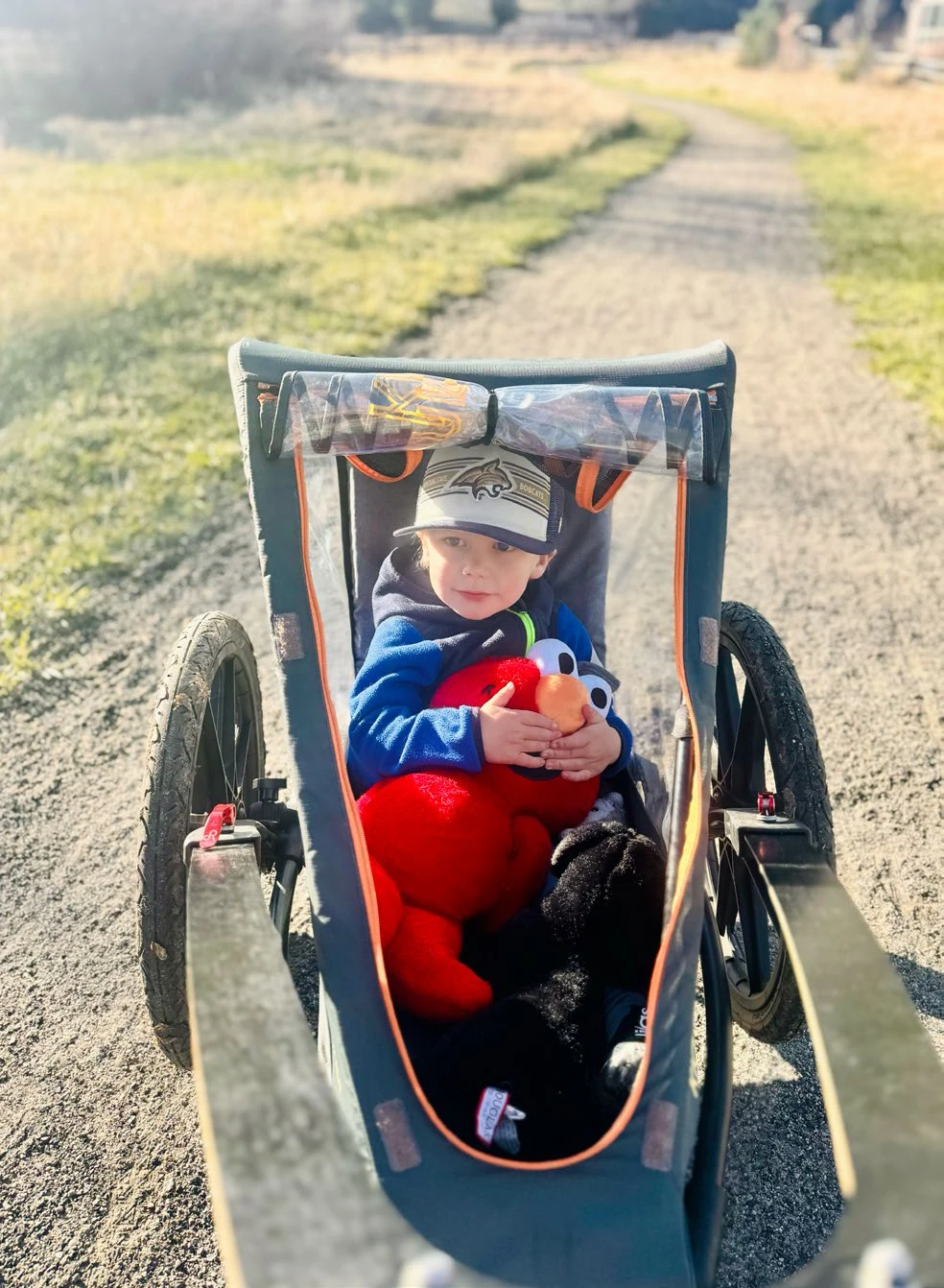
There were days I cried through my run. My husband supported the journey with steady love. My family’s encouragement carried me through moments when the road felt long. Running stopped being a solitary pursuit. It became something collective, a family effort, a shared resilience. Each mile was a reminder that we truly can do hard things. I wasn’t leaving motherhood behind, I was expanding it. There is nothing a mother cannot hold.
A Mother’s Strength
We received our official diagnosis on the plane to Boston: a specific form of epilepsy. I remember staring at the seatback in front of me, as if it might offer instructions for what to do next. It was strange to be suspended somewhere between where we had been and where we were going, holding news that would follow us long after we landed.
I tried to make sense of it there, quietly, without answers, without a plan. And when I couldn’t, I did what running had always taught me to do: I kept moving. I carried it onto the course, letting each step hold a piece of what I didn’t yet know how to name.
The strength in the body of a mother is not the kind of strength that shows up on podiums or leaderboards. It lives in hospital rooms and early mornings. In the steady rhythm of showing up day after day. It lives in the choice to keep moving forward, even when the road looks different than you had imagined.
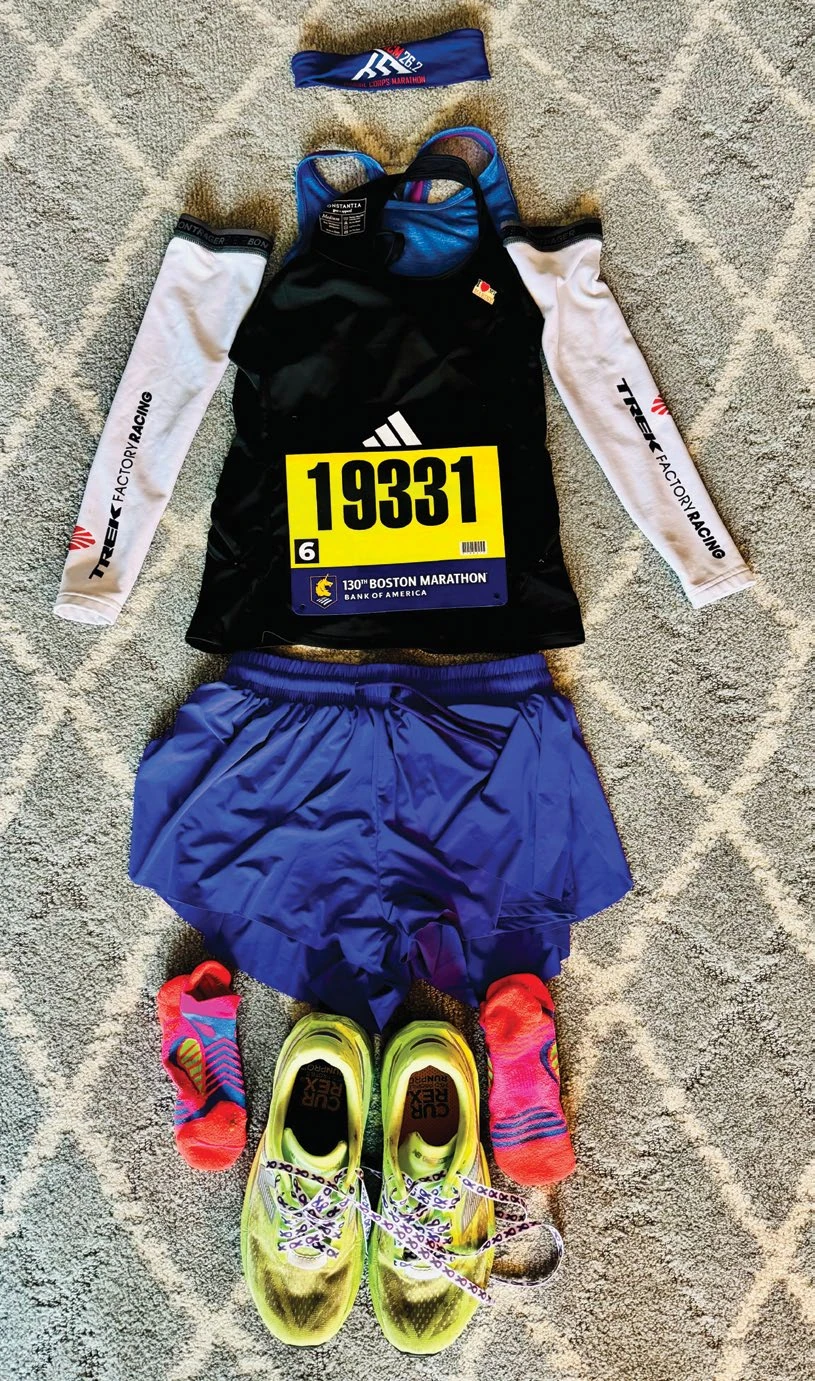
The 130th Boston Marathon
A marathon is never built in a single heroic moment. It’s constructed through countless small decisions: each training run, each rest day, each time you choose to keep going. The groundwork is laid mile by mile while overcoming setbacks and embracing opportunities.
On April 20, carbon-plated shoes toed the line as 30,000 runners from 190 countries set their sights on the infamous blue and yellow finish line. I’ve greeted many starting lines, but Boston was truly a unique experience.
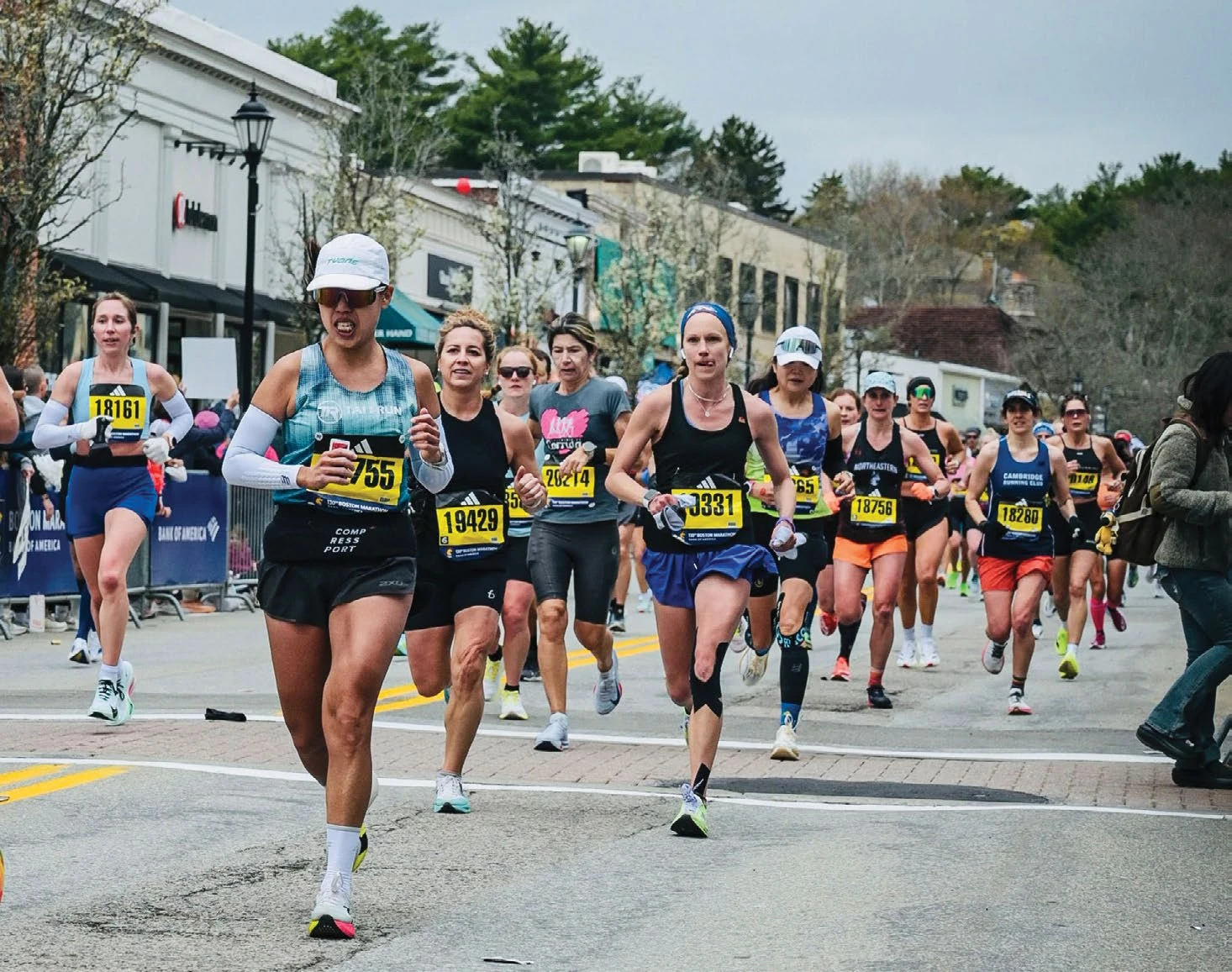
There was not one foot of the course that wasn’t lined with spectators cheering, holding signs or giving out pickles and oranges. I ran through crowds that felt louder than anything I’d experienced in other races, yet the thoughts in my head were quieter than they’d been in weeks. It was unlike any energy I’ve seen in the racing world. But Boston is much more than a race. It is a symbol of the human spirit.
This race is a proving ground where discipline meets determination, and runners honor a tradition larger than themselves. Boston embodies a shared belief that perseverance can carry you through heartbreak, fatigue, doubt, and adversity. The crowds lining the streets, the roar of encouragement, the iconic final stretch were reminders of community, of unity and of what people can achieve together. Boston is where personal dreams intersect with collective history.
The Real Finish Line
The Boston Marathon will always be known as one of the world’s most iconic races. I ran this race for all mothers. All mothers with little sleep, with worries of their baby’s health, with mental weight that no one sees. For me it was choosing family over ego, honoring the body’s signals, understanding that strength isn’t measured only by pushing forward; sometimes it’s measured by stepping back.
Running didn’t disappear during those difficult months. It transformed. I carried the weight of it with me; sometimes in my chest, sometimes in the quiet space between breaths. It showed up in the miles I cut short, in the ones I finished anyway. I wasn’t running to get stronger. I was running to steady myself, to find a rhythm when everything else felt unpredictable. Each step became a way to move through what I couldn’t solve, to sit with discomfort without letting it take over.
Running With Hope
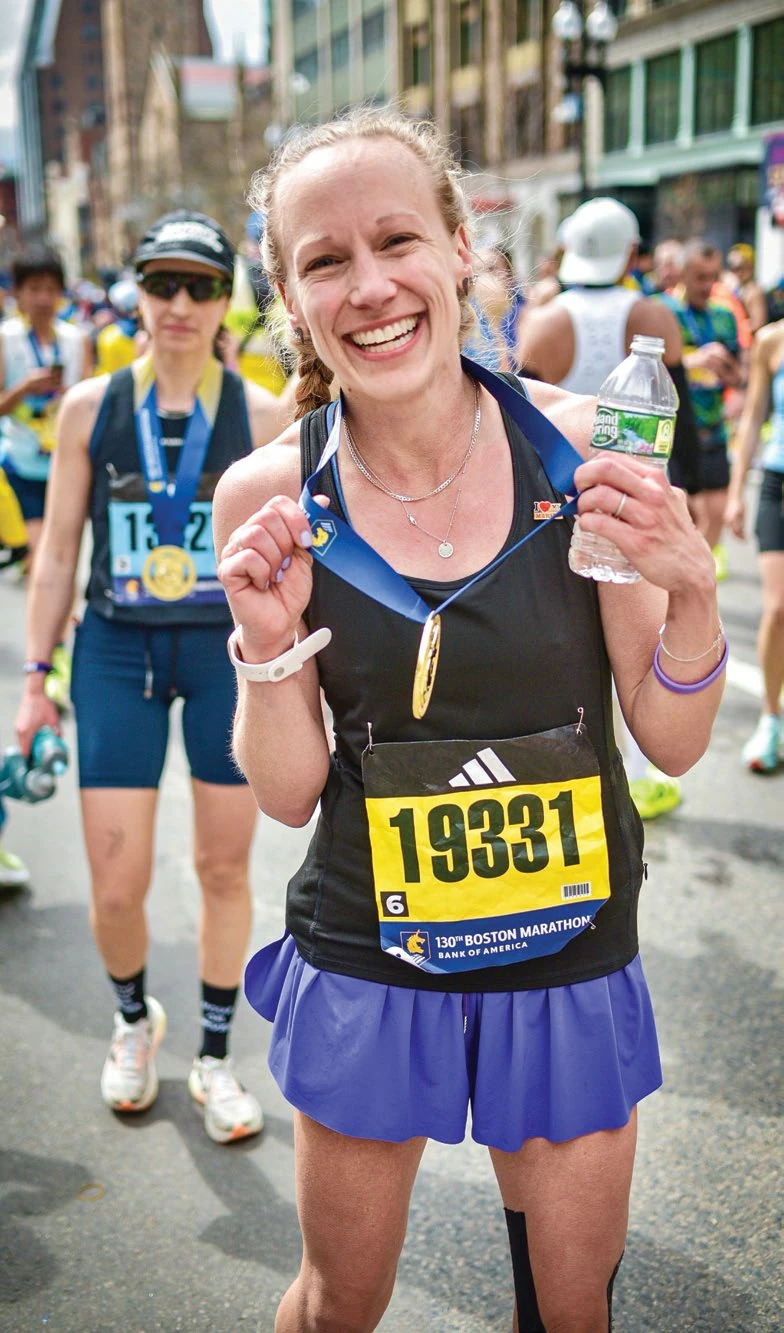
Now when I think about Boston, I think about more than the historic course or the roaring crowds on Boylston Street. I think about the journey that got us there. The uncertainty. The healing. The love that carried us forward. Holding ourselves together when it felt impossible.
The marathon mirrored our life. Life with a diagnosis has no set distance, no clear finish line. It asks the same thing, over and over: Keep going. In families living with epilepsy, love doesn’t wait for certainty; it’s steady, unrelenting, meeting each day without guarantees.
Out on the course, I began to understand that endurance isn’t fixed. Fear can narrow it. Love can stretch it further than you thought possible. And life teaches you that you don’t have to outrun what’s hard, you learn to carry it. We run marathons. We also live them. And neither asks you to be fearless, only willing to show up for the next mile.
Kaley Burns, ND is a naturopathic doctor, mother, and eight-time marathoner whose approach to health is shaped as much by the miles she’s run as the patients she serves.