By Ken Younger
Stand if you are able. Remove cover. Hand over your heart. Get ready to sing. The anthem is not for listening. Sing. With the first notes of “O say can you see,” a beautiful cowgirl on a beautiful horse rides Old Glory around the perimeter of the arena at a lope. You are surrounded by mountain majesty and big sky. You are breathing fresh Montana air. “Land of the free, home of the brave.” This is Montana rodeo. Let ‘er buck.
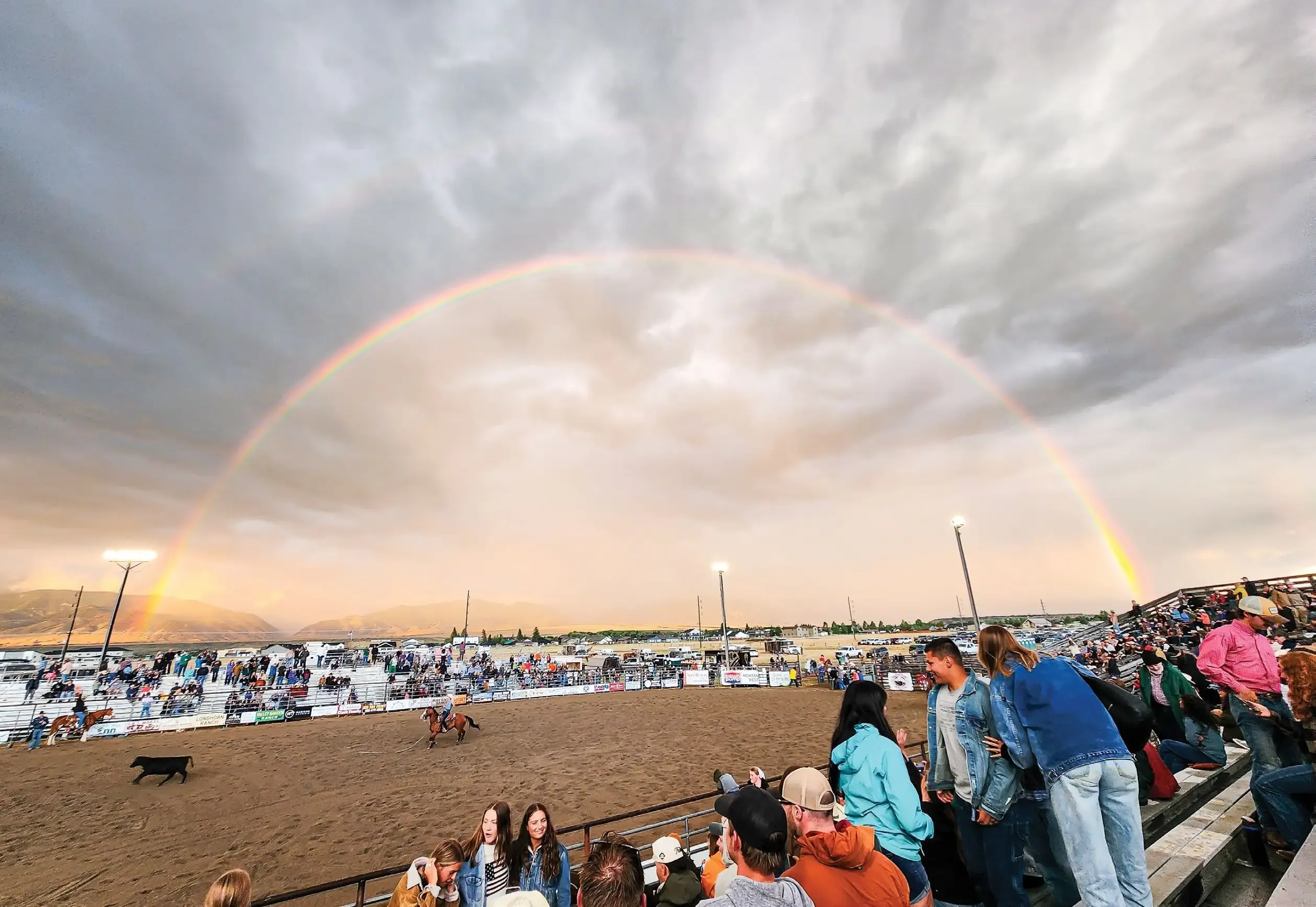
Nothing is more cowboy or cowgirl than rodeo. The hats and the boots, the dust and the leather. Southwest Montana alone hosts dozens of rodeos from early June into September, as pickups and horse trailers make a circuit from one small-town venue to another. A town of 917 will likely fill the bleachers with a couple thousand fans. The contestants show their skills, get and give thrills and, if things go right, they earn a pocket of prize money. Rodeo is a special brand of entertainment for those of us in the stands.

The contestants show their skills, get and give thrills and, if things go right, they earn a pocket of prize money.
There are two main sanctioning organizations in Montana: the Northern Rodeo Association (NRA); and the Pro Rodeo Cowboy Association (PRCA). The NRA events are usually in less populated towns, and the contestants are often home grown. Think Gardiner, Three Forks, Twin Bridges, Ennis, Wilsall, Townsend or Boulder. By definition, almost every population center in Montana might qualify as a “small town.” But the PRCA events are more big time, drawing competitors countrywide, offering a large purse, and featuring larger crowds. Livingston, population about 9,000, holds a Fourth of July weekend rodeo, the Livingston Roundup. This event is second to none, with nationally ranked contestants, premium livestock, and a big fireworks show. For other rodeo opportunities, there’s the WPRCA for women; the NPIRA, Northern Plains Indian Rodeo Association, high school and youth associations, and don’t forget the MSU Spring Rodeo in April. There are independent events as well, such as the Guts N Glory rodeo in Jardine, and the West Yellowstone Rodeo, held five or six days a week all summer long. In Montana, we are boot-top deep in rodeo.
There are things to consider when planning an outing to watch rodeo. Chief among these seems to be what to wear. If you work on the ranch or the farm, finish up your chores, get in the truck and go as you are. If you’ve lived in Montana for a while, but work at a bank or hardware store or doctor’s office, you undoubtedly own some Western wear. Dig your duds out of the closet, put them on, look in the mirror, and snap those shirt buttons. If you’re not local, you can get outfitted with a trip to the boutique or even the ranch supply store, but be careful. It might be a mistake to look like you were generated by artificial intelligence. Then again, how often do grownups get to play dress up? So, you might as well have some fun. But do remember: You can go to live in France, but that won’t make you a Frenchman.
Approaching Ennis for the Fourth of July Rodeo, you think you’re arriving early, but the road is already lined with cars, like ants marching to a picnic. The parking experience gives the first evidence that you’re someplace uniquely Western. The “parking lot attendants” are girls and women mounted on horseback. As you pull in, you follow the following end of a horse down the grassy aisle. Like obedient livestock, you’re passed on to another rider who guides your metallic horse into position. The rider gives a nod, whirls her pony in a 180, and trots off to her next assignment.
Wilsall, north of Clyde Park and south of Ringling, provides a fine rodeo weekend. Started in 1953 by “a few local boys with the rodeo bug,” this June rodeo sets the tone for the summer. The two-day event starts with rodeo Saturday night. If you’re too wound up to go home after the rodeo, stick around. There’s music and a chance to show off your Texas two-step right at the rodeo grounds. Or, take your dancing boots into town for another band and a street dance. Sunday morning is time for the firemen’s breakfast. Why do those pancakes taste better than what Momma flips at home? In our family, we have always had a life philosophy: Never miss a wedding, never miss a funeral, and never miss a firemen’s pancake breakfast. There’s church service at the rodeo grounds, 9 a.m. sharp. A parade, sponsored by Women of Wilsall, commences at noon. It’s rodeo time again at 2 p.m.
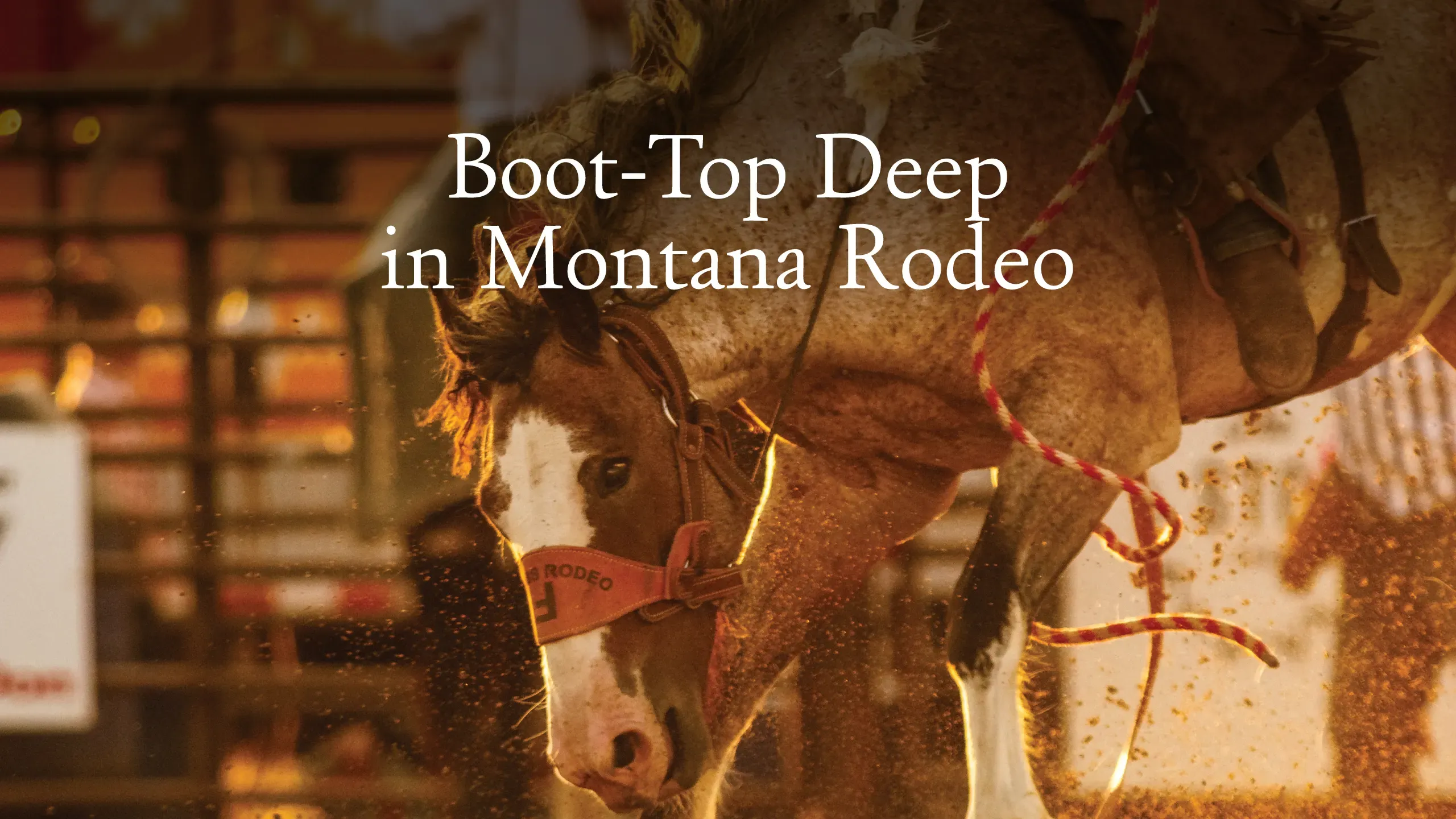
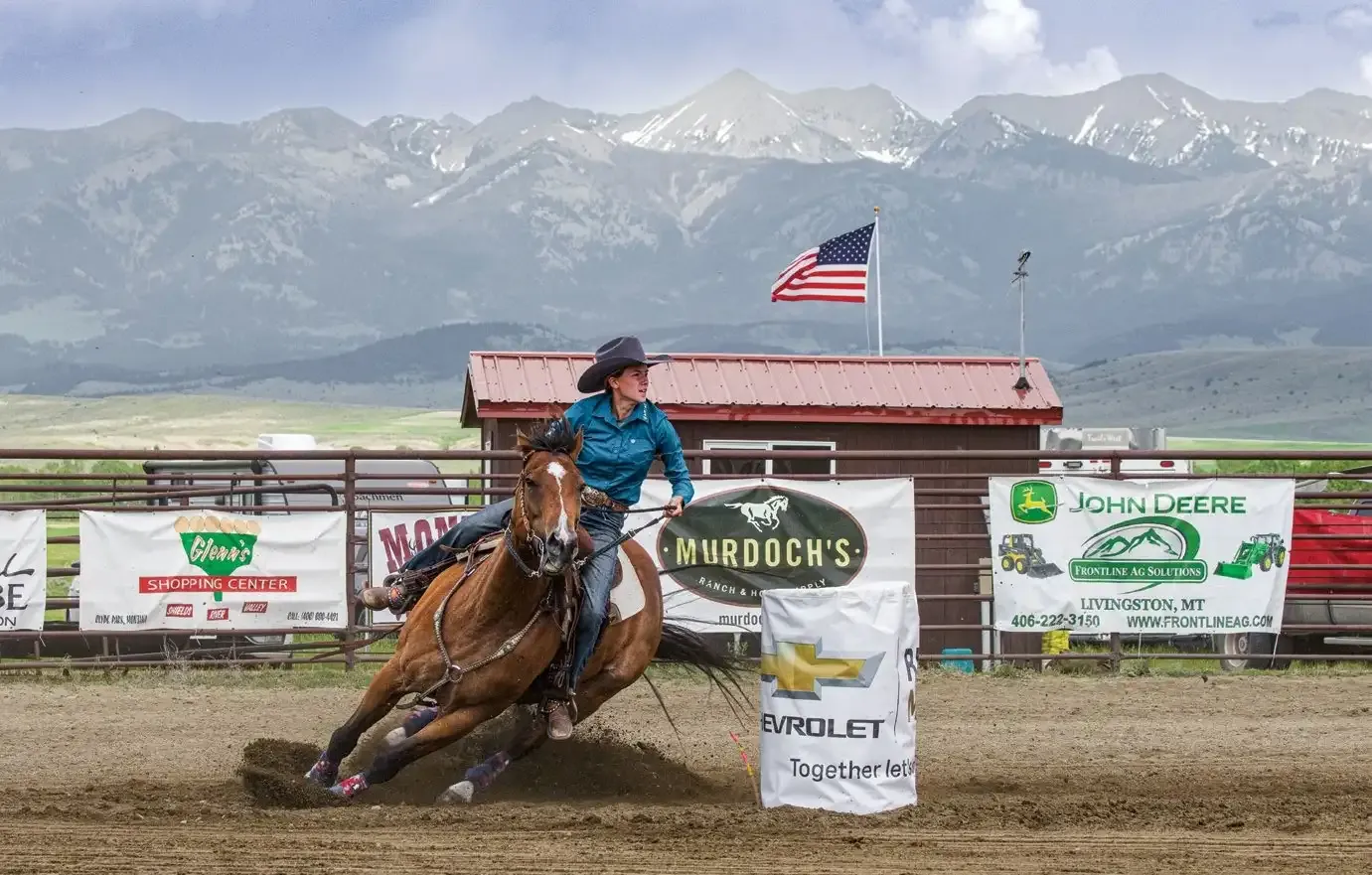
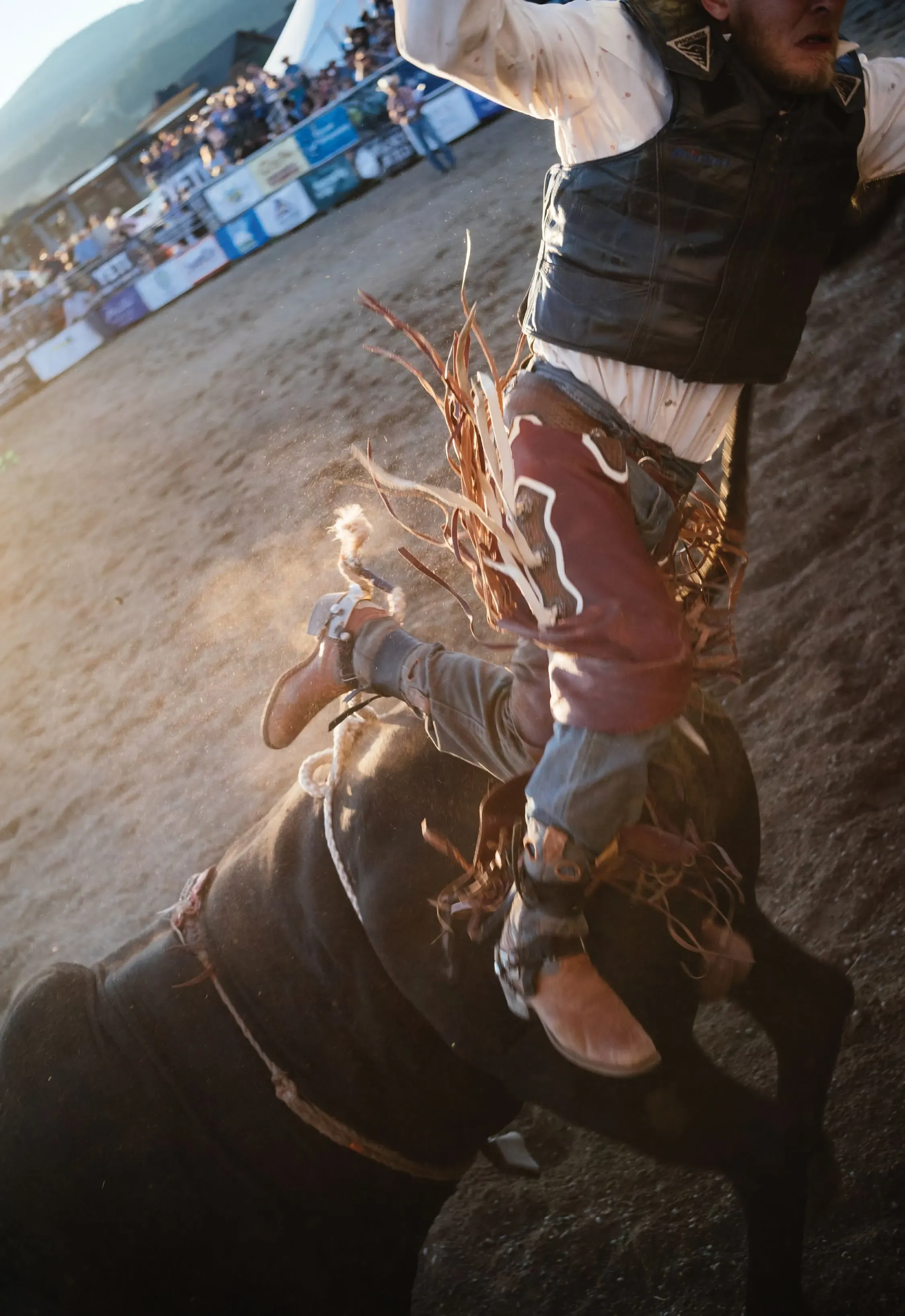
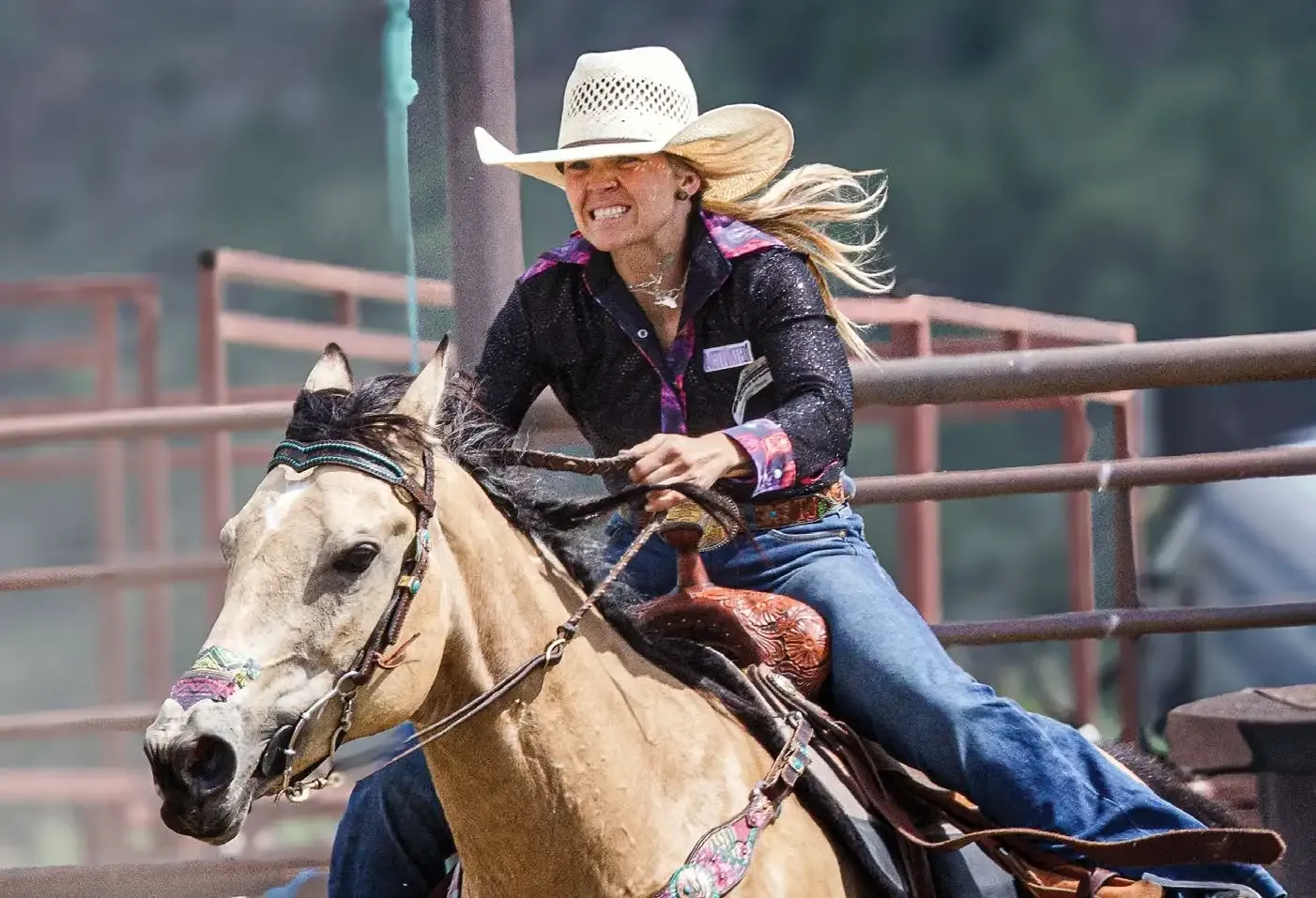
Rodeo events are of two types: roughstock and timed events. Your mental image of rodeo is likely of the roughstock events: bareback bronc riding, saddle bronc riding and bull riding—the cowboy’s arm pointed northwest, his boots and spurs aimed southeast. Likewise, the horse’s hind legs are high and forelegs low. Hang on for eight seconds and you’re awarded points. Timed events are steer wrestling, team roping, calf roping, ladies barrel racing and breakaway roping. These events require cowboys and cowgirls to race against the clock and their competitors’ times. The crowd is a participant in each event, roaring encouragement and approval during the ride, or applauding in consolation to the rider who made a premature exit.
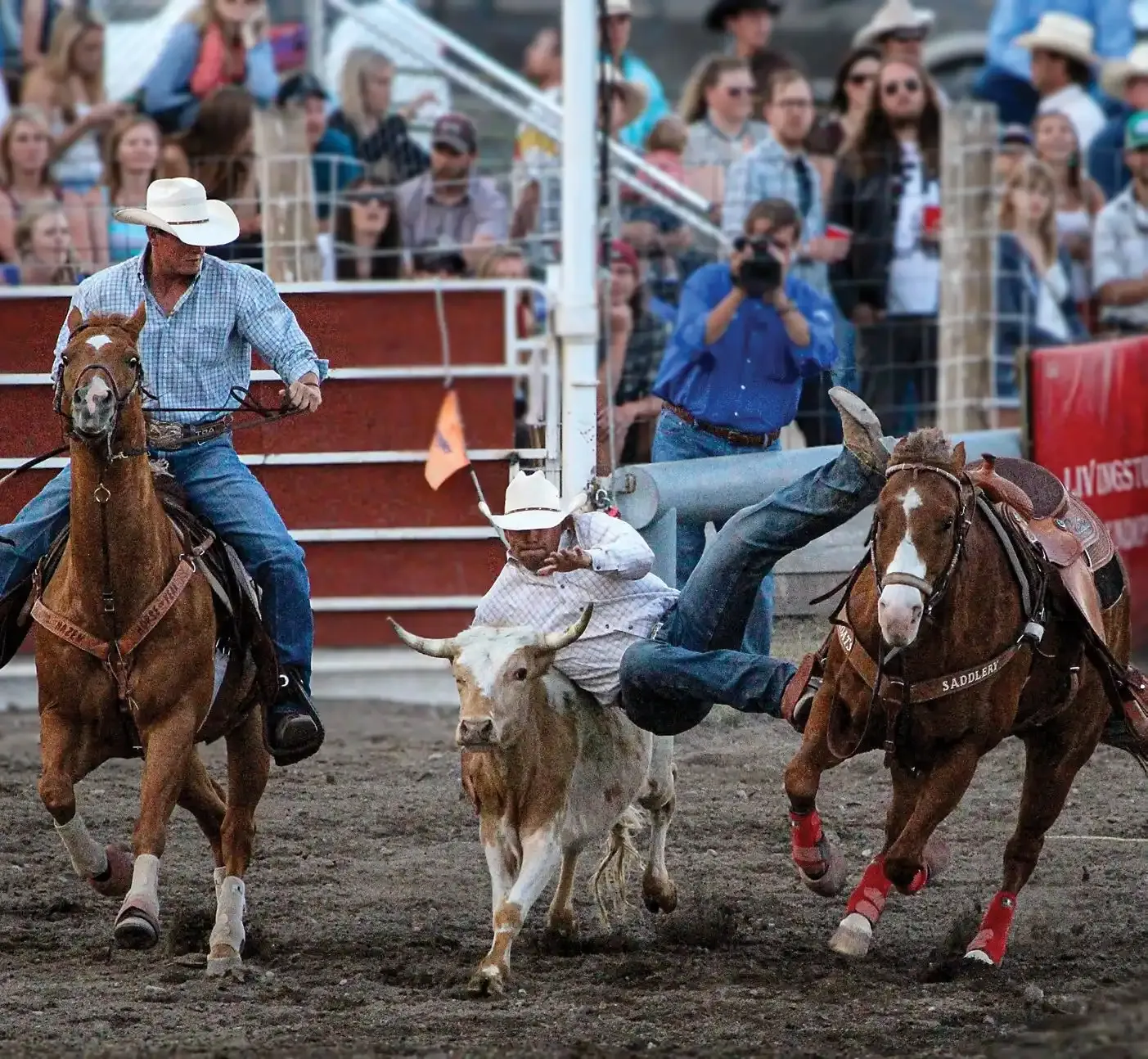

If you’re lucky, there will be some other events of high entertainment value: the children’s calf scramble, for instance. This hilarious event is some variation of a ribbon tied to the tail of a calf, and a free-for-all mob of kids. The object is to be the kid who grabs the ribbon. The calves do not cooperate, believe me. Another children’s event is mutton busting. Use your imagination on that one.
Over the Fourth of July, Livingston’s Roundup pro rodeo offers a chance for a visit to the major leagues. While there are PRCA rodeos in Billings and Great Falls and other places, you can’t beat the venue in Livingston. Get tickets ahead of time; this place sells out every year, with about 5,000 spectators each performance. The rodeo is even sometimes featured on the Cowboy Channel. On-site parking is limited, so you and fellow rodeo fans will have to parade through the surrounding side streets toward the Yellowstone River and the fairgrounds entrance. The rodeo is a four-day affair, beginning on Wednesday, and ending this year on Saturday, July 4. There’s a parade on July 2nd. The Park County Fairgrounds open at 5:30 p.m., with the contests starting at 8:00 p.m.
You know you’re at a Montana rodeo when, as you pass through the gate, the very first concession booth you encounter is selling whiskey. There are a multitude of other vendors hawking all the usual fare, such as corn dogs, burgers, brats, and barbecue. If you think your taste buds can handle it, you might find some deep-fried items that perhaps shouldn’t be deep fried, like pickles and Oreos. Other booths offer belts, buckles, boots, and hats.
If you’ve been to the Livingston Roundup before, you’ll recognize the distinctive voice and manner of the announcer. He is Steve Kenyon, who’s been behind the microphone for more than 20 years. It is said that every pilot wants his voice from the cockpit to sound like Chuck Yeager, the test pilot who first broke the sound barrier. Well, every rodeo announcer would like to sound like Kenyon. His narrative and banter with the rodeo clowns is especially distinctive. These rodeo clowns are equal parts entertainment and heroism. Imagine trying to distract a raging bull intent on trampling a cowboy while wearing a hat that is three sizes too big, pants that are five sizes too big and a nose that is painted red. Brave souls.
Now, let me call attention to an aspect of the competition that one might overlook. A pair of pickup men are the rodeo equivalent of a search and rescue team, with horses for helicopters. They hover at the periphery of the arena on their quarter horses, engines running. A cowboy has just spent eight seconds, more or less, trying to stay attached to a writhing, lunging, galloping, bucking mass of livestock. The rapid transit from horseback to the ground amidst flailing hooves is hazardous business. The only way it could be more dangerous is if the landing zone were a rattlesnake nest. Despite the chaos and peril, the pickup men evoke a strictly business demeanor with their starched shirts, bright chaps over their jeans, and all the while maintaining perfect posture. The pickup man pulls alongside the rider and mount, like a jet easing into formation. The cowboy leans and puts a bear hug around the pickup man. The two horses part, and the rider is settled back to earth. Another successful 911 call. If the hat is still there, the cowboy may touch the brim to salute the cheering crowd.
While the spectators may have turned attention elsewhere, the pickup men have another high-speed, high-hazard rescue. Mister bronco is still on the loose. The next step is to remove the flank strap from the bronc and haze him through a gate and out of the arena. Again, two equine jets align, the rider leans and with a quick grab and tug, relieves the bucking horse of his tickle. The bronc is swiftly escorted out. The pickup men retake their observation posts at arena’s edge, and soon enough a new gate opens for the next rider and mount to begin their eight seconds of glory.
There is another kind of rodeo that’s a horse of a different color—the ranch rodeo. These events are held in the same arenas but on different weekends. The emphasis is not on the individual daredevil, but rather this is a team competition. The contests represent day-to-day ranchwork and the cowhands are locals; the four-person teams are often made up of hands from the same outfit. The events include branding, where a calf is roped, held and branded. There’s no smoke or smell of burning hair; they use chalk. Another event is doctoring. Don’t worry, there are no shots or castration—chalk again. The signature event of ranch rodeo is the final contest of the day, wild cow milking. Picture this: A 900-pound lactating cow is roped around the head by team member A. Team member B grabs the tail to hold the cow steady. Good luck with that. Member C milks the cow, aiming to get the milk into the narrow mouth of an old-fashioned Pepsi bottle. And team member D sprints across the arena to the judge and inverts the bottle to demonstrate the presence of prized fluid. Sometimes there’s a few drops, sometimes not.
Bronk riders and bull dogers are all hart abouve the wast band but it’s a good bet there’s nothing under thare hat but hair.
— Charlie Russell
There is no doubt that the cowboys and cowgirls are taking on big risks for their own satisfaction and pride, and for your entertainment. The risk factor might be somewhere between NASCAR and Mixed Martial Arts. The contestants earn every bit of your applause. But when you watch a sentient being voluntarily climb on the back of a 1,700-pound bull and give the guy holding the gate a nod to turn the beast loose, you have to wonder: What is this guy thinking? There is a quote from Charlie Russell that gives the explanation: “Bronk riders and bull dogers are all hart abouve the wast band but it’s a good bet there’s nothing under thare hat but hair.”
Ride ’em cowboy.
Ken Younger is a physician who has lived in the Gallatin Valley for over 50 years. After retiring from his ophthalmology practice, he has pursued freelance writing and photography.