By Eric Ladd
Mountain communities advocate a new look at food and community health.
There wasn’t a moment where we collectively decided to trade health for convenience. It happened slowly, one shortcut at a time. Days got busier. Screens replaced movement. Food got faster. Sleep became optional. And for a while, it felt like we were getting ahead, until we weren’t.
Today, we are living with the consequences of that trade. Fatigue, inflammation and chronic disease have quietly become the baseline. But perhaps we’ve reached a tipping point. Something is changing as people ask questions. We have built a world optimized for convenience and, in the process, created one that makes it increasingly difficult to stay healthy. People are starting to prioritize their health and correct decades of damage done by processed food, sedentary living and a healthcare system built to treat symptoms rather than causes.

Starting at the root
If that correction is taking shape anywhere, it is happening in places like Bozeman, Montana. Set between Yellowstone National Park, the Gallatin River, and some of the most productive agricultural land in the region, Bozeman sits at a rare intersection of access and awareness. Here, the environment demands a healthy lifestyle.
What is emerging is not a single movement, but a convergence. Across town, a network of businesses and ideas is forming, each addressing a different piece of the same question: What does it actually mean to live well? It starts, as it should, with food.
For years, food was reduced to convenience, built on calories, shelf life and efficiency. As the pendulum swings back, what was once niche—grass-fed beef, pasture-raised proteins, clean-label dairy—is now one of the fastest growing segments in the food industry. At Regen Market, that shift begins below the surface. “Human health starts in the soil,” said Xan Jarecki, general manager at Regen. “Healthy soil produces more nutrient-dense plants, which support healthier animals and ultimately better food for people. In that sense, whole, properly-raised food is medicine, not just calories.”
Regenerative agriculture reframes the system entirely, prioritizing soil biology, biodiversity and natural cycles over short-term output. When the soil is alive, the food shows results. “When that living system is diminished, everything downstream is impacted,” Jarecki explained. “But when animals are raised on biologically active landscapes, you see real differences in quality and nutrient density.”
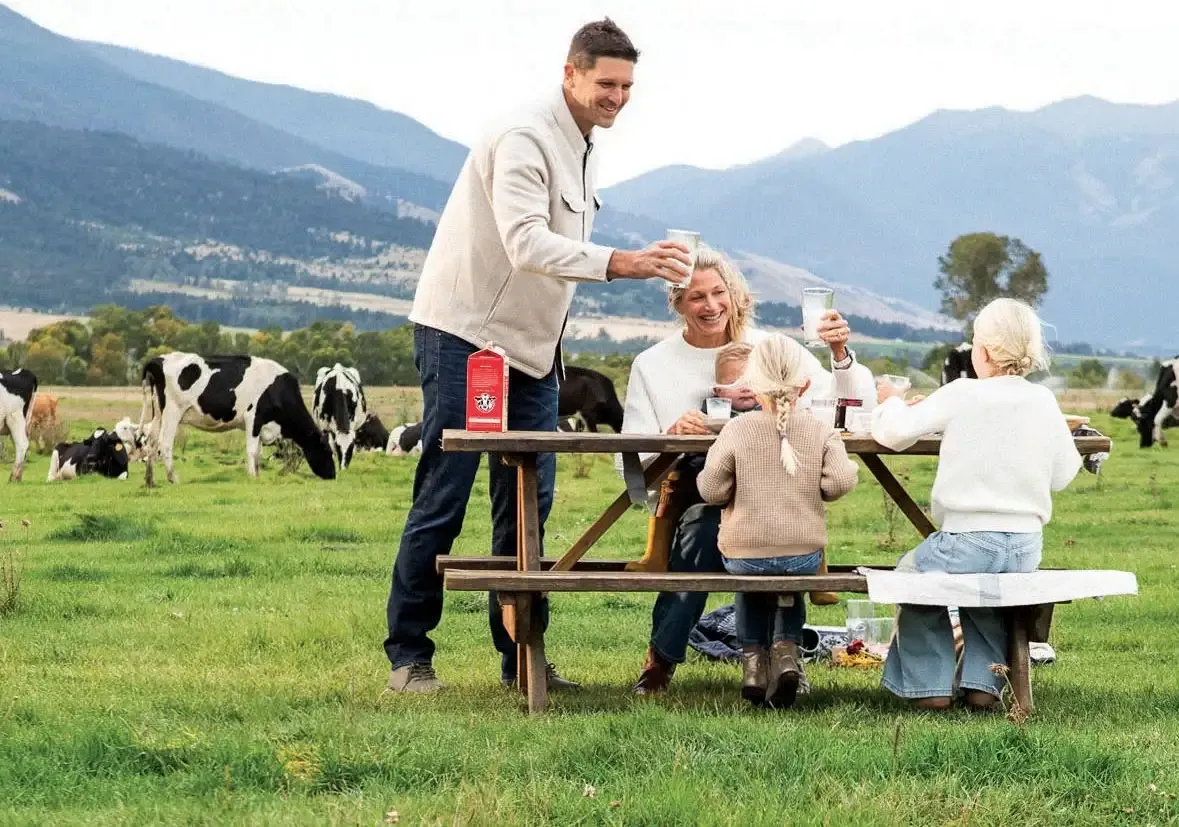
That same rethinking is happening in dairy. “Milk is one of the most nutrient-dense foods we have,” said Jeff Mroz of Pioneer Pastures. “But not all dairy is created equal. Too many products today are loaded with added sugars, seed oils and unnecessary additives that undercut what makes milk valuable in the first place.” By focusing on A2 dairy—milk naturally free of the A1 beta-casein protein that many people find difficult to digest—clean sourcing and minimal processing, Pioneer Pastures’ model shifts back toward simplicity, producing food that is closer to its natural state and easier for the body to recognize. “What’s good for the animal, the land and the consumer are actually aligned,” Mroz said. “They only diverge when the system optimizes for the wrong things.” In a region surrounded by working farms and ranchland, this does not feel like innovation, but a return.
“What’s good for the animal, the land and the consumer are actually aligned. They only diverge when the system optimizes for the wrong things.”
— Jeff Mroz
Supplementing a lifestyle
Awareness does not stop at food, but extends into how we fuel our bodies every day. The supplement industry, now approaching $70 to $80 billion dollars annually in the United States, is evolving rapidly, particularly in hydration and metabolic health. What was once reserved for elite athletes is becoming part of daily life.
Brands like LMNT sit at the center of that shift, a rapidly growing hydration company producing zero-sugar electrolyte drink mixes and ready-to-drink canned beverages, formulated with a precise balance of sodium, potassium and magnesium. “We’re in the middle of a major metabolic health crisis,” said LMNT co-founder Robb Wolf. “Something like 93 percent of American adults are metabolically unhealthy.” Many people, he explained, especially those eating whole foods or living active lifestyles, are under-consuming salt. “Most people don’t need more sugar,” Wolf said. “They need better mineral balance.” It’s a philosophy that led to LMNT in the first place.
The concept grew out of personal experience. “I had improved my health dramatically, but my performance was suffering,” Wolf said. “The missing piece was sodium. Once I started replacing it, the difference was immediate. Then I started seeing the same pattern everywhere.” That pattern became the foundation of the company. “We built LMNT by starting with the biology and working backward to the product,” he said. It’s an approach he has observed reflected in other industries including the medical system.
Preventative over reactionary care
More people are moving beyond symptom management, seeking preventative care, deeper diagnostics and a clearer understanding of how their bodies function. The functional and integrative medicine space is projected to grow into a $100-billion-dollar market over the next decade. In communities like Big Sky, that shift is already here.
At Big Sky Natural Health, demand continues to rise as patients look for answers around hormone balance, gut health, inflammation and metabolic performance. A growing part of that demand is centered around IV therapy. Once reserved for clinical settings, it is now becoming a sought-after tool for hydration, recovery, immune support and overall wellness.
By delivering vitamins, minerals and nutrients directly into the bloodstream, IV therapy bypasses the digestive system allowing for faster absorption and more immediate impact. For many, it has become a go-to for everything from post-travel recovery and altitude adjustment to immune support during peak seasons. For Dr. Kaley Burns, the foundation of health is simple.
“We’re seeing more people come in not because they’re sick, but because they want to stay well,” she said. “Health isn’t something you outsource. It is something you actively build.”
“We’re seeing more people come in not because they’re sick, but because they want to stay well. Health isn’t something you outsource. It is something you actively build.”
— Dr. Kaley Burns
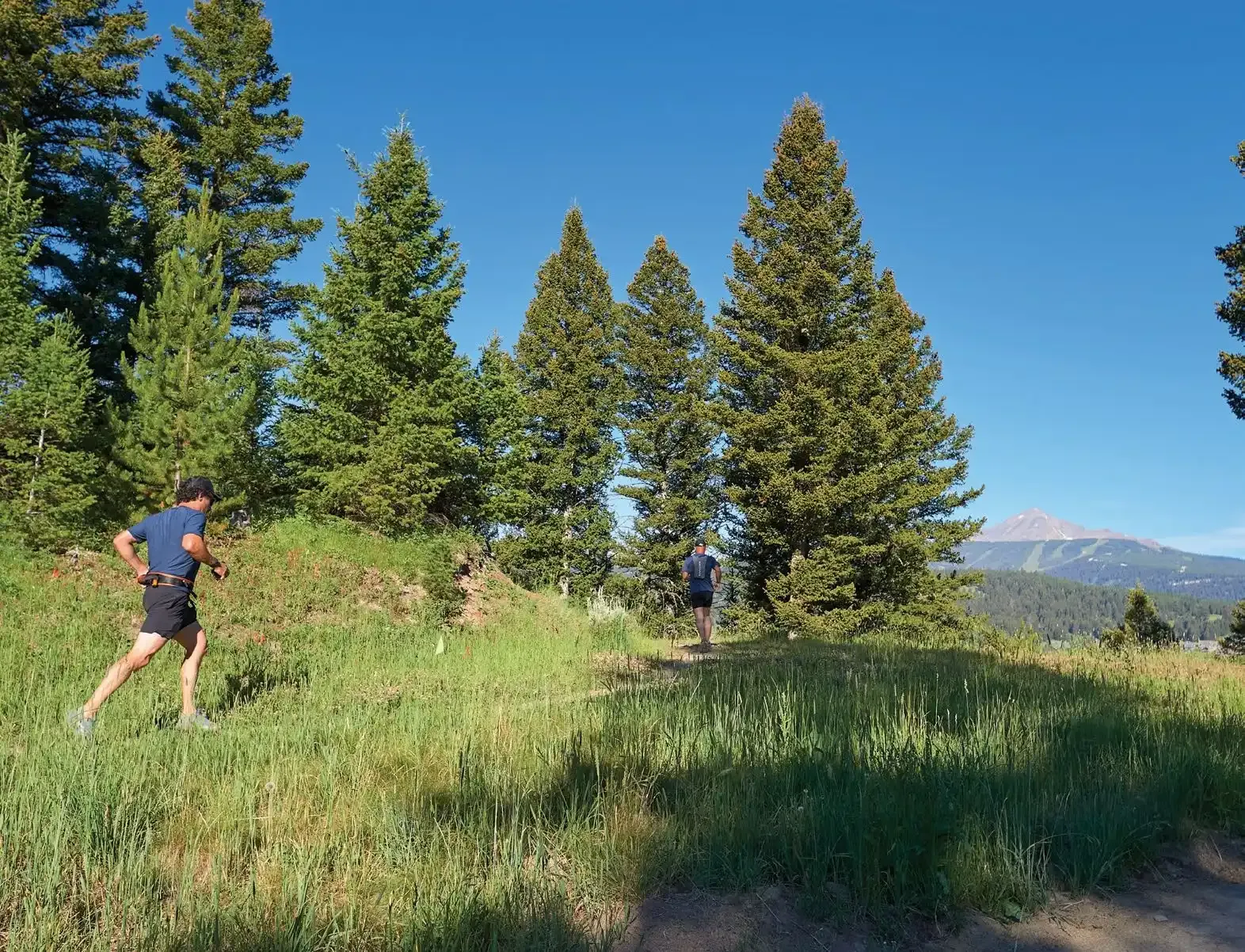
That philosophy extends beyond the clinic and into everyday life. Burns notes the growing 1,000 Hours Outside movement, focused on getting growing children outdoors and away from screens, but easily applied to adults as well. It’s a reminder that some of the most powerful health interventions are also the most accessible: time outside in natural light, moving your body.
It is equally evident inside the gym. Fitness is no longer just about intensity or aesthetics; there’s a growing focus on longevity, mobility and durability, especially in mountain communities where strength must translate into real-world capability. At Ascend Movement, that evolution is deeply personal. Founders Ben and Sarah Bese moved to Bozeman not just to start a business, but to build a healthier life.
“There’s been a clear shift from performance-driven training to longevity-driven training. People are realizing that pushing harder is not always better, especially if it comes at the expense of long-term health.”
— Sarah Bese
“There’s been a clear shift from performance-driven training to longevity-driven training,” Sarah said. “People are realizing that pushing harder is not always better, especially if it comes at the expense of long-term health.”
Their classes reflect that philosophy, bringing together elite athletes, individuals focused on staying active longer, and those recovering from injury. “A lot of people are simply tired of getting hurt,” Ben said. “They want to build strength in a way that actually supports their life.” The shift, they explained, is in how strength training applies outside of the gym. “We’re not just making people stronger. We are building bodies that can actually handle life outside the gym,” Ben said. Suddenly, fitness becomes less about how you look and more about what you can continue to do.
Therapy of stillness
What was once niche—sauna, cold plunge and contrast therapy—is now moving into the mainstream. The global wellness economy has surpassed $5 trillion dollars, with thermal bathing and recovery practices among its fastest growing segments. In places like Bozeman, that shift is visible. At Portal Thermaculture, recovery is framed as something deeper.

Places like Portal Thermaculture in Bozeman have filled the gap of “third spaces,” creating an environment of relaxation and community outside of work and home. Photo courtesy of Portal Thermaculture
“Connection is a foundation of human health,” said Portal Thermaculture co-founder Rory MacMurdo. “Thermaculture offers connection to nature, to others, and to yourself, something that has been missing in a comfort-driven society.”
Portal’s Bozeman location reflects that evolution. In the city’s growing Northeast Neighborhood, the space blends ancient modalities like sauna and cold plunge with a clean, design-forward aesthetic, where experience and environment carry equal weight. And while you recover, you connect with others.
A similar concept is taking shape across town at Umvelt, a modern bathhouse rooted in centuries-old traditions. “Bathhouse culture has existed for generations across Scandinavia, Japan and Europe,” Paul Byrne, Umvelt owner, explained. “What we’re seeing now is not something new, it is a re-emergence driven by a need for connection, a response to isolation, and a growing fatigue with technology.” In a world shaped by screens and constant stimulation, these spaces offer something different: a sense of shared experience.
“One of the most powerful aspects of these environments is that they are not skill-based or performance-driven,” Byrne said. “They become true third spaces where people from all backgrounds can come together, disconnect, and share a common experience.”
While the physical benefits of heat and cold therapy are well documented, including improved circulation, reduced inflammation, enhanced recovery and even dopamine increases from cold exposure, the deeper impact is the physical connection gained away from your phone, conversing with others and being still. “Being in an intentional space, combined with heat and cold, acts as an equalizer,” Byrne said. “It helps people reconnect with a sense of shared humanity.”
In a mountain town where athleticism is a part of daily life, third spaces like Umvelt and Portal become a part of the rhythm. “We’ve gathered around fire since the beginning of time,” MacMurdo said. “We just put it in a small wooden room.”
Individually, each of these shifts—whether it be regenerative food, functional nutrition, strength training or recovery—represents a powerful equation. In places like Bozeman, surrounded by wild landscapes and rooted in working land, that alignment feels inevitable; a reflection of place.
When you live in a place that demands more of you, you begin to demand more of yourself. And that is where real change begins.
Eric Ladd is the publisher of Mountain Outlaw, as well as a husband and father. He advocates for clean rivers, conservation, and community whenever possible, including through his service on the board of American Rivers and his involvement with Big Sky Search and Rescue and AxeALS.