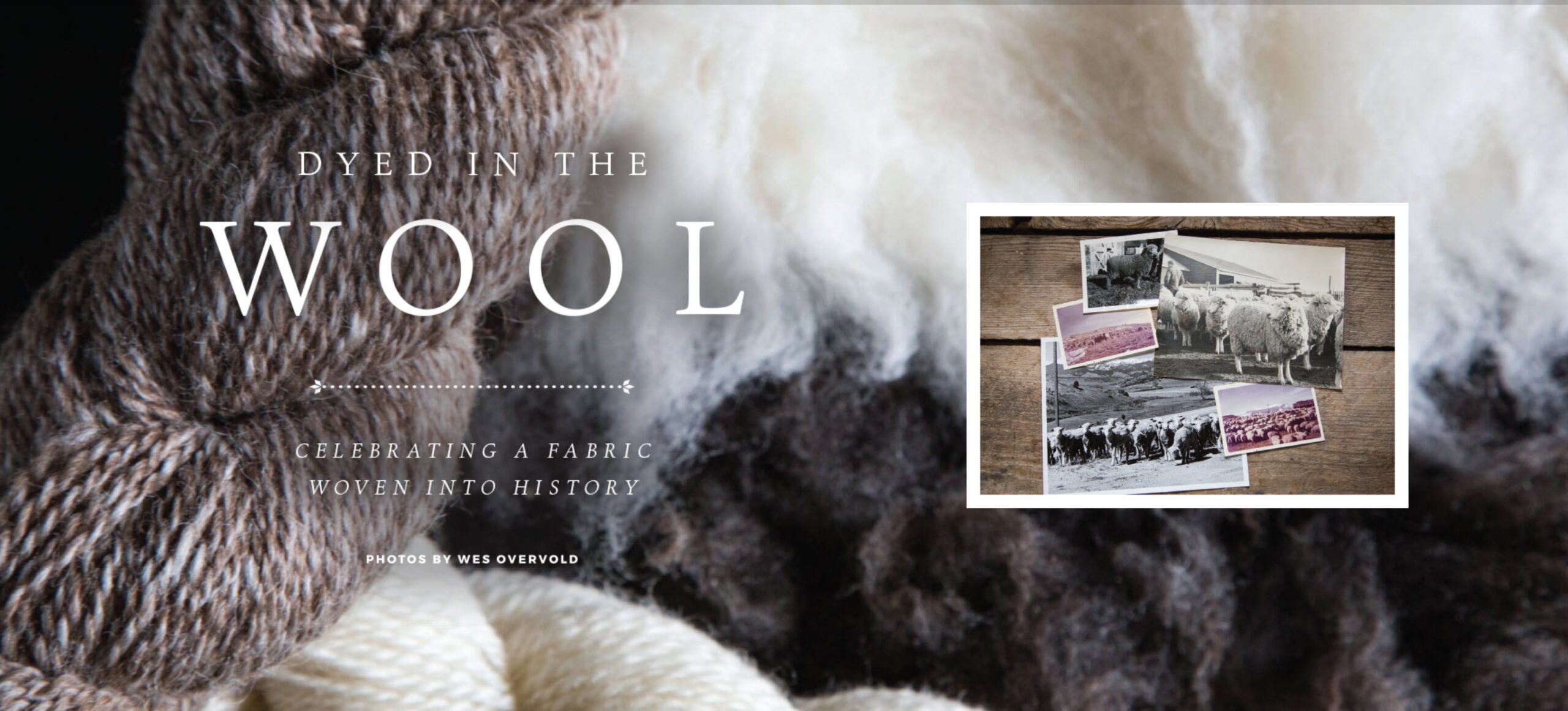
Your favorite wool sweater or pair of socks has a long, woven history.
Sheep were first domesticated around 8,000 B.C. in Mesopotamia, according to the Belgium-based International Wool Textile Organisation, and the earliest wool clothing dates back to at least 3,000 B.C. From Asia, sheep were introduced to North Africa and Northern Europe.
Europeans embraced sheep farming, valuing this animal that provided not only meat and milk but also clothing fabric. The Spanish fiercely guarded a fine-wool sheep breed later called Merino, and selling these animals outside the Spanish empire before 1700 was punishable by death.
The Dutch eventually acclimated the breed to their southern African colonies and from there the stock made its way with sailors to Australia, which by 1840 was the most important Merino sheep grower along with South Africa and New Zealand.
Sponsored Content
Wool and cotton remained a significant part of the world textile industry until synthetic fibers were developed in the early to mid 20th century, and by 2000, synthetics and cotton accounted for 90 percent of worldwide textile fiber production. Today, however, wool fabric is seeing a resurgence as consumers seek natural alternatives to fossil fuel-derived products.
In the following pages, Mountain Outlaw celebrates wool with some of our favorite American companies and the styles that reveal its elegance. – The Editors
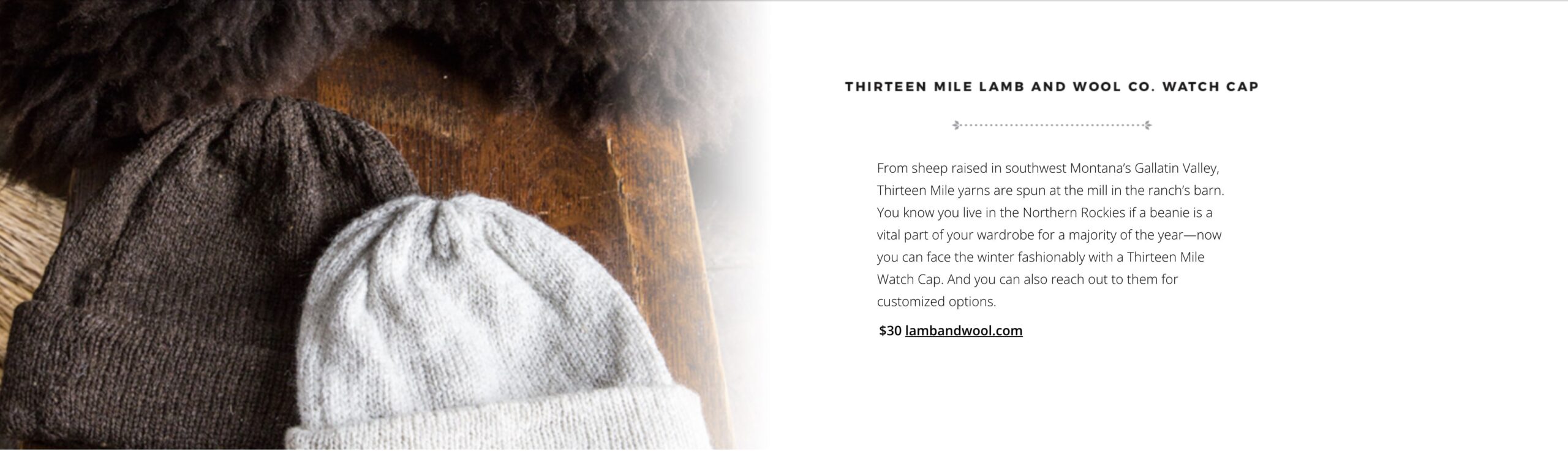
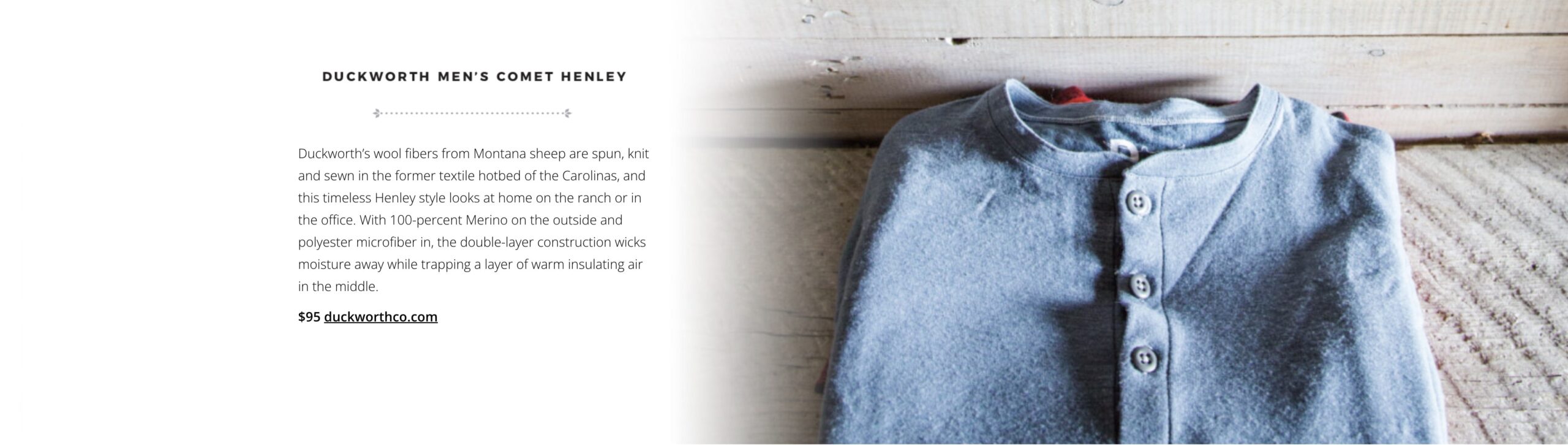
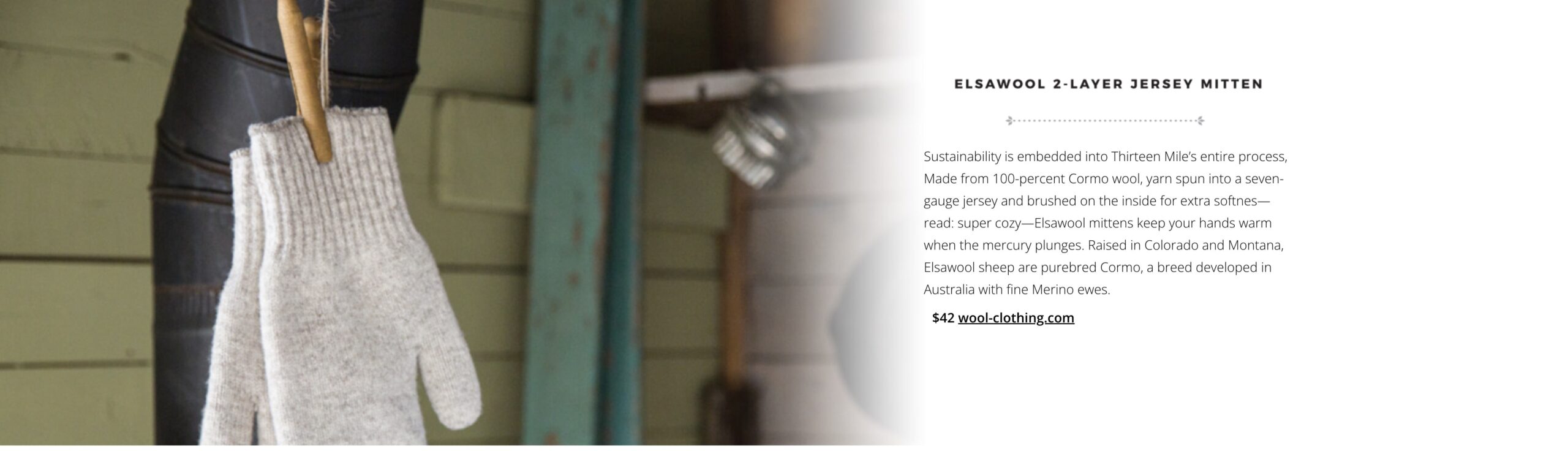
From sheep raised in southwest Montana’s Gallatin Valley, Thirteen Mile yarns are spun at the mill in the ranch’s barn. You know you live in the Northern Rockies if a beanie is a vital part of your wardrobe for a majority of the year—now you can face the winter fashionably with a Thirteen Mile Watch Cap. And you can also reach out to them for customized options. $30 lambandwool.comDuckworth’s wool fibers from Montana sheep are spun, knit and sewn in the former textile hotbed of the Carolinas, and this timeless Henley style looks at home on the ranch or in the office. With 100-percent Merino on the outside and polyester microfiber in, the double-layer construction wicks moisture away while trapping a layer of warm insulating air in the middle. $95 duckworthco.comSustainability is embedded into Thirteen Mile’s entire process, from the grassfed, organic lamb and wool to the renewable energy that powers the wool mill. These 100 percent wool blankets measure in at 64-by-90 inches and feature a gray warp woven through chocolate-brown yarn. For more than 20 years, Thirteen Mile’s ultra-warm blankets and throws have turned even the coldest winter evening into a cozy fireside night to remember. $190 lambandwool.comJohn Rich built his first woolen mill in 1830 in Plum Run, Pennsylvania, and Woolrich bills itself as “The original outdoor clothing company.” Inspired by archival designs, the 85 percent wool/15 percent nylon Mill Wool Pant is made with a mid-weight herringbone pattern that keeps heat in while you’re chopping wood on a cold winter day. A cellphone pocket on the right leg and wide, vintage-inspired belt loops marry the new with the old—and elastic ankle cuffs let you show off your favorite boots. $195 woolrich.comMade from 100-percent Cormo wool, yarn spun into a seven-gauge jersey and brushed on the inside for extra softness—read: super cozy—Elsawool mittens keep your hands warm when the mercury plunges. Raised in Colorado and Montana, Elsawool sheep are purebred Cormo, a breed developed in Australia with fine Merino ewes. $42 wool-clothing.com