A Jackson Hole wildlife photographer is challenging the ethics of photographing mountain lions—and offering a better way forward
Words & Photos By Savannah Rose
Last light had come and gone by the time we tucked into the wooden blind, sheltered from the cold and wind. The dark outside was periodically interrupted by the full moon as it cut through heavy snow clouds. My eyes were fixed out into the blackness, waiting for the night to light up in front of us. My heart thumped as I stared into the void where, unbeknownst to me, a mountain lion and her cub were fast approaching wildlife filmmaker Jeff Hogan and me.
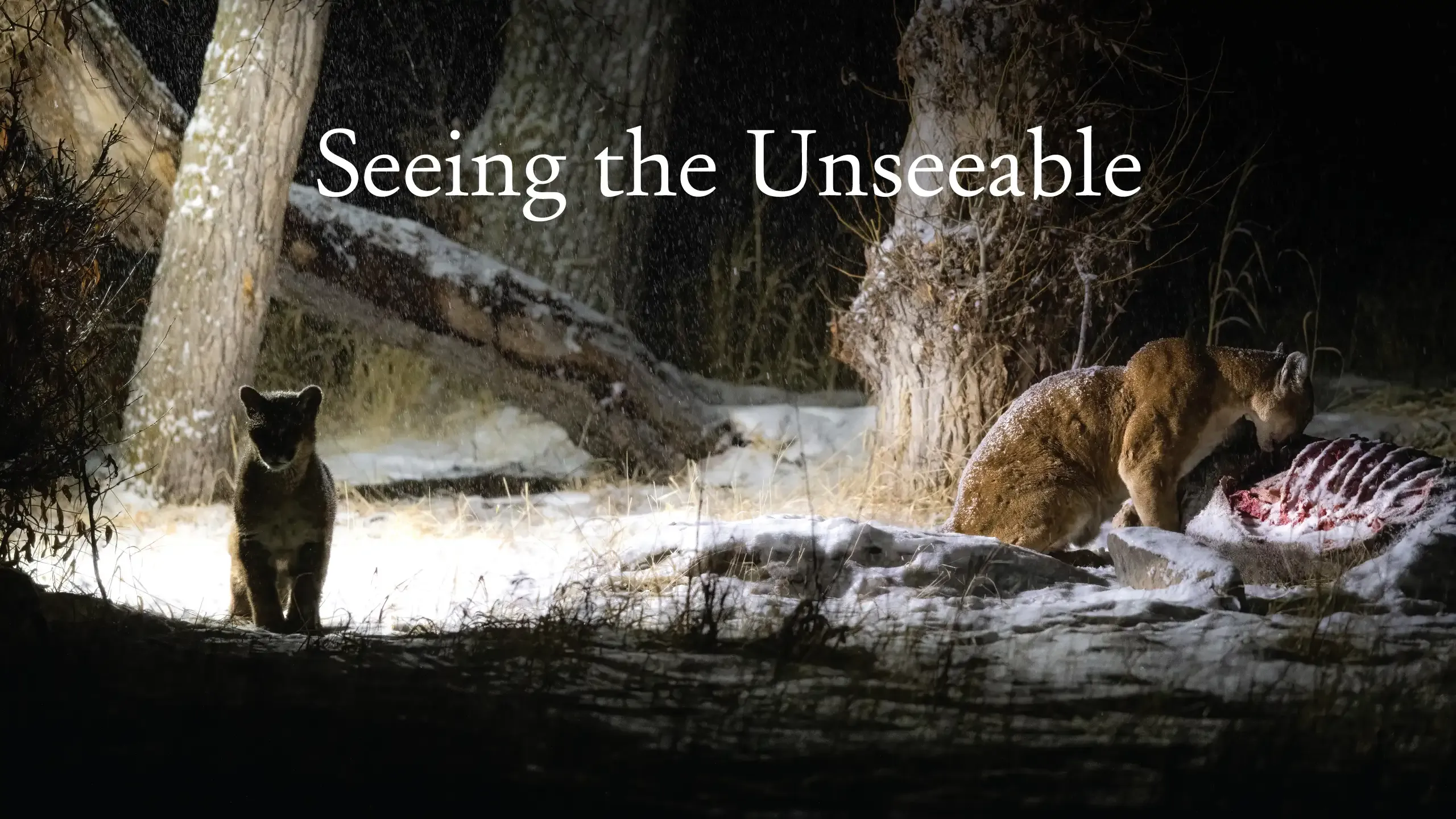
The mother passed in front of a motion sensor and light flooded the snowy night like the start of a movie illuminating a dark theater. She paused, drinking in the scene in her svelte lioness way, her kill revealed by strategically placed hidden halogen lights. She stepped further into the scene, tail quirked up in a lazy twitching loop, bending her head to feed on the remains of a winter-killed elk. Snowflakes hung in the air, backlit by the lights; an eerie silence gripped the night save for the occasional crunch of an elk bone against carnassial teeth. I watched in reverence while the lion dipped her head in silent prayer over her feast, snow slowly blanketing her back. This was the moment we had been waiting for: the rare opportunity to watch a mountain lion family’s natural behavior at night.
We met a herd of deer on our hike out from the blind, and our headlamps revealed them keeping a watchful eye on the mother lion. She was on the other side of the herd, slinking from shadow to shadow. I was struck by how — even in the dead of night — the mountain lion was still moving only by shadow, never stepping into the moon glow. They are creatures of the utmost secrecy; this of course being part of their allure as well as the conundrum of photographing them. And as in many cases in the wild, such mystery has left room for myth to take place of that which we cannot witness.

It will likely come as a surprise that the majority of cougar images you see in media are not actually taken in the wild, and often are not procured ethically. Generally speaking, there are three standard practices for photographing mountain lions:
The game farm is a largely unknown dark secret in the industry and the skeleton in the closet of many wildlife photographers’ exotic portfolios. Operating under a “roadside menagerie” license and with the same ethical standards as a fur farm, game farms keep animals living in frequently abysmal conditions, often without proper veterinary care, and can sell them for parts when they’re no longer useful. From here, photographers can pay a steep price to take the animals from captivity and pose them in dynamic, often fatuously stereotypical scenes of resplendent canyonlands or snowy mountainscapes. These images are frequently promoted to the public as reality.
For those who can afford the opportunity, mountain lions can be photographed ethically in the wild in the southernmost reaches of their natural habitat in Torres del Paine, Argentina. Though this is an option to photograph true wild cougar behavior, it’s often too costly in both time and money for most.

The third oft-used method for photographing mountain lions is by hunting them down with hounds. Photographers opting for this practice accompany a houndsman (a lion hunter) into the wilderness, where they’ll turn their dogs onto a cougar and chase them to exhaustion. At that point, the cat is forced to retreat to a tree, cornered and threatened. In most cases, this is how mountain lions are hunted for sport. This practice causes undue stress simply for the privilege of photographing a mountain lion in the wild. In addition, these images of bayed-up cats frequently show the cats hissing fiercely (the behavior of a terrified animal, sold to the public as offensive aggression). This adds significantly to the fear-mongering effect surrounding mountain lions, contributing to human intolerance of these cats that ultimately leads to more of them being killed, and a greater chasm between human society and the wild. These images do matter, and they do have an impact. Human perception of the mountain lion desperately needs an overhaul—and this begins with how they are portrayed in media.
I’ve been a wildlife photographer in Jackson, Wyoming, for close to a decade, a career I stumbled into by the grounding effect of being in close proximity with the wild. I take images of all the Greater Yellowstone inhabitants, but mountain lions have become my favorite subject. Ten years ago, I found an image behind the broken glass of a frame — a mountain lion crouched over a dead bighorn sheep in the mountains of Hoback, Wyoming, taken back in the 1980s by my partner’s father. I knew immediately I wanted to witness something like that someday, but at the time, it seemed unattainable.
Then in 2018, I watched the film “Big Cats in High Places” which was shot where I live in Jackson. This film portrays the true, often peaceful, and sometimes brutal lives of mountain lions in a way that both warmed my heart and shocked me with its stark realism. It was made by my now-friend Jeff Hogan. I reached out to him immediately to volunteer. As one of the only wildlife media makers committed to ethical practices for capturing images of mountain lions, Hogan mentored me in tracking them by following prints, scat and other signs, and taught me how to photograph them with minimal to no disturbance.
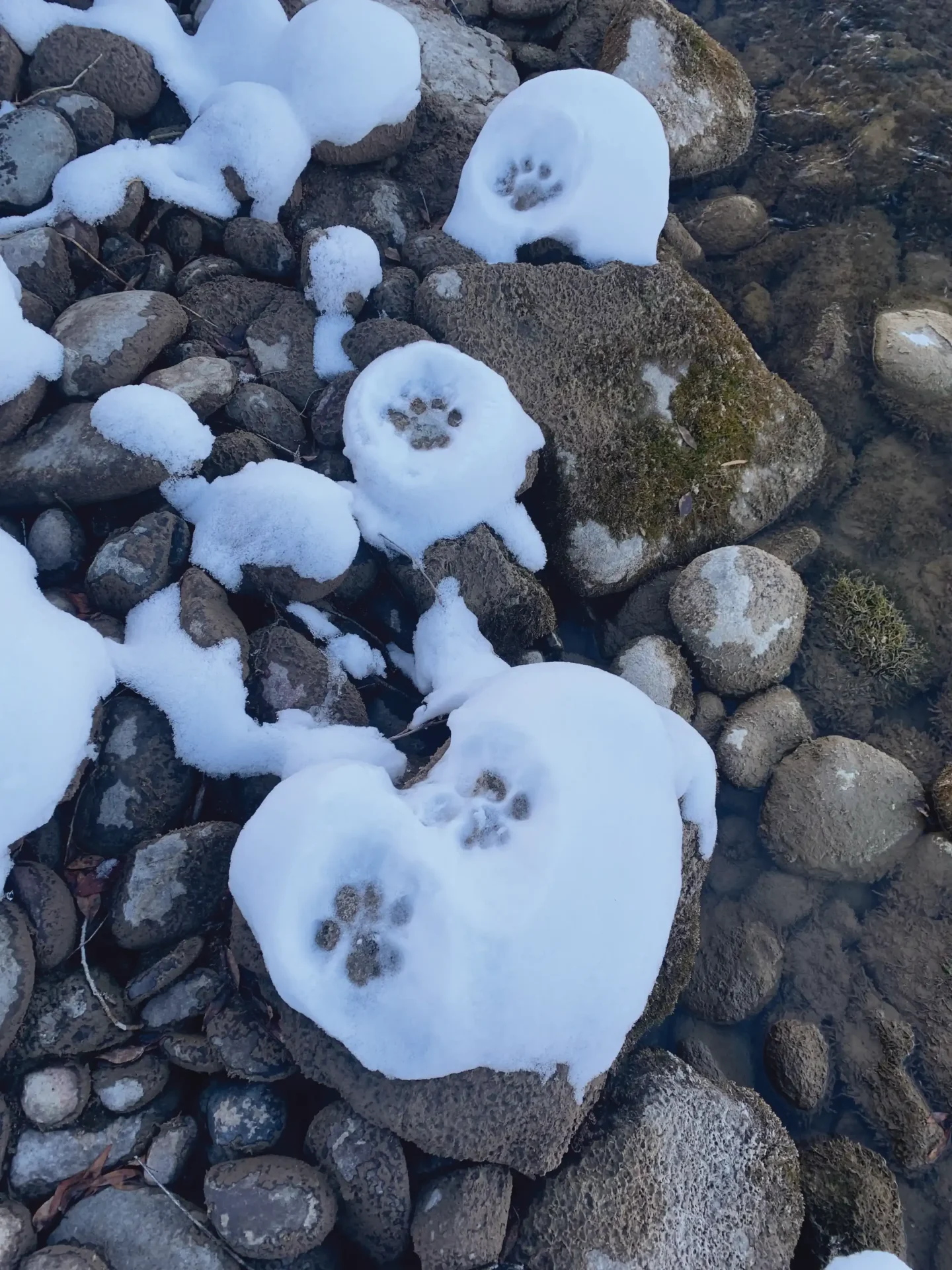
Through fate (and quite a bit of fieldwork), this is how I ended up stuffed in that blind in the dark watching the lions and the snow and the deer on that magnificent night. After that I was addicted to being in the presence of these cats and emboldened by a desire to show people that photographing the North American cougar can be accomplished without abusing the animals. And so began my quest into mountain lion photography.
The winter routine I’ve adopted has become a form of meditation: Hike until I find tracks; follow the tracks until I find the lion’s kill; stage the kill for a camera trap, or if I’m lucky, a blind. This has yielded great photographic results, but human desire is a difficult beast to tame: Despite my successes with remote or distant photography, I wanted more. Specifically, I wanted to be on the ground, up close, in the daylight with a cat — a true wild lion — with no snarling dogs to hide me.
In November of 2022, this vision materialized with a sudden opportunity, as chance often does. I had spent a few days tracking a mountain lion and her cubs, and on day three, I jumped ahead to a new location further down the corridor. Along a frosty creek, I cut tracks so cold they were filled with hoarfrost and nearly unrecognizable as cat tracks if not for the shape and stride length. I stopped when I saw the legs of a cow elk half cached into the bank, jutting out into the stream. The strangeness of the scene paralyzed me for a second. Generally, lion kills are cached meticulously under snow, dirt or grass, tucked neatly out of view. But this kill was a mess, lacking in all classic cougar fastidiousness; the cat had ostensibly killed the elk in the water and, unable to pull it out of the stream fully, it had lazily tossed grass and snow over half the elk before giving up.
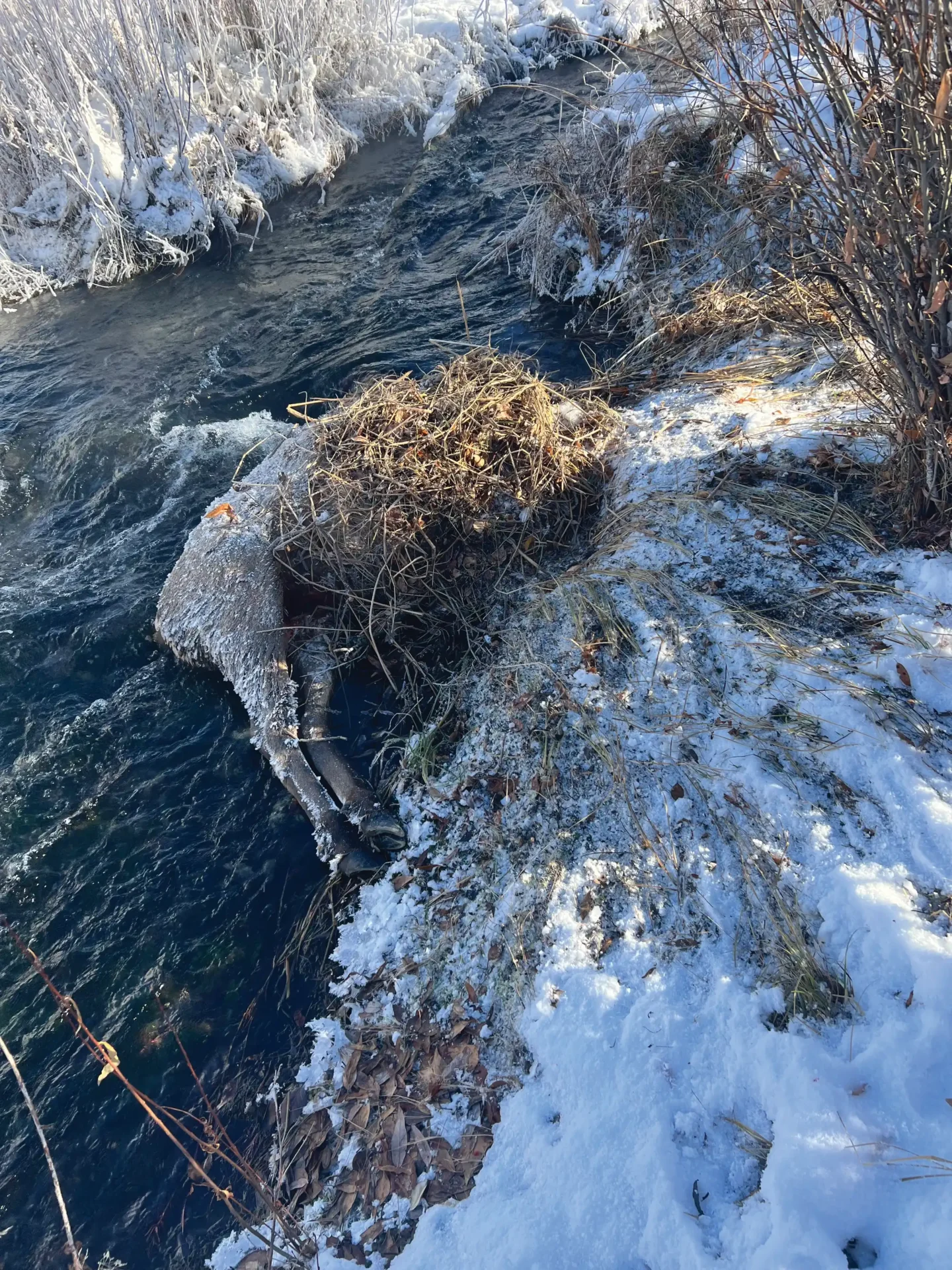
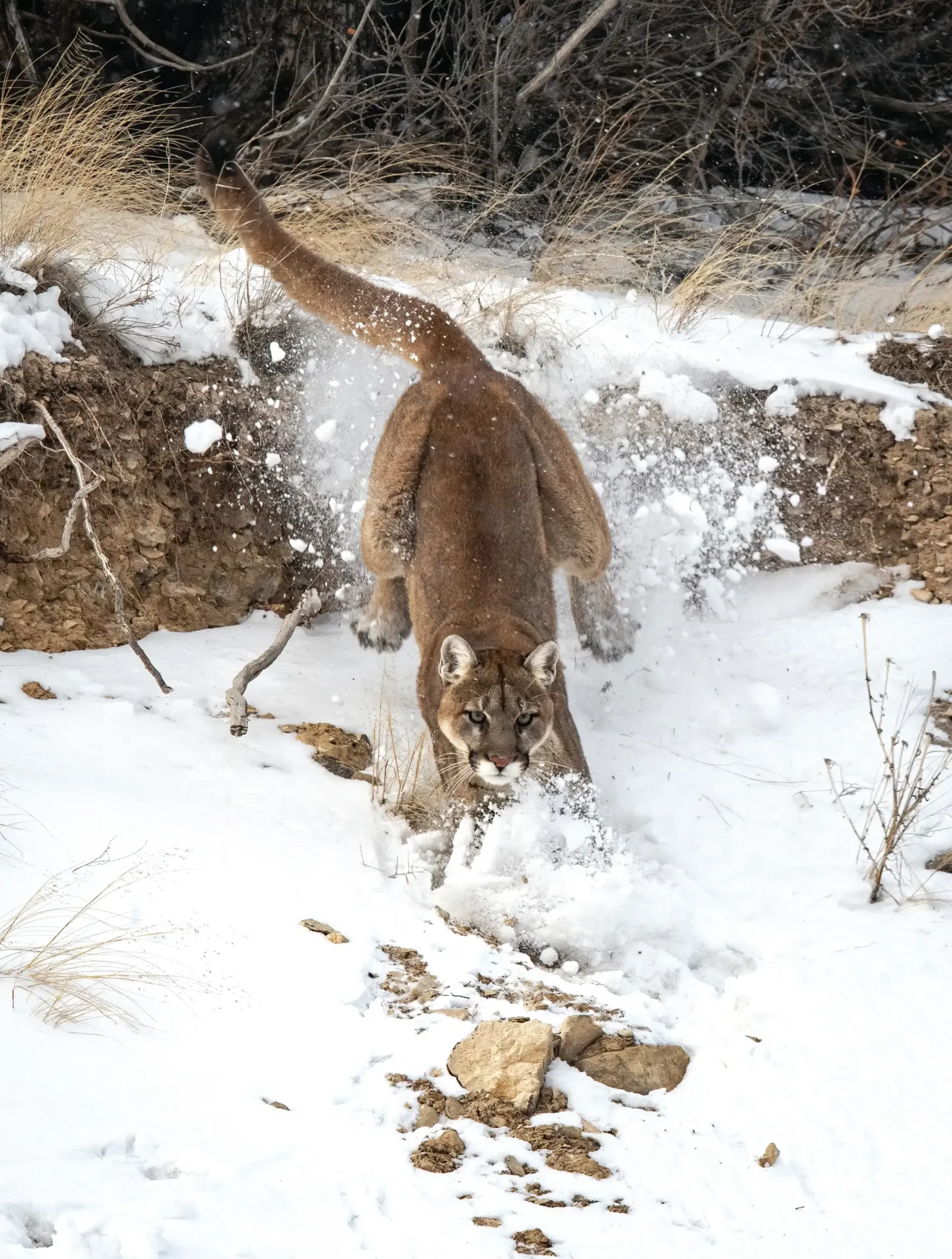
The next morning, I returned before dawn, waiting in the dark a few hundred yards from the kill before the sun’s upward crawl against the sky illuminated enough of the frozen world in front of me. I crept along the eroded cliff edge above the stream, moving closer to the prize. I was expecting a female cat, possibly with a cub, but the hulking shape that materialized out of the steam in front of me stopped me in my tracks. A huge male cougar stood hunched over the elk, dwarfing any cat I’d ever seen. He was scarred and muscular, a true specimen of a life lived in the brutal wild. I pushed even closer, the noise of my movements somewhat hidden behind by the sound of babbling water. My heart in my throat, I made eye contact with the cat, and for a moment everything stopped—heart, breath, thought. But he went back to what he was doing, attempting to cache the now-half-eaten elk. The tom was so preoccupied that I was able to observe him for 40 minutes. Besides the initial glance, he only looked at me one more time as he dismounted the carcass, giving me the privilege of capturing my dream portrait of a wild, unbaited North American cougar. I consider it the greatest personal accomplishment of my life.
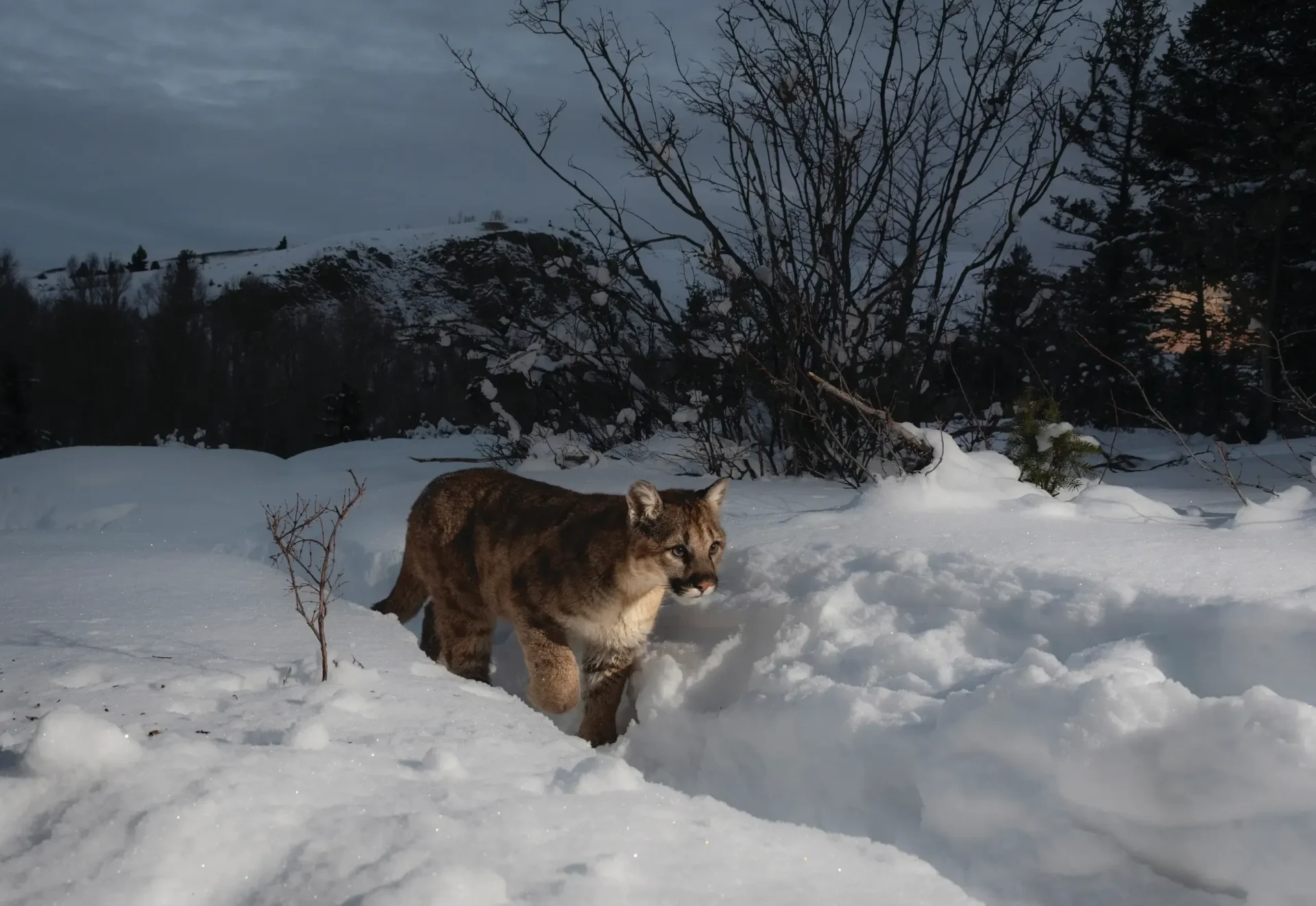
After more than a decade spent learning how to keep myself and the wild animals I photograph safe, I now have the experience to confidently assert that the North American mountain lion can be photographed ethically in the field like any other wild animal. We can witness these incredible creatures — and share our images with others — without supporting game farms or barbarically treeing the animals. While the fact remains that like any big predators they can be dangerous, my experiences with cougars — and my photos of them — have shown a side of them most people don’t see. We must reconsider the mountain lion as a gentler animal than we have been taught to believe. They deserve our tolerance and understanding, and ultimately, our coexistence.
Watch the accompanying film, and others, click here
Savannah Rose is a full-time wildlife photographer with a passion for North America’s incredible biodiversity. She strives to capture evocative portraits of the most elusive and misunderstood creatures, and hopes to share with you the beautiful stories of these animal’s lives.