By Jack Reaney
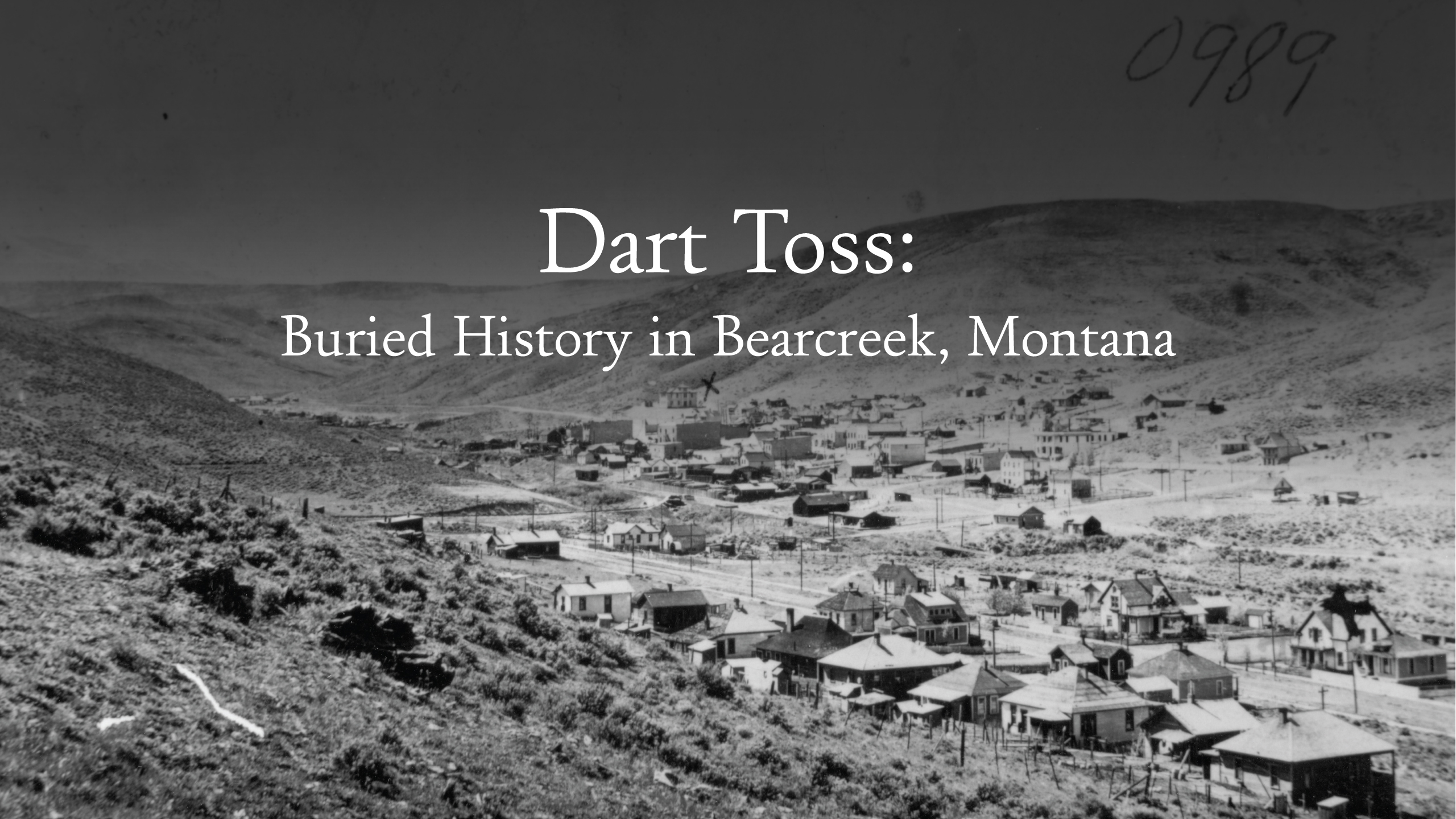
It’s incredible that a tiny, windswept ghost town can illuminate decades of American history. After booming, busting and withering into a pass-through bedroom community, Bearcreek today is known for one famous attraction: pig races at its last remaining saloon. Coal built Bearcreek, Montana, until the world left coal behind.
Blindfolded, I threw a dart at a six-foot-wide map of Montana to continue Mountain Outlaw’s Dart Toss series. It landed on the border of Bearcreek and Belfry. Looking at Google Maps’ satellite view, my team agreed Bearcreek looked especially interesting for its tiny footprint between two valleys. I knew nothing. Perfect. My only goal: tell the story of a place.

About 60 million years ago, more than 100 billion tons of coal began to develop within the Fort Union Formation across eastern and central Montana. By American standards in the late Industrial Revolution, some of Montana’s finest, most useful coal waited underground in the Bear Creek Coal Field until it was discovered in 1866 by James “Yankee Jim” George.
“Coal was the thing to own back in those days … [Bearcreek] was an important source of coal for southern Montana and the country, I think, for probably 50 years or more,” said Bob Schalla, a geologist and historian based in Billings and Red Lodge who published his first book, Black Diamonds from the Treasure State, in 2024.
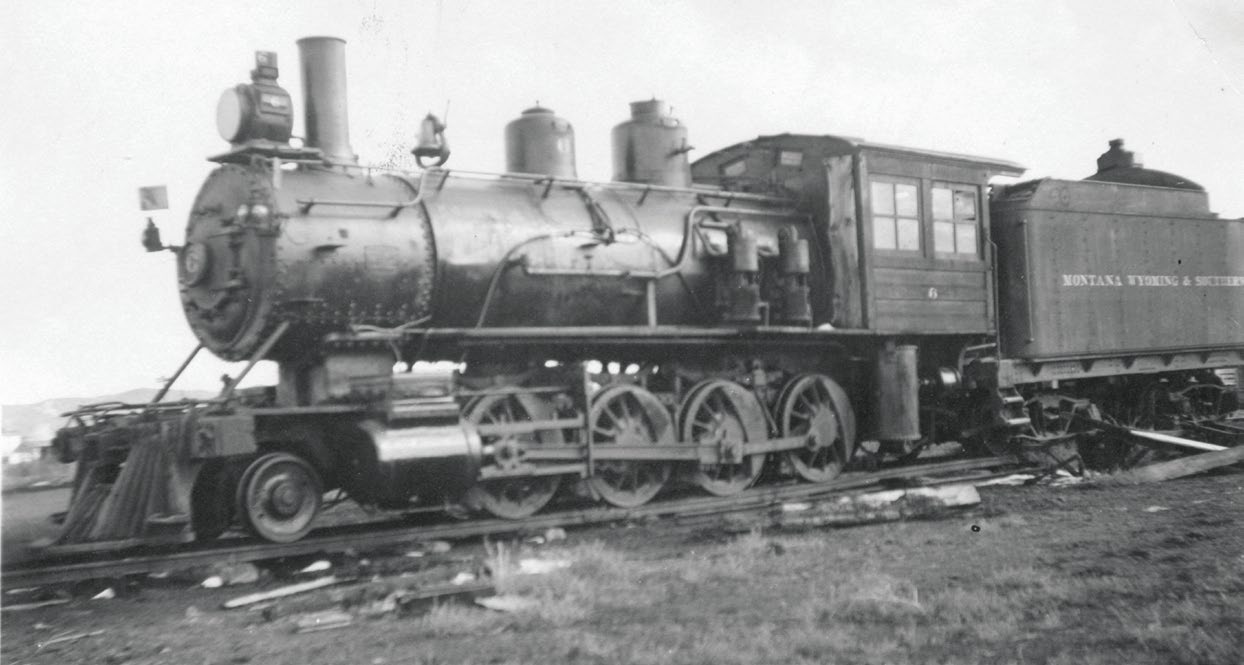
Before any companies could turn a profit pulling riches from the earth, they’d need a railroad—that, and an 1882 treaty agreement to extract valuable land from the Crow Reservation. Several railroad proposals had emerged by 1889, but it took 17 years of false starts and funding lapses, backstabbing and “pain and anguish,” Schalla explained, before the Montana, Wyoming and Southern Railroad connected Bridger to Bearcreek in 1906. Schalla unraveled that story obsessively, like a detective.
“It was all these different personalities and how they interacted and conflicted with each other that really made it interesting,” he told Mountain Outlaw after offering a tour of Bearcreek’s buried history on a blustery April afternoon. During his research, he learned that photos of the small railroad were archived far and wide, including the California State Railroad Museum, Southern Methodist University and Railroad Museum of Pennsylvania.
“From coast to coast, when you dig into the archives, there are pictures of this railroad … I was really excited when I discovered all that,” Schalla said. With the 25-mile branch finally completed in 1906, the town sprang to life.
Within a year, infrastructure included telephones, city water and electric street lights. The Lamport Hotel opened in 1907 and became one of Montana’s finest accommodations. The Bearcreek Bank, now listed in the National Register of Historic Places, stands prominent and sturdy today—it was built using local sandstone to symbolize confidence in the future. In 1928, Bearcreek High School went 13-0 to win the Yellowstone District Basketball League. Now, there’s no school to speak of.
“[Bearcreek] had banks, they had schools, they had a courthouse. And at its peak, it was about 3,000 people,” said Becky Van Horn, historical preservation officer with the Carbon County Historical Society and Museum. In the mid-1920s, Bearcreek’s peak population—including many immigrants—outnumbered Red Lodge, another mining town about seven miles west. Red Lodge has sustained its prominence thanks to tourism drawn by a large ski area, the Beartooth Highway and Yellowstone National Park.

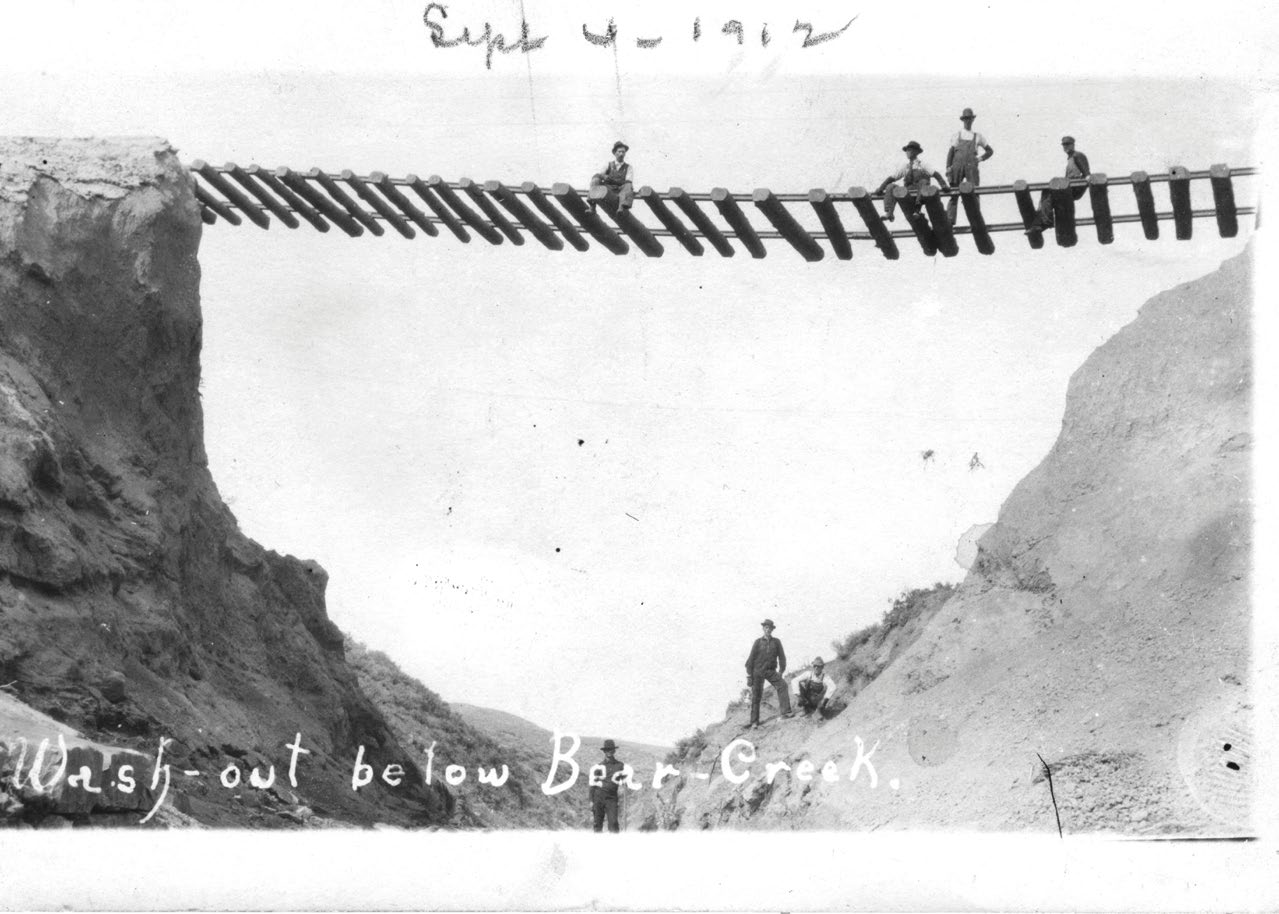
Bearcreek’s annual coal production peaked in 1918, when industrial demands of World War I compelled all seven mining companies to produce a combined 692,000 tons of coal. Output spiked again in World War II, yielding 576,000 tons of high-grade coal in 1944 before demand dropped sharply.
In 1899, coal supplied 90 percent of U.S. energy. By 1947, that share fell to 50 percent as natural gas and nuclear energy took hold. Furthermore, the development of open-pit mining was cheaper compared to Bearcreek’s underground room-and-pillar style of mining. The Northern Pacific Railway transitioned from coal-fired engines to diesel-powered trains, and Bearcreek’s railroad was removed in 1954. One mine lingered into the 1970s.
Parking his SUV around the silent town, Schalla pointed to scars in the land—a rotting trestle, flattened land where railroad spurs once ran into the sage-covered coulees—as evidence of an industrial engine for Montana, once upon a time.
“It was a pop-up town that kind of popped right back down when it became ineffective, financially … The decline happened pretty swiftly, probably within a decade,” Van Horn said.
Montana’s Worst Coal Mining Disaster
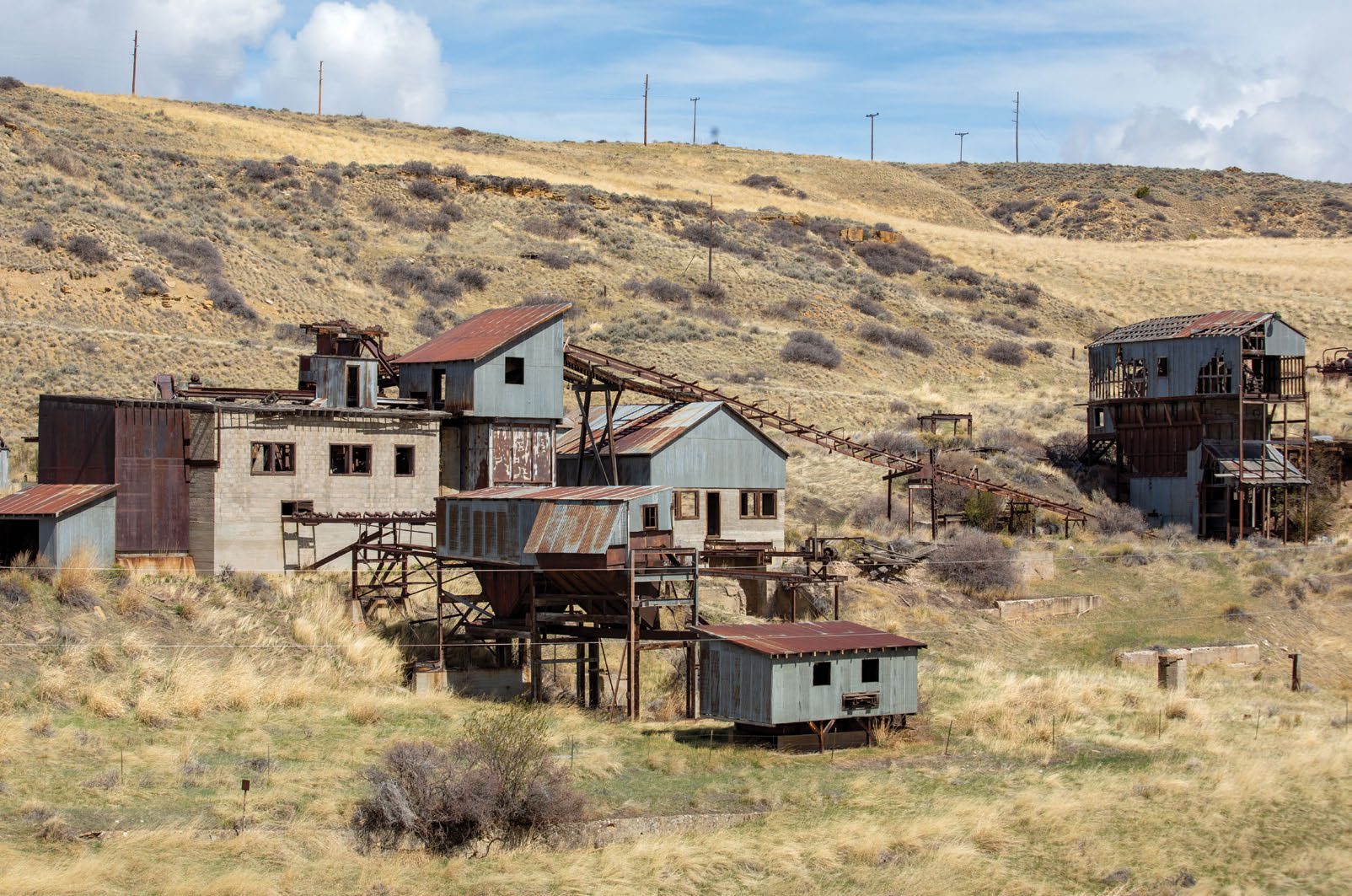
Tragedy struck late one Saturday morning, Feb. 27, 1943. An explosion claimed 74 souls and sealed the Smith Mine’s fate as the only operation whose remains can still be seen.
Historians believe the Smith Mine Disaster hastened Bearcreek’s decline, but did not cause it. It was depressing for residents and families of victims, Van Horn said, paired with the demise of coal in the post-war era, when almost all of Bearcreek’s mines were completely deconstructed and removed. Some families loaded homes onto trailers; others took them apart brick-by-brick.
Federal investigation by the U.S. Bureau of Mines concluded that roughly 200,000 cubic feet pent-up methane gas—a substance as combustible as gasoline vapor—was contained in an underground chamber of Smith Mine No. 3.
During inspection in November 1942, Loren Newman, a foreman and fire boss, offered a recommendation to mitigate the well-known hazard: “I suggested they shoot a hole through there and open up the circulation—get some air in there,” Newman later told investigators, according to documents displayed at Carbon County Historical Society’s museum. “But the federal inspectors decided to seal off the gas instead. I guess I should have kicked up a bigger fuss than I did.”
Trapped by the cave-in, four men left a note: “We try to do our best but we couldn’t get out.” Another two miners scribbled, “Walter & Johnny. Good-bye. Wives and daughters. We died an easy death. Love from us both. Be good.”
Six days and no survivors later, grim news on the front page of Carbon County News: “CONCEDE 74 DEAD IN COAL MINE DISASTER.” It remains the deadliest coal mining incident in Montana history.
Still, many visitors drive right past the historical markers detailing this tragedy and the story of Bearcreek, merely glancing from the highway at the Smith Mine ruins, almost certainly unaware of the railroad, and the hundreds of homes once scattered across a now-barren landscape. All this, of course, because their imagination is captured by scampering piglets.
Bearcreek Today: Dinner and a Show
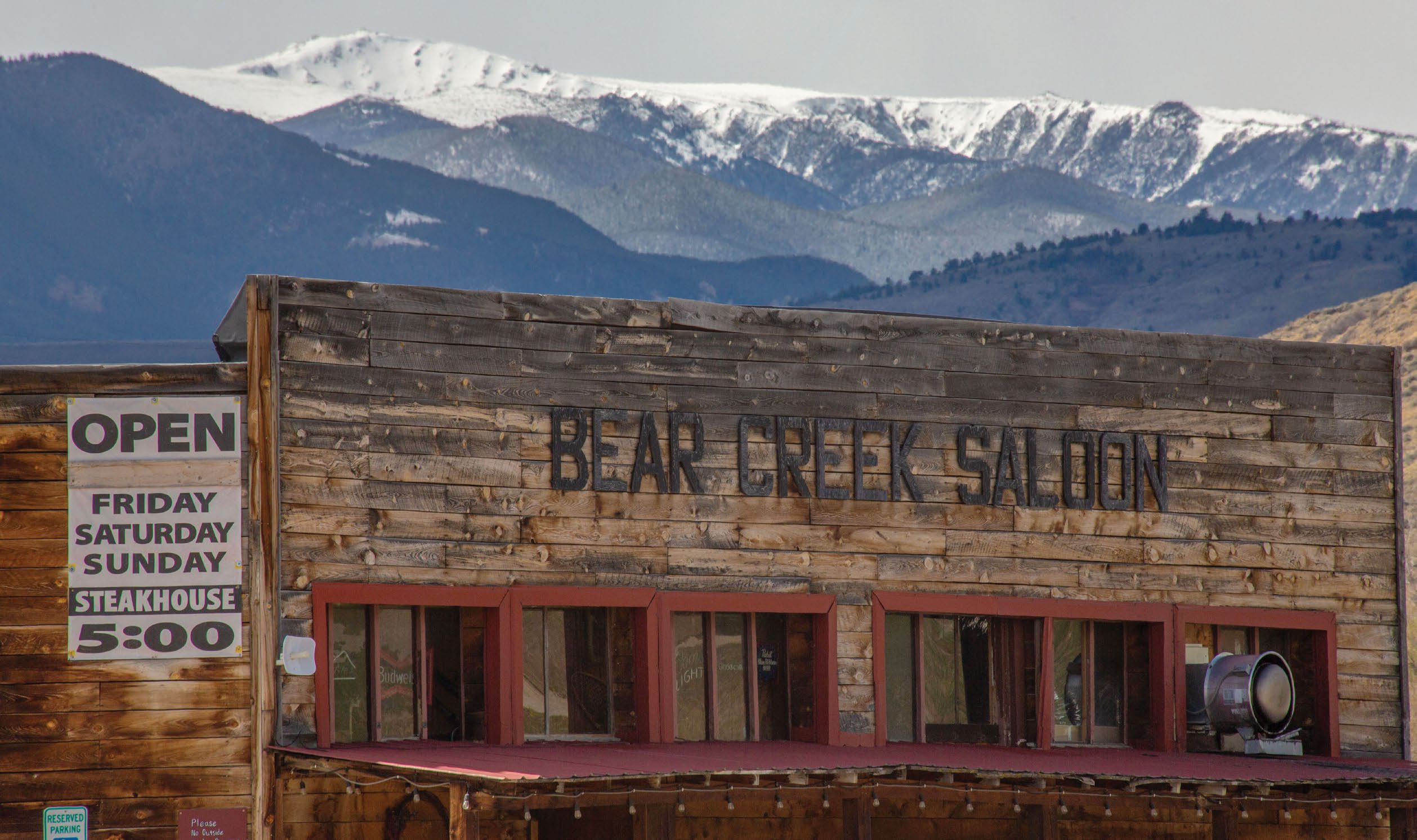
Bearcreek industry died, but the world-famous pig races of the Bear Creek Saloon & Steakhouse have rebranded the town: the Bear Creek Downs has been featured by outlets including “Good Morning America,” The Discovery Channel and The Wall Street Journal.
The bizarre tradition spawned in 1988, intended to lure tourists amid the 1988 Yellowstone Fires. Former saloon owners Pits and Lynn DeArmond came up with the idea over a bottle of Grand Marnier.
It wasn’t legal. Authorities shut it down until one Montana lawmaker, Rep. Alvin Ellis, championed the tailor-made “Pig Racing Bill” to allow pig racing in small towns for the purpose of raising money for nonprofits.
The saloon has since raised more than $175,000 in post-secondary scholarship funds for Carbon County students. After a record-breaking 2025 raised $16,000, the Bear Creek Downs scholarship will now support an additional student, now from Stillwater County.
“We get a lot of feedback from the community that they’re glad it’s still here … We didn’t re-invent the wheel, we just polished it up a little bit,” DeVille said.
Her grandfather was a mechanic, born in Bearcreek to French-Belgian immigrants. He played piano for silent films at the local theater. DeVille visited Bearcreek throughout her life and moved in full-time in 2002. It’s one of Montana’s smallest incorporated communities with fewer than 100 residents, mostly retirees and Red Lodge workers, she explained.

DeVille looks around her restaurant, pointing out the path of a stray bullet into the wooden pillars of an ornate, European-built bar purchased from the 1904 St. Louis World’s Fair. She doesn’t sugarcoat the history that left the saloon among Bearcreek’s few remains.
“There were tons of bars, brothels, restaurants, things like that. Never a church. … I think at one point it was just kind of a rowdy coal-minin’ town.”
— Dawn DeVille
“There were tons of bars, brothels, restaurants, things like that. Never a church,” DeVille said. ” … You know, I don’t want to make it sound like something that it wasn’t, but I think at one point it was just kind of a rowdy coal-minin’ town.”
When you learn the history of a place like Bearcreek, it stretches your imagination. Reporting alongside my filmmaking colleague Fischer Genau, we frequently theorized: We guessed the purpose of some decrepit shack; we wondered where the miners entered the complex web of underground tunnels; and we tried to connect old photographs with today’s sleepy hills. As a writer lucky enough to meet some local experts, I can only hope that visitors drawn to the pig races will catch a glimpse into Bearcreek’s invisible, volatile past.
To start, I suggest examining the photographs hanging in Bearcreek’s lonely saloon. After all, that’s probably the only reason you’d find yourself in the Bear Creek Coal Field.
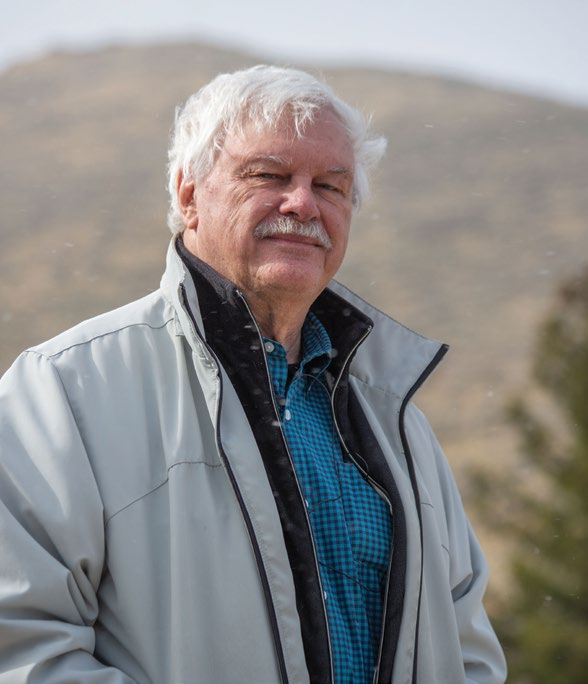
Jack Reaney is a writer and photographer based in Big Sky, Montana. He works as senior editor for the Explore Big Sky newspaper. Outdoors, he’s a skier, runner, baseball player and timid mountain biker.
For the accompanying film on “Dart Toss: Bearcreek, Montana,” and other Mountain Outlaw films, visit mtoutlaw.com.